In many shared digital experiences people take part in processes that lead to common results.
These can include joining activities confirming choices, or helping shape outcomes that affect others. While clarity is important not everyone feels comfortable with every detail of their involvement becoming widely visible. I’ve noticed that in many current on-chain systems, participation often comes with full exposure by default even when the action itself is relatively simple.
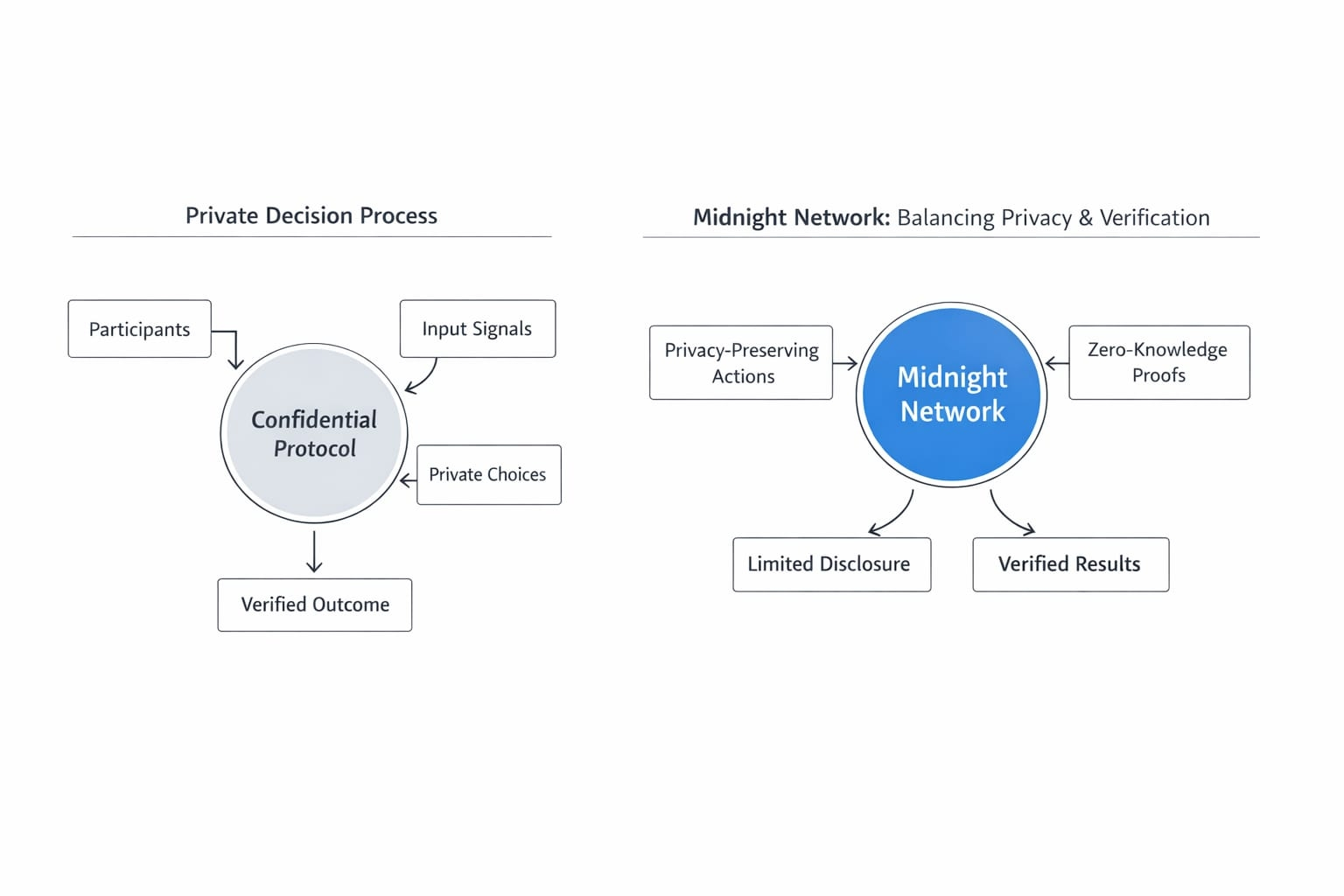
@MidnightNetwork is exploring ways to support useful interaction while keeping certain personal signals less exposed.
Through advanced verification methods outcomes can still be recognized as correct without requiring full visibility of how each step was arranged or why specific decisions were made. This becomes especially relevant in areas like governance voting or identity-linked participation where users may want to contribute without permanently attaching every decision to a public record.
This idea reflects how expectations around participation are slowly changing.
People often want systems that work reliably but they also value having space to engage without turning every action into a permanent record. As more users interact with transparent networks there’s a growing awareness that not every signal needs to be broadcast for coordination to work effectively.
Looking at how Midnight Network approaches this challenge offers a simple reminder that progress is not only about speed or scale.
It is also about designing environments where meaningful activity can happen with a stronger sense of comfort and control. As digital coordination becomes more common systems that balance verifiability with selective privacy may shape how people choose to take part in the next phase of on-chain interaction.