
When I started digging deeper into @Pixels , I expected to see the usual success story — growth, hype, numbers. And yes, Pixels did grow massively in 2024. But what actually impressed me wasn’t the success… it was how openly they addressed their problems.
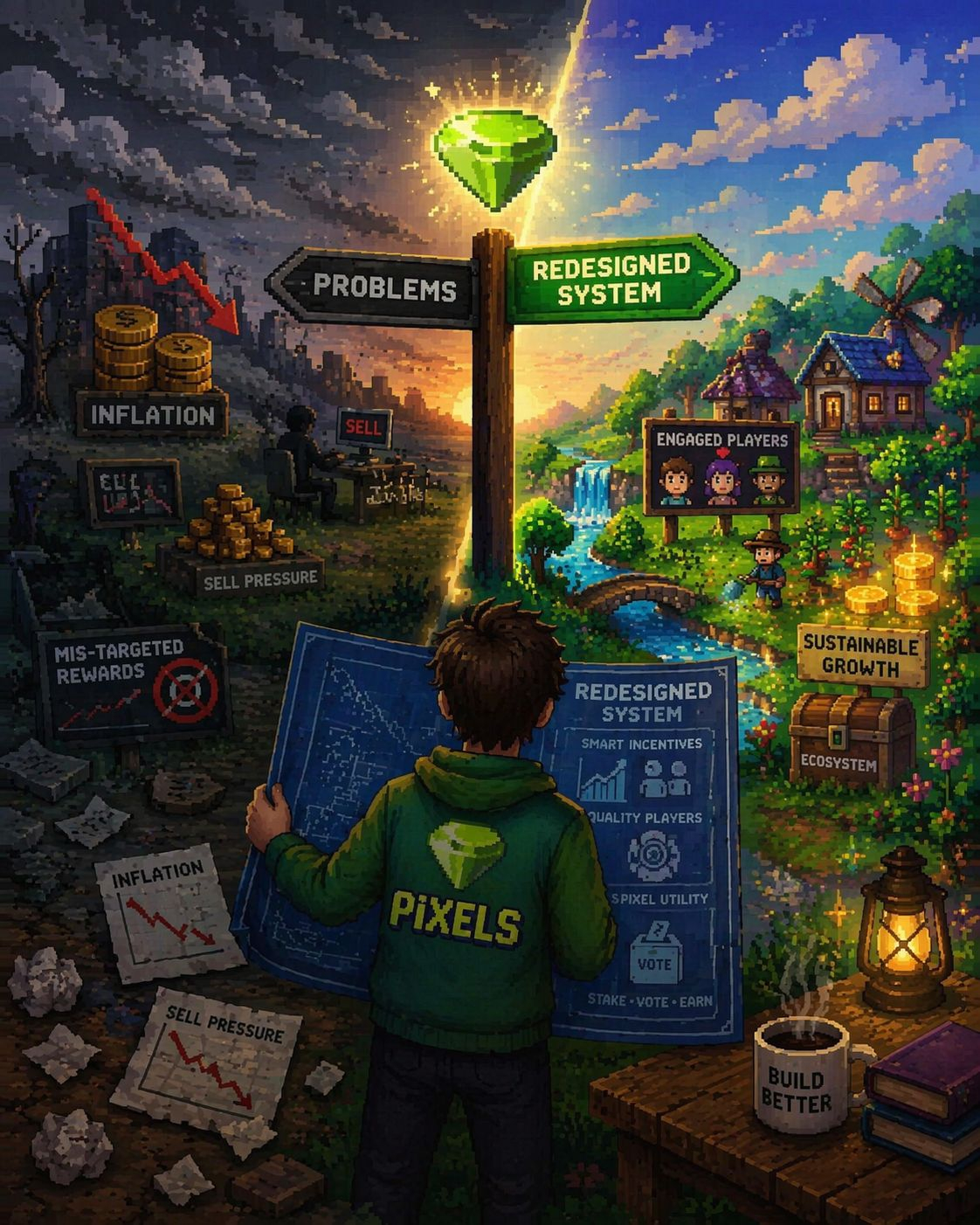
One of the biggest issues was token inflation. Too many tokens were being emitted, which naturally created pressure on the economy. On top of that, many players were simply extracting value — earning rewards and selling without really contributing back to the ecosystem. I’ve seen this pattern in many Web3 games, and honestly, it often leads to slow collapse.
Another interesting issue was reward distribution. It wasn’t precise enough. Short-term activity was getting rewarded more than long-term value creation. So instead of building a strong ecosystem, it was unintentionally encouraging temporary engagement.
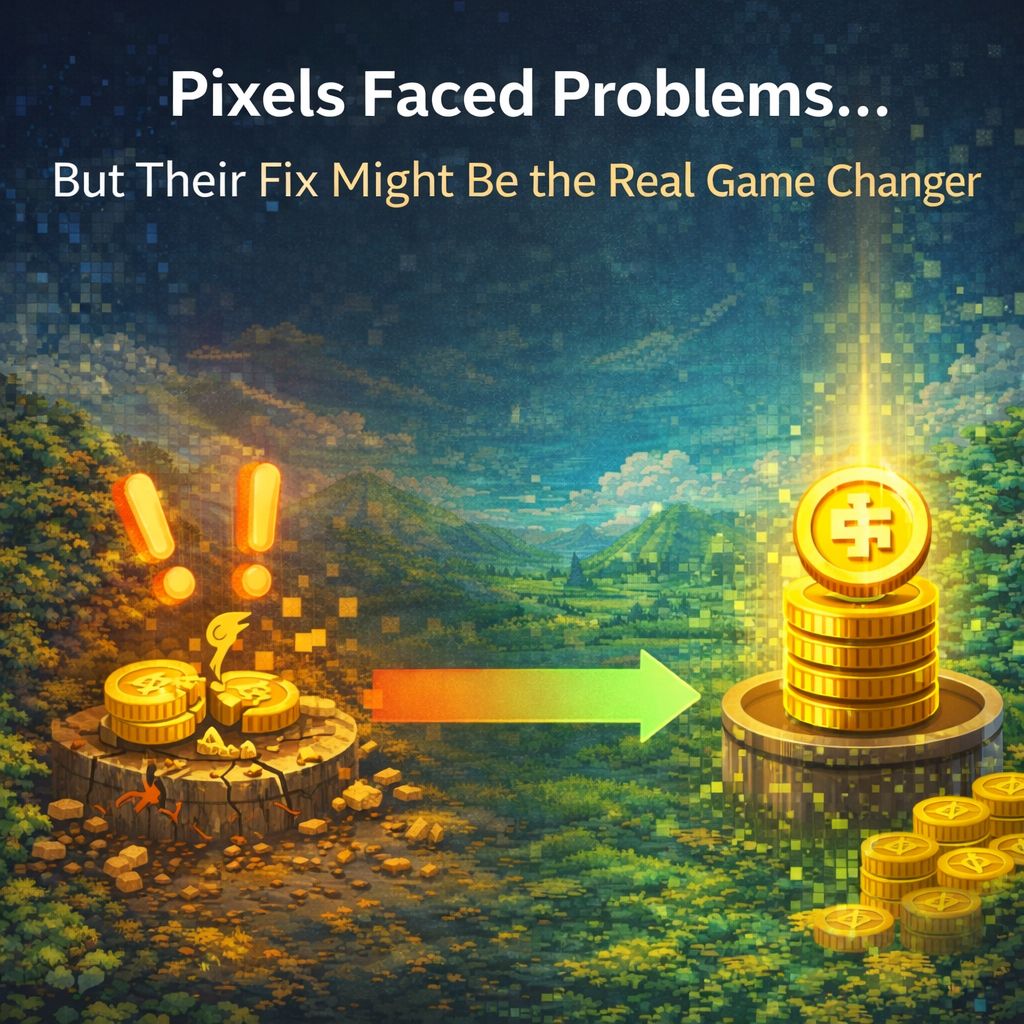
But here’s where Pixels feels different.
Instead of ignoring these flaws, they redesigned their entire approach. They introduced data-backed incentives — meaning rewards are now targeted toward players who are more likely to reinvest and stay engaged. This alone changes the mindset from “earn and leave” to “earn and grow.”
They also added liquidity-related mechanisms to reduce unnecessary token extraction. And more importantly, they introduced a new model — stake-to-vote-and-earn. This connects directly with $PIXEL utility, where players influence which games succeed just by staking.
What I personally find interesting is their focus on quality over quantity. Instead of chasing high user numbers, they’re prioritizing engaged players who actually support the ecosystem. That’s a rare approach in Web3 gaming.
The introduction of $vPIXEL also plays a big role here. By encouraging in-ecosystem spending instead of immediate selling, Pixels is slowly trying to build a more balanced economy.
In my opinion, Pixels is not just evolving as a game — it’s evolving as a system. A system that learns from its mistakes and adapts.
And in Web3, that might be the difference between a short-term trend and a long-term project.