

There was a moment when I tried to claim a small reward onchain, something routine, nothing complex. I remember staring at the screen, waiting for confirmation, refreshing once, then again. It wasn’t broken, just… stuck in that quiet in between state. That moment felt strangely familiar, like waiting in a line that doesn’t seem to move, even though you can see people ahead of you being served.
After noticing this pattern across different platforms, I started to realize that what we often experience in Web3 isn’t really about speed, it’s about coordination. Transactions don’t just execute, they compete. They wait, they get ordered, they get verified. And when too many things happen at once, the system doesn’t fail outright, it just becomes harder to read. That subtle friction is what I keep coming back to.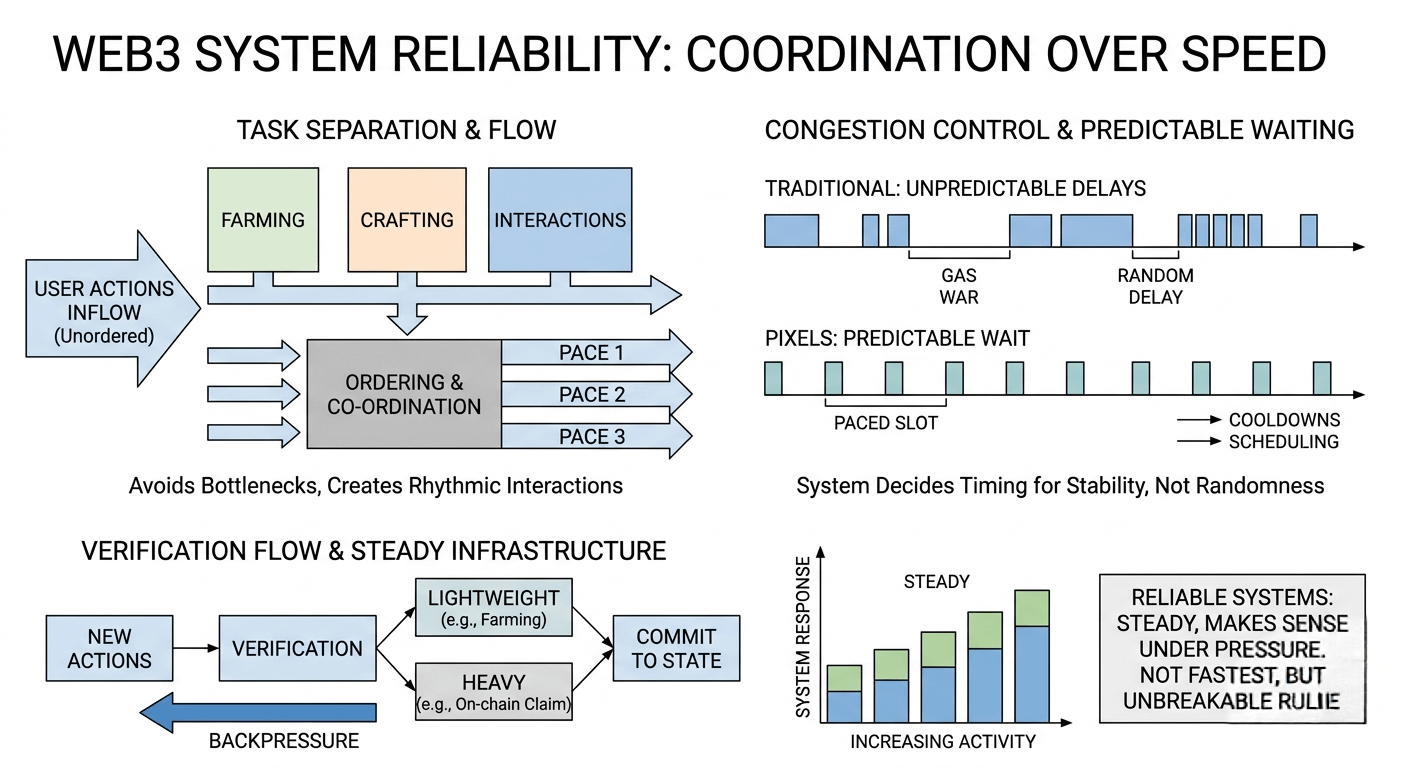
In my experience watching networks, it feels less like a digital system and more like a shared public space. Like a busy marketplace where everyone arrives with something to do, but there are only so many ways to process those actions at the same time. Some tasks move quickly, others take longer, not because they’re complex, but because they’re part of a larger flow that has to stay consistent.
That’s why I often think about it like a small town post office during peak hours. Letters, parcels, documents… all arriving at once. The workers aren’t slow, but they have to sort, verify, and route everything properly. If too much comes in at the same time, things don’t stop, they just slow down in a way that feels uneven from the outside.
When I look at how @Pixels approaches this, what I noticed isn’t just the farming or the relaxed interface. It’s the way interactions seem to unfold with a certain rhythm. Nothing feels rushed, but nothing feels randomly delayed either. There’s a quiet structure behind it that makes participation feel paced rather than congested.
What interests me more is how actions seem to be distributed. From a system perspective, it feels like different types of activity are separated just enough to avoid stepping on each other. Farming, crafting, and other interactions don’t feel like they’re all competing for the same narrow pathway. That kind of task separation is something I’ve learned to look for in resilient systems.
Scheduling also seems to play a role. Not everything happens instantly, but it doesn’t feel like a delay for the sake of limitation. It feels more like the system deciding when something should happen to keep everything else stable. What matters in practice is not removing waiting entirely, but making that waiting feel predictable.
Verification flow is another detail I keep thinking about. Some actions feel lightweight, others carry more weight, and the system seems to treat them differently. That alone can reduce unnecessary congestion. In many systems, everything is forced through the same process, which is where bottlenecks start to form.
Then there’s congestion control, something most users don’t notice directly. In my experience, systems that hold up well don’t try to handle everything at once. They absorb pressure, spread it out, and keep moving. Backpressure, in that sense, isn’t a flaw, it’s a kind of quiet discipline.
What I find interesting about @Pixels is that it doesn’t present any of this in a technical way. It just feels like a calm, casual environment. But underneath that simplicity, there’s a structure that seems to respect limits instead of ignoring them. And that, in a strange way, aligns with what Web3 was trying to do from the beginning.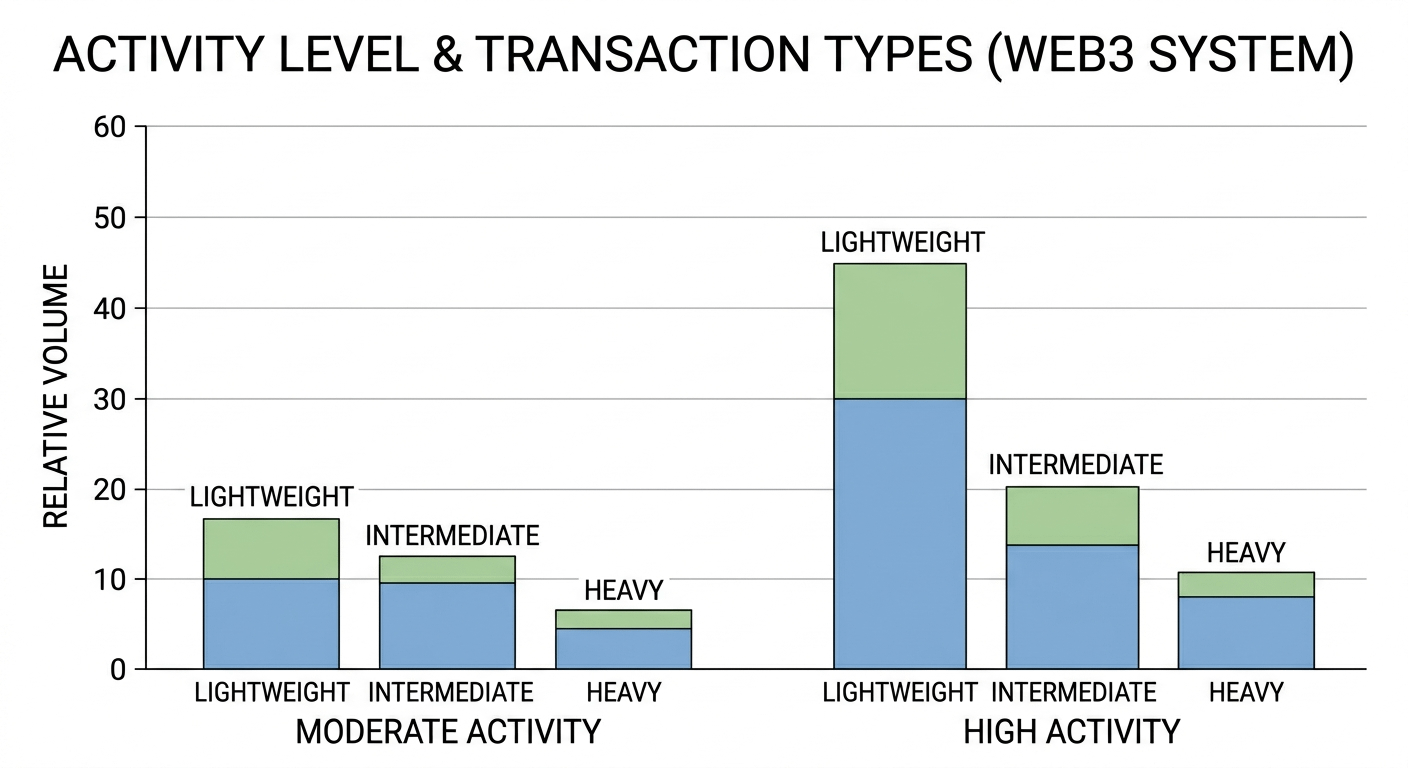
From my perspective, the systems that last are rarely the loudest or the fastest. They’re the ones that remain steady when things get busy. The ones that don’t break their own rules under pressure.
A reliable system is not the one that feels instant all the time, but the one that continues to make sense when activity increases. Good infrastructure doesn’t try to impress you. It just quietly works, even when everything else starts to feel uncertain.