
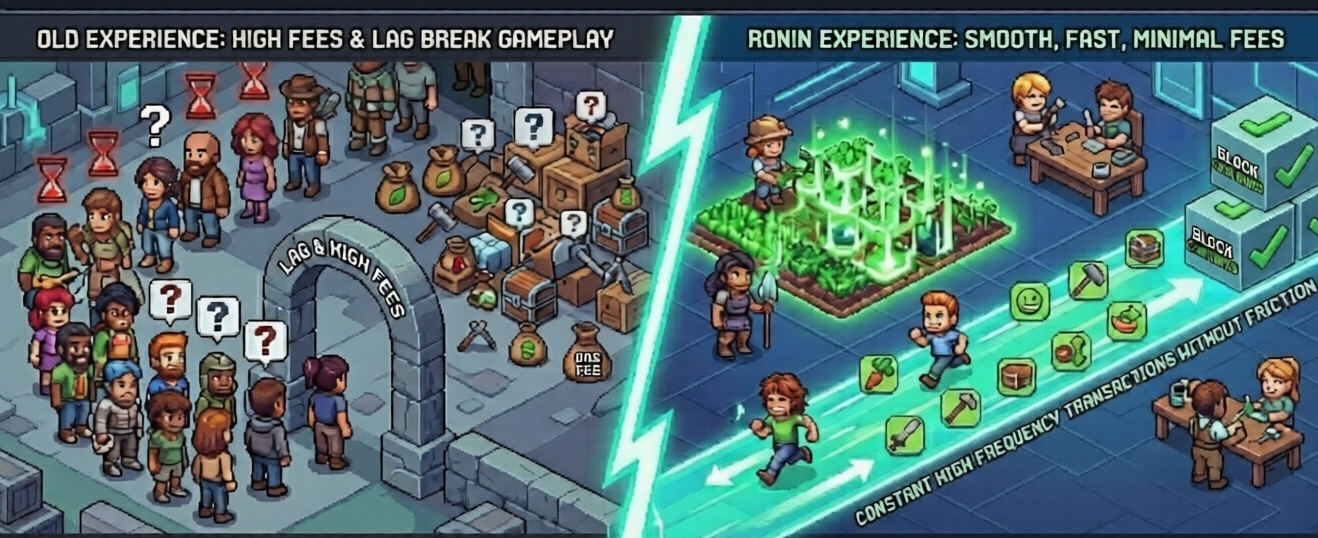

Every Web3 game starts with the same question: where should it live. The chain choice decides what kind of gameplay is even possible. High fee environments force developers to minimize onchain actions. That means less interactivity and slower loops. For a game like Pixels, that model does not work.
Pixels is built around constant player input. Planting crops, harvesting resources, crafting items, upgrading land, and trading with other players. Each action needs to be recorded fast and cheap. If a player waits five seconds for a transaction or pays a fee every time they click, the game stops feeling like a game. It becomes a wallet simulator.
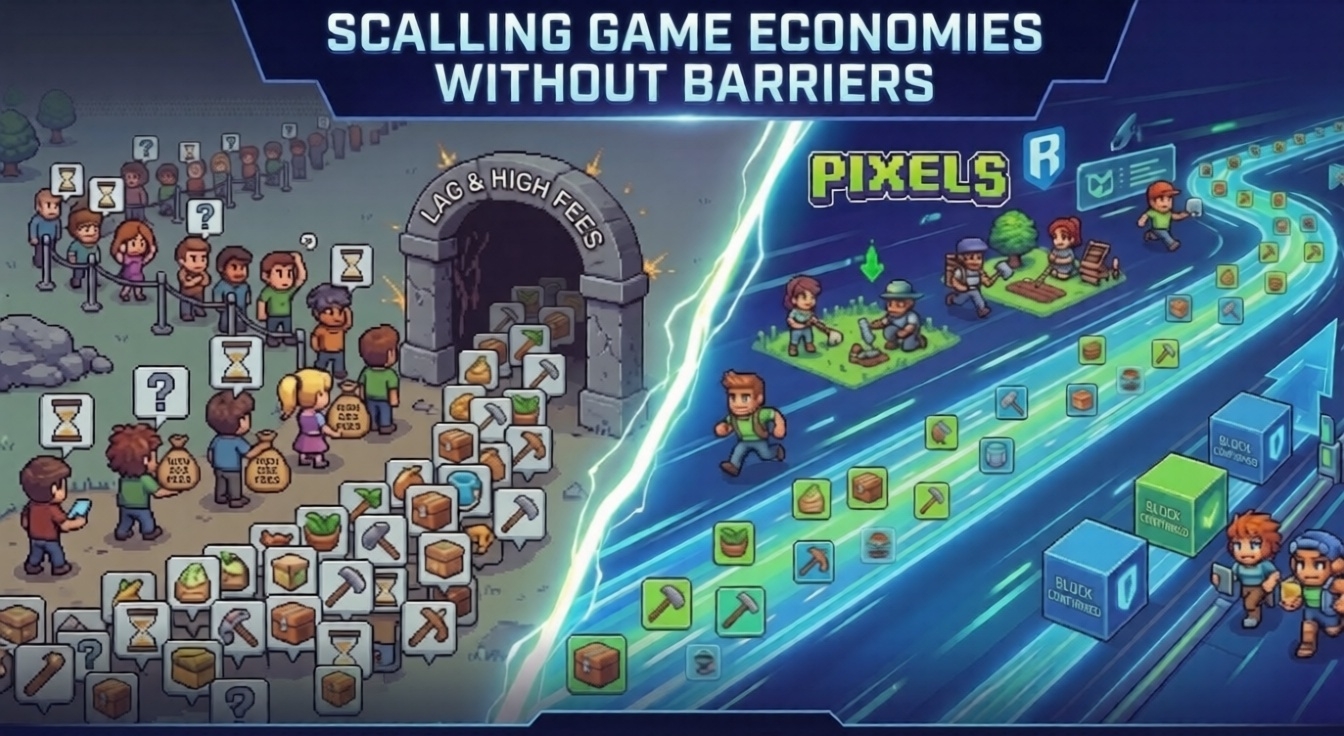
This is why the migration to Ronin mattered. Ronin is an EVM compatible blockchain designed from the ground up for gaming. It was first built to support Axie Infinity at scale, and now powers an entire ecosystem of high frequency games. The architecture prioritizes speed and cost efficiency over everything else.
The technical details are simple but important. Ronin uses a Proof of Authority model with trusted validators to keep block times low. That allows near instant finality for gameplay transactions. Fees are reduced to fractions of a cent, which means players can interact hundreds of times per day without thinking about cost. For Pixels, that unlocked the core loop.
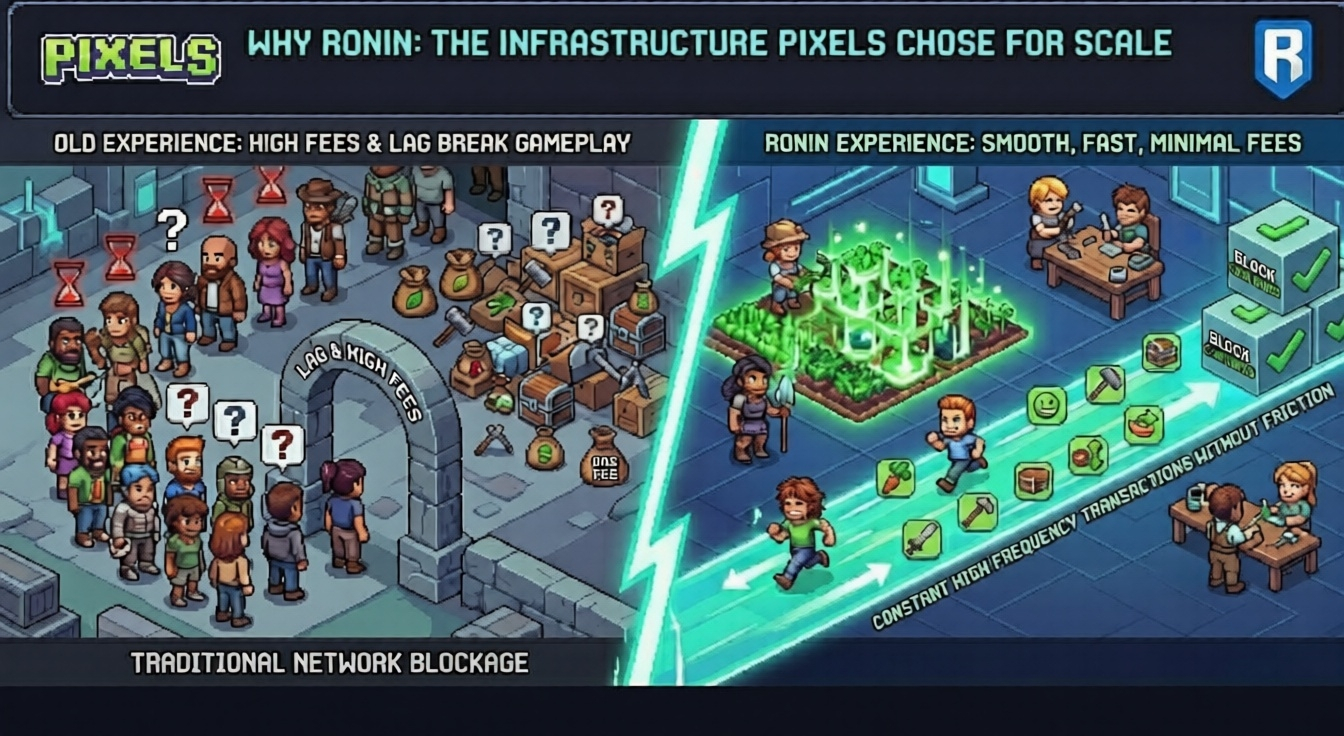
Before Ronin, scaling meant compromise. Developers had to choose between putting gameplay onchain and keeping the experience smooth. Most chose offchain systems and lost the ownership benefits of Web3. Others stayed onchain and accepted low player counts because fees pushed users away. Ronin removed that tradeoff.
The numbers tell the story. After moving to Ronin, Pixels grew to over 100K daily active users. Those users are not just logging in. They are farming, crafting, trading, and upgrading land every day. Each action is an onchain transaction that would be too expensive or slow on most Layer 1 networks. On Ronin it feels like a normal game.
This infrastructure choice also changes how the token economy works. When transactions are free and fast, you can design more sinks into the game. You can ask players to spend PIXEL on small upgrades, crafting recipes, or access passes without punishing them with fees. That creates more ways for the token to have utility. Infra and token design are linked.
Choosing Ronin was not about chasing a trend. It was about matching the game mechanics to a chain that could support them. Web3 gaming fails when the chain limits the design. It works when the chain enables it.
Understanding this decision helps frame everything else in the PIXEL economy. The token sinks, the land system, the VIP model. None of it scales if the base layer cannot handle the load. Ronin is that base layer.
Tomorrow we will look at the direct impact of this migration. What changed for players and for the economy after Pixels moved. The before and after numbers make the architectural shift clear.
Infrastructure is quiet when it works. Players do not think about Ronin when they harvest a crop. That is the point. The chain disappears and the game takes over.
What part of game infrastructure do you think players undervalue most?