


I used to think evaluating a token like $PIXEL would come down to the usual things price trends, market sentiment, and short-term momentum but the more I looked into how systems like Stacked actually operate, the more it shifted my attention toward something less visible but far more important: where the underlying value is coming from and where it actually goes.
In most digital ecosystems, especially in gaming, a large portion of the budget is spent on acquiring users. Studios pay for visibility, traffic, and installs through external platforms, and while that may bring users into the system, the value itself leaves the ecosystem almost immediately. What comes back is attention, not necessarily meaningful engagement, and that creates a disconnect between spending and long-term outcomes.
What stands out in the PIXEL ecosystem is that this flow is being restructured in a way that changes how I think about value entirely. Instead of directing that budget outward toward intermediaries, the system redirects it inward, allowing the same economic input to circulate within the environment where the actual activity happens. In other words, the materials that we use for user attraction are no longer disconnected from the user experience after they arrive.
At first, this change may seem small, but it affects very fundamentally how the system can sustain itself in the long run. When value remains within the ecosystem, it can not only create user participation but also strengthen it over time. Players are not only entering the system through that spending, they are also interacting with it in a way that allows the value to remain active rather than being extracted immediately.
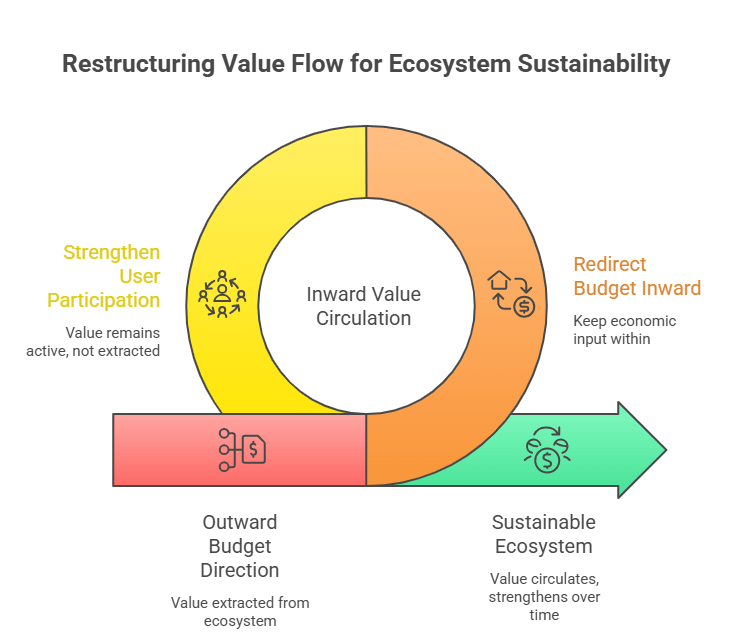
From an investment perspective, this changes the type of questions that become relevant. Instead of asking how much is being spent to acquire users, it becomes more important to understand how effectively that spending is converted into meaningful activity within the system. If the same budget can both attract and sustain engagement, the efficiency of that system increases without requiring constant external input.
This is where the connection to $PIXEL becomes more interesting. When the value is kept within the ecosystem and is not allowed to go out of it, the token is not positioned as a mere inactive element that is just sitting on top of the system. Instead, it gets involved in the internal flow and is affected by the ways in which the activity is generated, sustained, and measured at different points in time. Such a situation is likely to bring about a closer connection between the system design and token dynamics instead of leaving the token dynamics to be governed only by external market conditions.
One more thing that is different with this approach is the way it opens up the scope for changes in how success is measured. Historically, one of the major indicators that a model was working well was that user growth was accelerating. However, it is highly possible that growth without retention or meaningful participation may not provide long-term stability after all. By continually confining value to the system and turning it into a measure of real behavior, you not only get to track the number of users, but also the degree to which they are actively supporting the ecosystem, which is a very important aspect.
This also brings in a degree of transparency that is usually absent in conventional acquisition models. When budgets are allocated to external channels, it usually is quite challenging to measure the real effect of that investment beyond very basic metrics. However, if the same value is spent inside a system, the results not only become clearer but also can be directly traced to particular actions and behaviors.
What I find most compelling about this structure is that it reduces reliance on constant external growth pressure. Instead of continuously needing to put in new capital to keep their activities going, the system can start to support itself through a more efficient use of its current resources. That does not totally get rid of the growth requirement. However, it dramatically adjusts how expansion and stability are weighed against each other. Referring to PIXEL from this vantage point, the attention gets diverted from short-term changes to structural design.
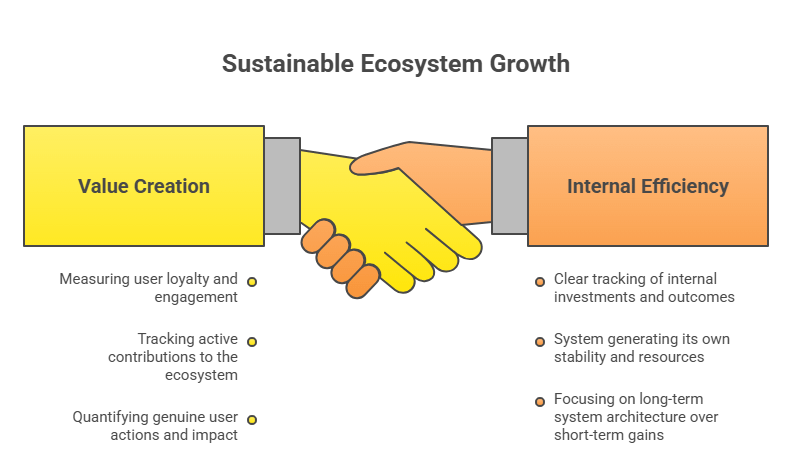
In other words, it is less a matter of trying to guess where the price could head and more a question of grasping how the system is constructed to retain its value over time. Often, that very framework will decide if the ecosystem can hold on to its wholeness as it enlarges. Actually, the more I mulling over it, the more it seems to me a kind of change like this is what doesn't always grab instant spotlight, but is the silent factor that modulates how a system can remain sustainable over the years. It’s not driven by hype or visibility, but by how effectively value is managed inside the environment itself.
And that is what ultimately changed how I look at PIXEL not as something to evaluate purely from the outside, but as part of a system where the direction and retention of value may matter more than the initial flow that brings it in.
