

I kept watching two newer players in Pixels this week.
Both were active.
Both were learning.
Both were putting in time.
But only one looked like he was actually moving.
The other stayed busy.
And stayed flat.
That stuck with me more than price ever does.
People usually judge Pixels through visible numbers.
$PIXEL price.
Volume.
Rewards.
Player count.
Those matter.
They just miss the metric that often decides whether a game world is still alive.
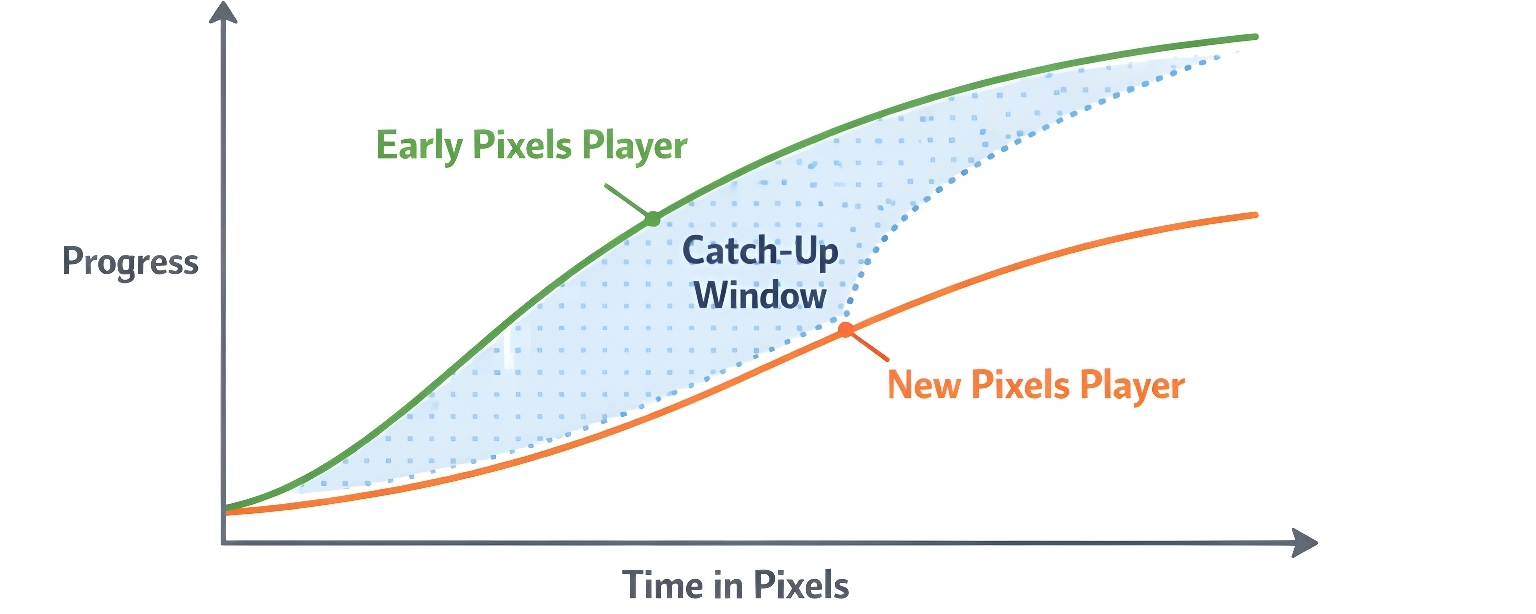
How fast can a smart new player become relevant here?
Not catch veterans overnight.
Not skip the grind.
Something simpler.
If someone starts today, learns the loops, improves routing, studies markets, and shows up consistently...
when does that effort begin to change outcomes?
That timeline tells you more than charts.
Because some economies look healthy while quietly closing underneath.
Rewards still print.
Chats stay active.
Veterans stay rich.
But the real edges were claimed long ago.
Pixels can hide that in small ways newer players feel immediately.
Longer routes.
Crowded stations.
Bad land placement.
Thin inventory.
Veteran relationships.
Knowledge older players forgot was learned.
None of that is automatically unfair.
Time invested should matter.
Early players should carry advantages.
The danger starts quietly.
When advantages stop acting like leads...
and start acting like walls.
That difference decides everything.
A lead tells newer players:
catch me.
A wall tells them:
know your place.
Healthy worlds preserve aspiration.
You begin behind.
But progress feels believable.
Unhealthy worlds preserve rank.
You begin behind.
And the system keeps reminding you.
That’s where retention usually dies.
New players don’t need instant dominance.
They need visible momentum.
A smarter route that pays.
A better market call that matters.
One upgrade that changes pace.
Proof that learning still converts into progress.
Without that, effort becomes ceremonial.
People log in.
Try hard.
Understand more.
Then disappear.
One player walks ten extra seconds every loop.
Another spawns beside everything useful.
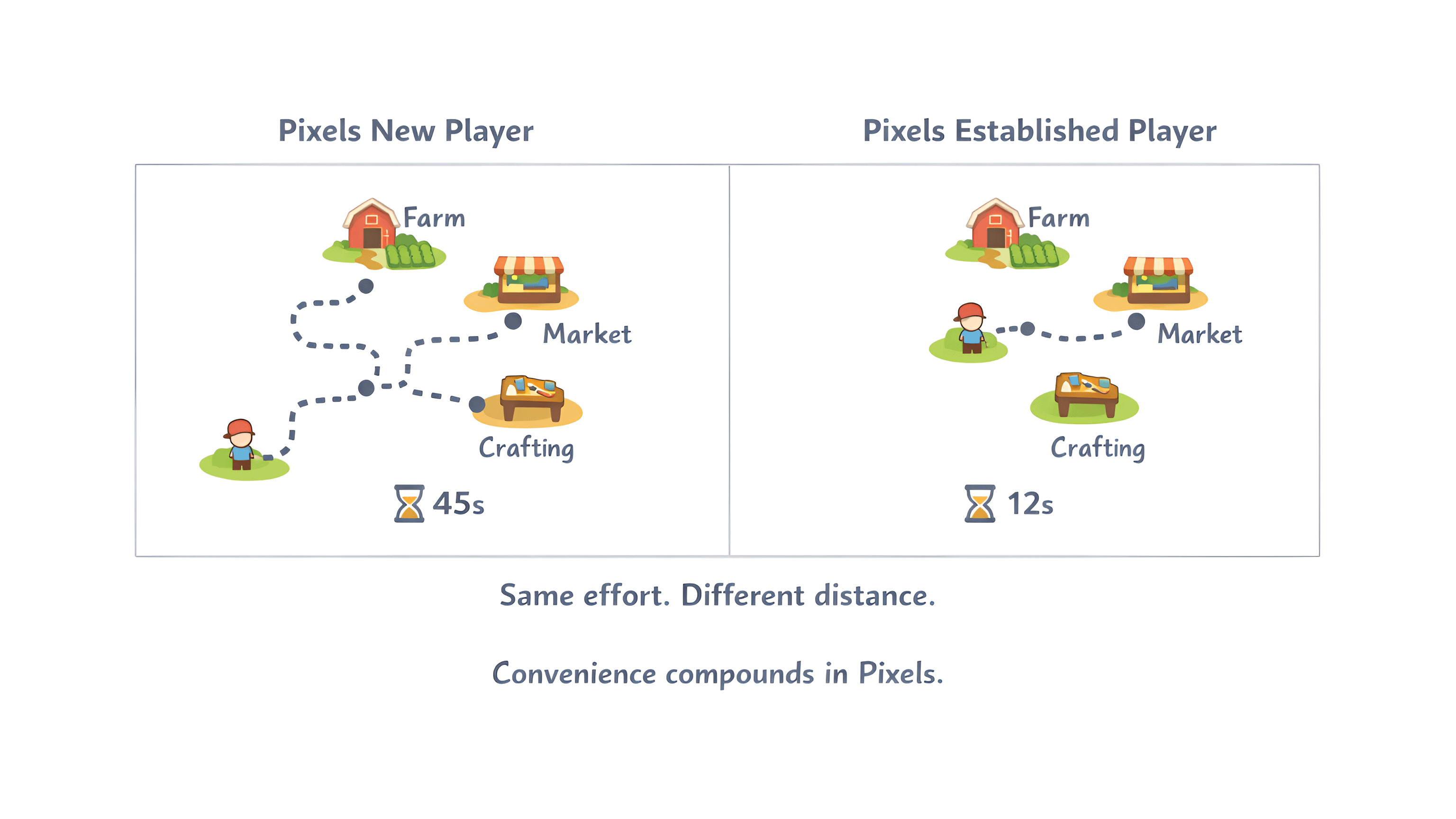
One pays hidden travel tax.
One compounds hidden convenience.
Neither shows up in reward numbers.
Both shape the ladder.
Repeat that enough times and progression starts separating before skill does.
That’s why catch-up speed matters.
Fast catch-up creates fresh competitors.
New traders.
New land demand.
More reasons for veterans to adapt.
Slow catch-up creates static winners.
Same names ahead.
Same plots valuable.
Same routes optimal.
The world still runs.
But surprise dies first.
$PIXEL only matters if the economy underneath keeps creating upward mobility for players who arrive late.
If progress feels permanently reserved for earlier players, demand can become nostalgia instead of growth.
But if expansions, balancing, congestion shifts, new loops, and smarter progression paths keep reopening the ladder...
then veteran advantage can exist without freezing the world.
That’s stronger.
So if someone starts Pixels today and plays intelligently for thirty days...
do they feel closer to the front?
Or closer to understanding who already owns it?