
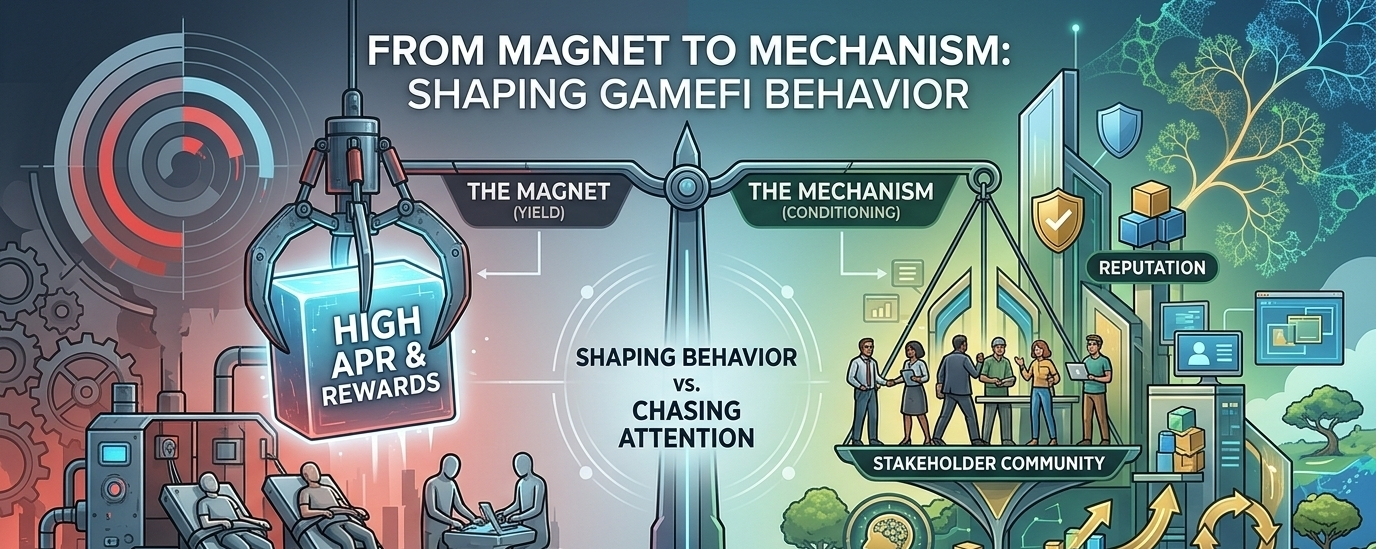
It’s what those rewards train players to do. For a long time, I looked at incentives in a simple way: higher rewards bring more users, more activity, more growth. And that does work at first. But over time, the same pattern keeps repeating. Players aren’t really playing they’re optimizing. They come for yield, stay while it makes sense, and leave the moment it doesn’t. Not because the game fails, but because the system trained them that way from the start.
The challenge is that “valuable behavior” isn’t universal. What matters in one game doesn’t translate cleanly into another. A farming loop, a PvP system, a social world they all define value differently. So the real problem isn’t just incentive design, it’s understanding what should be rewarded in the first place. That’s the part most systems haven’t fully solved.
As you noted, "valuable behavior" isn't universal. In a technical market or a digital governance hub, value might be accuracy or reputation. In a game like Pixels, it might be land stewardship.
The challenge for developers is defining a "Proof of Contribution" that is specific to their world. If the rewards don't reinforce the core loop of the game, they are essentially just a marketing budget masquerading as an economy.
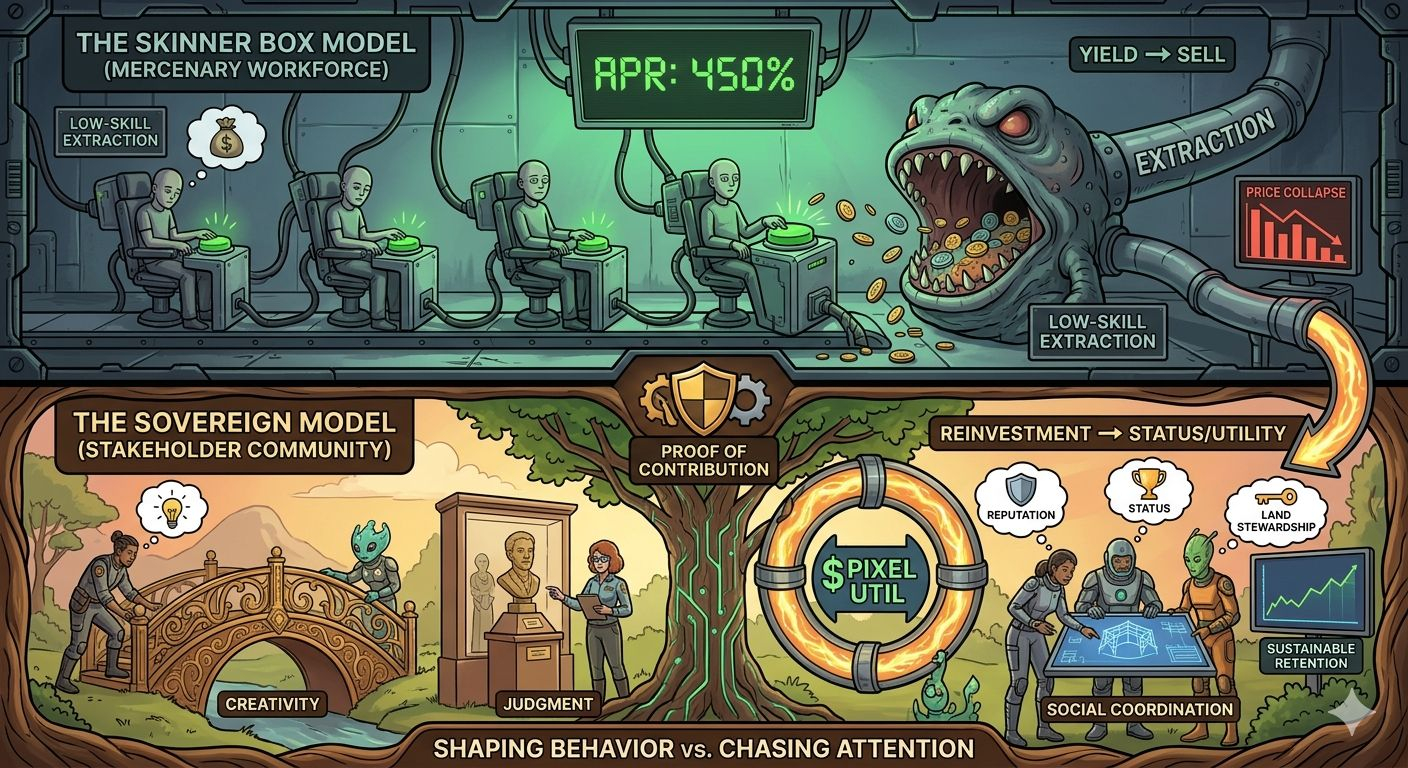
Now I look at things differently. It’s not about how much a system rewards, but what kind of behavior it reinforces. That’s where systems either hold or break. If rewards are tied to time spent or repetitive actions, you attract extraction. It might look active on the surface, but underneath it’s slowly draining. If rewards are tied to actions that actually improve the system building, contributing, meaningful interaction then something shifts. The system starts supporting itself, not perfectly, but in the right direction.
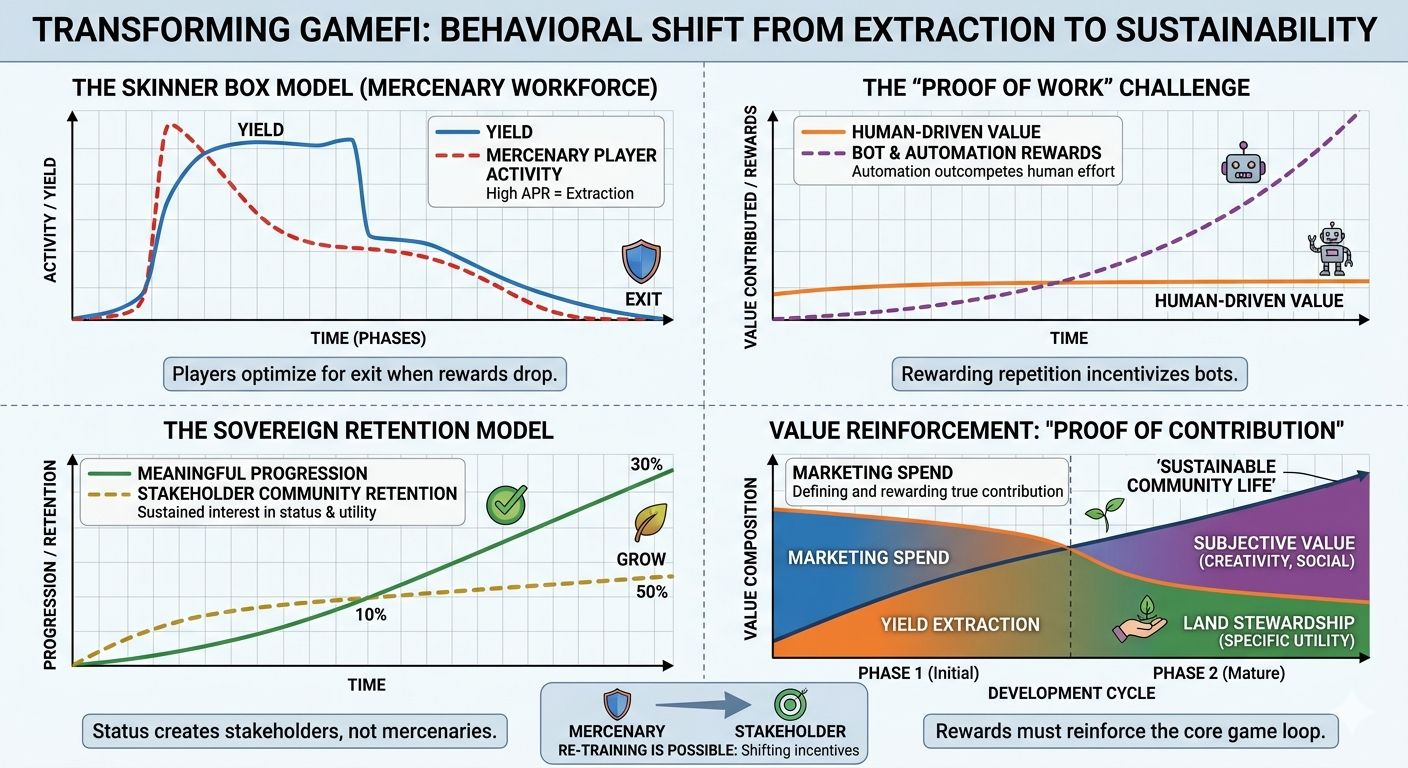
Your closing thought is the most haunting: What kind of players are we creating? If we spend years training a generation of users to treat every digital interaction as a "transactional harvest," we risk making digital spaces purely adversarial. Shifting the focus to shaping behavior is the only way to build a "sovereign" digital environment where the participants actually care if the system exists tomorrow.
In your view, is it possible for a system to "re-train" a mercenary player base once they’ve already entered with an extractive mindset, or does a project have to filter for the right behavior from day one?