
Yesterday I was sorting through old family ledgers from my grandfather's small textile business—yellowed pages tracking every rupee in and out, decisions made with pencil and instinct under dim bulb light. The weight of those choices felt heavy, finite. No resets, no emissions to paper over mistakes.
That feeling lingered as I opened the Binance Square CreatorPad task for Pixels. I clicked into the campaign dashboard, scrolled past the reward tiers, and landed on the specific prompt: Treasury Management and Capital Allocation in Pixels. The screen showed the familiar layout—task description box, character counter ticking up, hashtag field for #pixel. As I typed my post and hit submit, watching the verification status flip from pending, something clicked uncomfortably.
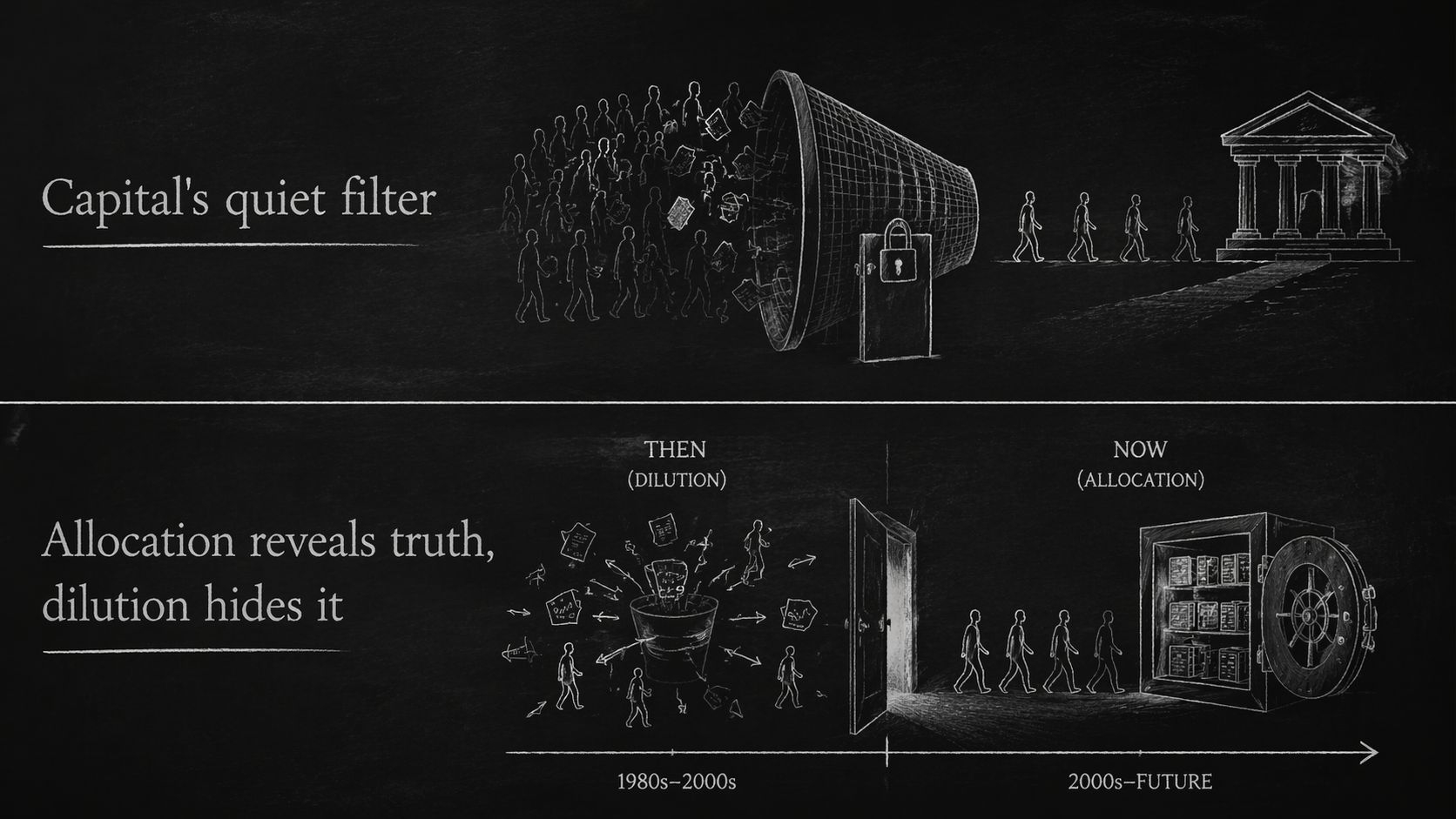
The real disturbance wasn't in the mechanics of allocating PIXEL. It was realizing how casually we've accepted that in crypto, "treasury management" often means little more than deciding how fast to print and distribute more tokens. Pixels forces a sharper lens: staking PIXEL into individual game pools turns users into active capital allocators, not just passive reward collectors. That moment on the task screen—seeing the project name and the explicit call to discuss treasury and allocation—made the idea land. Here was a system where capital doesn't flow outward indiscriminately but gets directed toward specific validators and experiences based on where value is actually being created.
We like to believe that decentralized projects are inherently better at capital allocation because "the market" or "the community" decides. But watching this task unfold, it disturbed me how often that belief masks a deeper laziness. True treasury management isn't about democratic voting on emissions or letting whales steer the ship. It's about confronting scarcity head-on and making hard calls on what deserves funding today versus what gets starved tomorrow. In most crypto narratives, we treat tokens as infinite goodwill—rewards that keep players engaged forever. Pixels quietly challenges that by routing value through staking pools before the average user even logs in. Capital allocation becomes a filter, not a faucet.
This isn't unique to one farming metaverse. Across DeFi and GameFi, we've romanticized "community treasuries" as neutral pots of gold that solve everything from development to marketing. The uncomfortable truth is they often become black holes where accountability dissolves. When everyone has a claim but no one bears the full cost of poor decisions, capital gets misallocated toward hype cycles rather than sustainable building. Real economies—those grandfather-ledger kinds—don't survive on endless dilution. They force trade-offs: protect the core, cut the waste, reward what actually compounds. Crypto's version of treasury management frequently dodges this by reframing inflation as "incentives" or "ecosystem growth." It's a comforting story until the music stops and the reserves are thin.
Pixels serves as a living example here, not because it's flawless, but because its model surfaces the tension. By letting users stake directly into game-specific pools, it turns capital allocation into an ongoing experiment in prioritization. Some paths get funded; others wither. That's riskier to admit than the usual cheer about play-to-earn utopias, yet it feels closer to how actual value emerges—through selection pressure, not blanket distribution.
What stays with me is how rarely we question whether our favorite projects are managing treasury like stewards or like hosts at an open bar. The task didn't let me hide behind generic praise; it pinned the discussion to concrete allocation choices.
How long can we keep pretending that more tokens automatically mean better governance of scarce resources?