
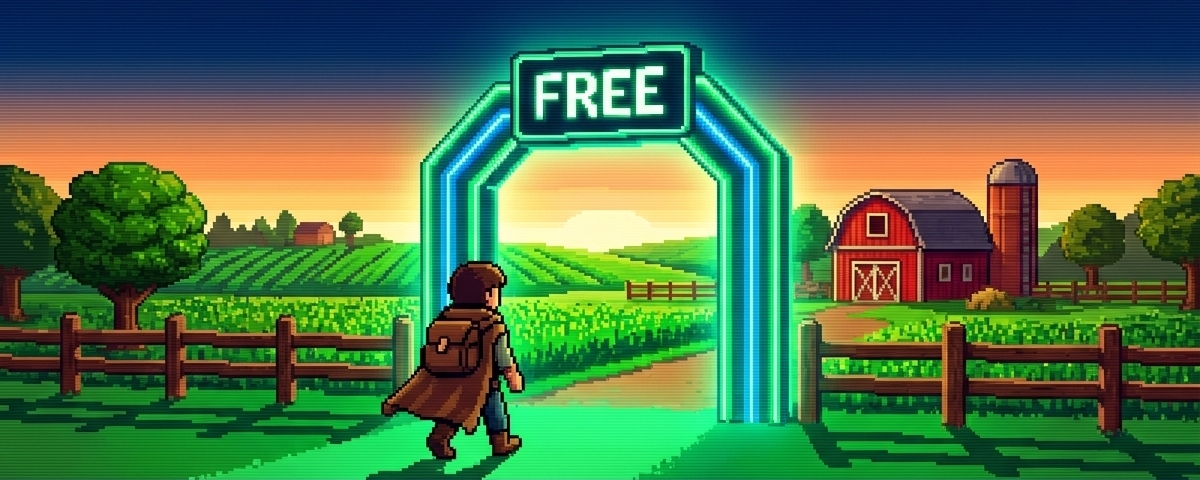
Most Web3 games have it backwards.
They ask you to buy a token, mint an NFT, or connect a wallet before you've seen a single minute of gameplay. You're expected to invest financially in something you've never experienced. That's not onboarding — that's a bet.
Pixels does the opposite.
You download, you play, and the game runs entirely on off-chain Coins at first. No wallet required. No $PIXEL required. You farm resources, cook food, trade goods, explore the world, and figure out whether you actually enjoy the game before any financial decision gets made.
That order matters more than most people realize.
The reason most Web3 games bleed players in the first week is that the people who show up aren't players — they're speculators checking if the token pumps. Speculators leave the moment momentum slows. Players stay because the game is good.
By making the free layer genuinely playable, Pixels filters for actual players. The people who eventually stake $PIXEL, mint NFTs, and participate in the economy are people who chose to deepen their involvement after experiencing the game firsthand.
There's also a practical benefit. The free-to-play layer generates millions of player sessions and with those sessions comes data. Pixels knows what keeps players engaged, where they drop off, which skill trees hold attention longest. That data is what powers Stacked — the AI reward platform built on four years of live operational experience.
Free-to-play isn't a charity model here. It's the top of a funnel that converts informed players into token participants. The ones who upgrade do it because they've decided the game is worth owning a piece of.
That's a different quality of player than one who bought in on hype before ever seeing the game.