
Most people think DeFi growth is only about token prices.
But one of the strongest indicators of real ecosystem activity is actually liquidity usage.
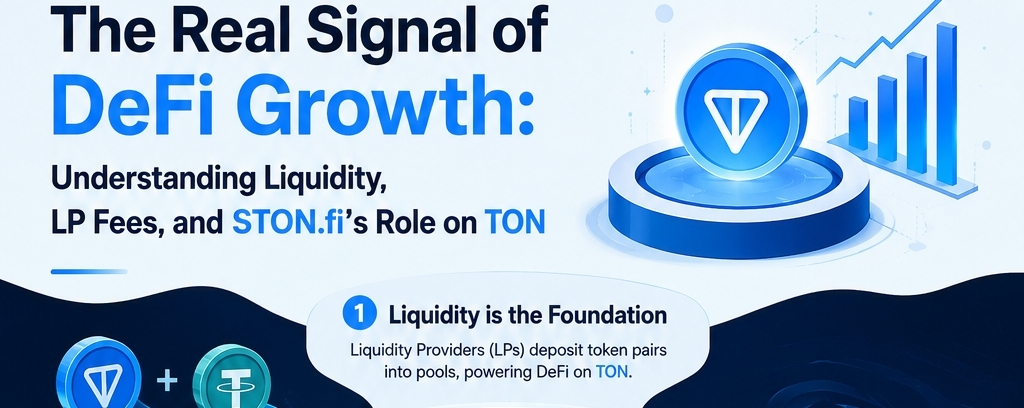
@ston_fi becoming responsible for a massive share of LP fee generation on TON highlights how much liquidity activity is concentrating around its infrastructure.
A lot of beginners hear “LP fees” and think it’s just another technical metric.
But LP fees reveal something deeper.
Every time users swap assets on a decentralized exchange, liquidity providers help make those trades possible by supplying liquidity to pools.
In return, they earn fees from trading activity.
So when a protocol generates a large share of ecosystem LP fees, it usually means;
→ users are actively trading there
→ liquidity is being utilized consistently
→ execution quality is attracting activity
→ the platform is becoming a major liquidity hub
This matters because liquidity is one of the foundations of every DeFi ecosystem.
Without strong liquidity;
→ swaps become inefficient
→ slippage increases
→ trading becomes more expensive
→ user experience worsens
As liquidity deepens, the entire ecosystem becomes more functional.
Better liquidity often leads to;
→ smoother execution
→ stronger market depth
→ easier onboarding
→ improved trading efficiency
One thing I find especially interesting is how this reflects the broader evolution of TON DeFi infrastructure.
The conversation is gradually shifting away from pure speculation and toward usability.
Users increasingly care less about complicated blockchain mechanics and more about whether applications feel fast, simple, and reliable.
That’s where infrastructure protocols become extremely important.
Because behind every smooth DeFi experience is usually a strong liquidity layer coordinating everything underneath.