
I think minting and redeeming are two of the most misunderstood actions in onchain finance.
People usually talk about transfers because transfers are easy to see. One wallet sends, another wallet receives, and the story feels simple.
But minting is not just movement.
Minting is creation.
Redeeming is not just another button either.
Redeeming is exit.
That difference matters a lot to me, because once an asset can be created or removed from circulation, the whole system is no longer just about speed or convenience. It becomes about control. It becomes about trust. It becomes about whether the asset has real discipline behind it.
This is why Newton mint/redeem guardrails feel important to me.A transfer can be wrong and hurt one side badly. But an unauthorized mint can hurt the meaning of the asset itself. It can create supply that should not exist. It can make balances look real when they are not backed by proper approval. It can damage confidence in a way that is hard to repair.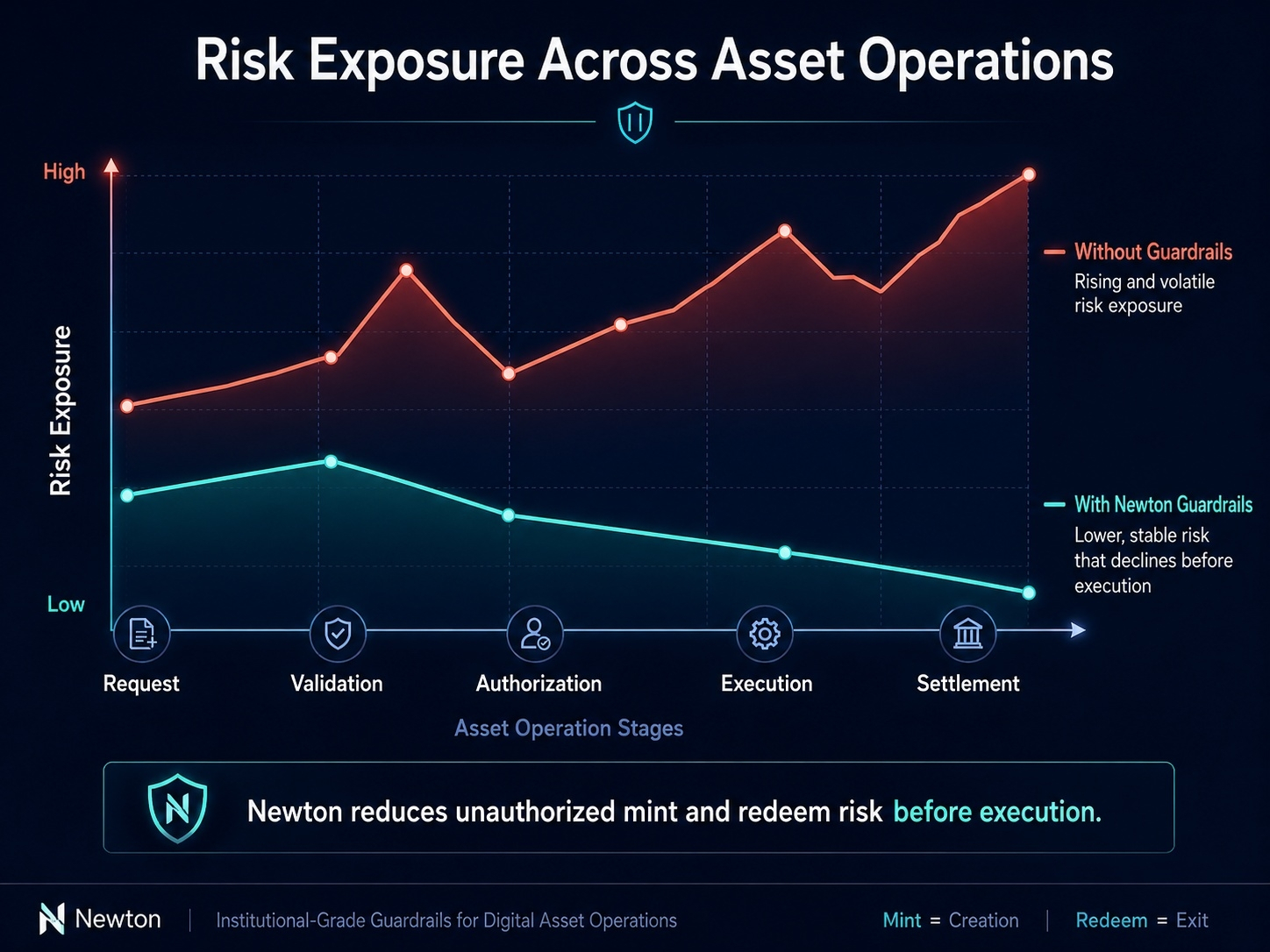
And redemption has its own danger.
Redeeming is the door out. If that door is weak, value can leave the system in the wrong way. It can be drained, released, or settled when it should have been stopped. I think people underestimate this because redemption sounds calm. It sounds like a normal process. But in serious asset systems, the exit door is one of the most sensitive places.
For me, the biggest issue is not only whether someone has access.
Access alone is not enough.
A privileged account can still make a bad request. A backend system can still be compromised. A human approval can still miss something. A smart contract can still receive a call that looks valid on the surface but is wrong in meaning.
That is the part I keep thinking about.
The system should not only ask, “Can this caller do this?”
It should ask, “Should this asset operation happen right now?”
That question changes everything.
Newton makes more sense to me when I see it through that lens. It is not just trying to make asset operations possible. It is trying to make them harder to misuse. Minting should have boundaries. Redeeming should have boundaries. Amounts, timing, asset type, destination, role, and risk should all matter before execution happens.
Because without guardrails, mint and redeem functions become too powerful.
And honestly, power without boundaries is where many systems quietly become fragile.
I do not think users always see this layer. Most people just see a balance and assume the asset is safe. But that balance depends on rules happening behind the scenes. It depends on supply not being created casually. It depends on redemption not being opened to the wrong request. It depends on sensitive operations being treated with more care than normal transfers.
That is why this topic feels bigger than security language.
It is about asset honesty.
It is about whether the system respects the difference between moving value and controlling the asset itself.
Newton guardrails matter because they protect the places where trust can break fastest. Not after damage is done. Not after everyone is confused. Before the operation becomes final.
And maybe that is the part I respect most.
The strongest asset systems are not the ones that let every powerful action move quickly.
They are the ones that know when a powerful action should not move at all.