
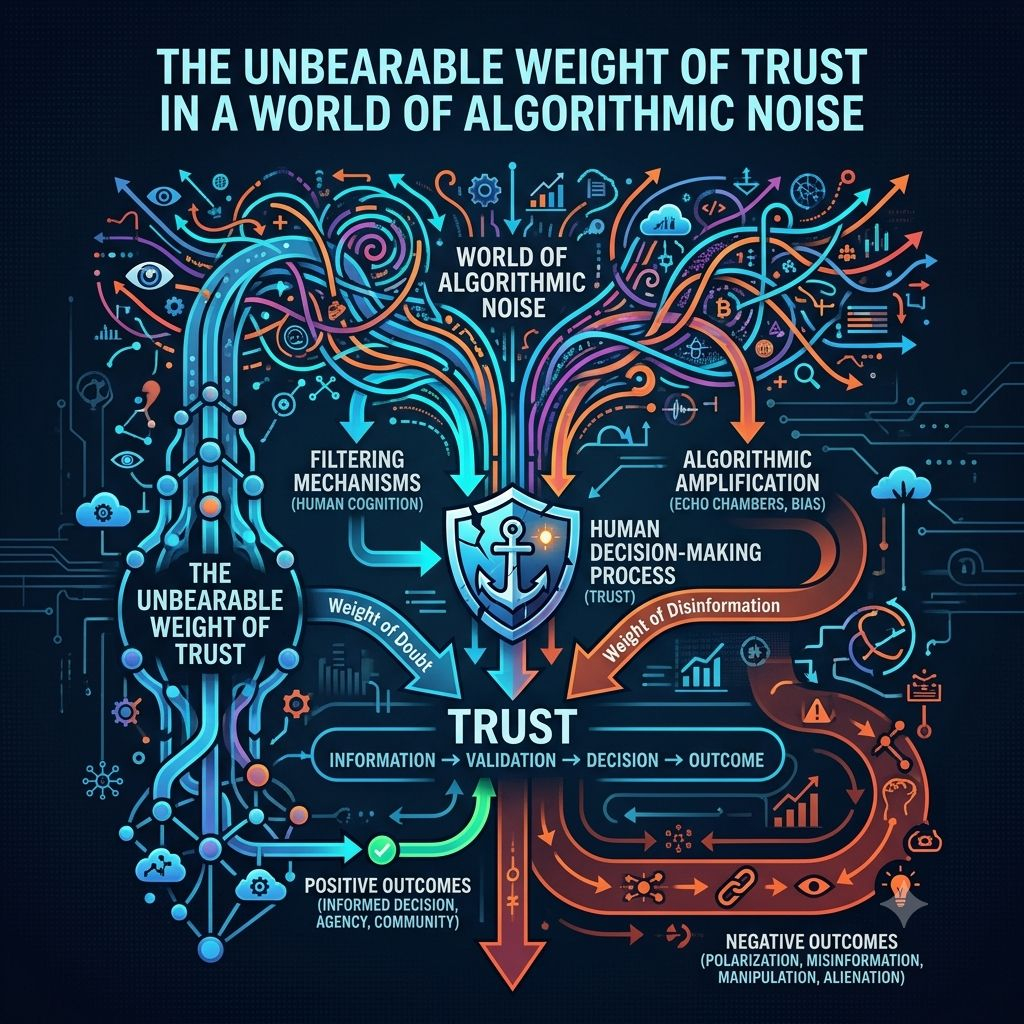
It’s wacting how we talk about artificial intelligence these days, like it’s some sort of infallible oracle that’s going to solve all our problems if we just hand over the keys to the castle, but when you peel back the glossy marketing layers and look at what’s actually happening in the trenches of automated trading and strategy execution, the picture gets a lot messier and a lot more human in its fragility. We are effectively handing over our capital to black boxes, sophisticated ones sure, but black boxes nonetheless, hoping that the lines of code inside them are doing exactly what the developer claimed they would do, and that’s where the entire premise starts to wobble on its foundations because trusting a stranger’s code with your life savings is, frankly, a terrifying prospect when there is zero transparency. This brings me to something I’ve been chewing on for a while now, the Newton Protocol, or NEWT as the ticker faithful call it, because it seems to be attacking this specific anxiety head-on, trying to build a bridge over the trust gap that currently separates retail users from the high-octane world of AI-driven finance, and while the ambition is laudable, the execution is where the real battle lies.
You see, the current landscape of algorithmic trading is a bit like the Wild West, if the Wild West was populated entirely by mathematicians and grifters who were really good at hiding their tracks, and the average person is just left standing there holding a bag of magic beans hoping they sprout into a money tree. A developer claims they have a strategy that beats the market by 15% annually, and maybe they do, or maybe they are just front-running their own users, or maybe the strategy is great until the market turns and then it liquidates everything you own in the blink of an eye, and the worst part is that you would never know until it’s too late because the code is proprietary, hidden, locked away. Newton Protocol is trying to flip that script by establishing a secure rollup specifically designed for these AI-driven strategies, which sounds technical and dry, but let me tell you why it actually matters in a way that goes beyond the tech specs. It’s about verification, not just execution.
Think about it for a second. When you interact with a smart contract on Ethereum today, you can verify the code, you can check the audit, you can see exactly what it’s going to do because it’s transparent, but AI models are these massive, complex beasts that can’t just be shoved onto a blockchain in their entirety without clogging up the network and costing a fortune in gas fees, so we’ve been stuck in this limbo where the settlement is on-chain but the decision-making is off-chain in some AWS server somewhere. That’s the weak link. That’s the choke point where trust erodes. Newton is essentially proposing a specialized environment, a rollup, where these heavy computational tasks can run with some degree of oversight, ensuring that the AI isn’t just hallucinating or, worse, acting maliciously against the user’s interest.
But let’s not get ahead of ourselves, because rolling out a "secure rollup for AI" is one of those things that sounds amazing on a whiteboard but is an absolute nightmare to implement in the real world where incentives are misaligned and people are constantly looking for exploits. The protocol is aiming to serve as a marketplace too, a hub where AI developers can list their strategies and users can pick and choose like they’re shopping for apps on an App Store, but the critical difference here is that these "apps" have direct access to your wallet. I’ve seen this movie before, and it usually ends with a liquidity crisis, but the way Newton is structuring this, with a focus on cryptographic proofs and verification, suggests they are aware of the gravity of the situation. It’s not just about connecting buyers and sellers; it’s about creating a liability shield and a verification layer that says, "Hey, this bot is actually doing what the label says."
The marketplace aspect is fascinating to me because it shifts the paradigm from "find a good trader" to "find a good algorithm," and while that sounds like a subtle distinction, it’s actually a fundamental change in how we think about asset management. You aren’t betting on a person’s intuition, which can be swayed by a bad night’s sleep or a messy divorce; you are betting on code, which is cold and indifferent, and if the code is verified within the Newton Protocol environment, you remove that pesky human element of error, or at least that’s the theory. In practice, AI models drift, they degrade, they encounter edge cases in market data that no one anticipated, and when that happens, the secure rollup needs to be robust enough to handle the fallout without cascading into a systemic failure, which is a massive technical hurdle that keeps developers up at night.
What really grabs my attention, though, is the implication for the AI developers themselves. Right now, if you are a brilliant quant coder, you either go work for a massive hedge fund and sign away your intellectual property, or you try to raise a fund yourself, which is a grueling sales and compliance process. Newton Protocol offers a third path: build a strategy, deploy it on the marketplace, and let the performance speak for itself, taking a cut of the fees or the profits generated by the users who subscribe to your model. It’s permissionless innovation in a space that has been gatekept by institutional giants for decades, and that democratization of access is the kind of thing that gets me excited about crypto all over again, even when the market is in the gutter and everyone is claiming the technology is dead. It’s not dead; it’s just building the infrastructure that matters, quietly and without the fanfare.
However, we have to talk about the NEWT token and the economic incentives because, in this industry, the tech is only half the story, and often it’s the less important half when money is on the line. Tokens can be tricky beasts. They need to serve a purpose beyond just being a speculative vehicle for flippers and day traders, and for a protocol like this, the token has to be deeply integrated into the security model and the governance structure. If the token is just used for paying fees, it’s basically a coupon, but if it’s used for staking to validate the integrity of the AI strategies, or for slashing bad actors who deploy malicious code, then it becomes the glue that holds the whole trust mechanism together. I haven’t seen the final tokenomics laid out in a way that completely satisfies my skepticism yet, but the potential is there for it to be a critical component of the security architecture, forcing developers to put skin in the game.
There is a raw, almost uncomfortable honesty required when evaluating these kinds of projects because the road to hell is paved with whitepapers promising "trustless" systems that end up being anything but. When we say "secure rollup," we are making a massive promise. We are saying that we have solved the oracle problem for complex AI decisions, which is a bold claim. If the AI on Newton Protocol is fed bad data, or if the verification process has a lag that arbitrage bots can exploit, the whole thing unravels. It’s a make-or-break moment for this niche of the market. We’ve seen too many "AI crypto" projects that are just a thin wrapper around a GPT-4 API call, charging users a premium for something they could do themselves with a few lines of Python, so the bar for Newton is incredibly high. They have to prove that this isn’t just a gimmick, that the infrastructure is battle-ready, and that takes time, audits, and real-world usage under heavy fire.
I look at the trajectory of automated trading and it’s clear that the future isn’t manual; it’s not even close. We are moving toward a world where your financial position is managed by a swarm of agents, some rebalancing your portfolio, others hunting for yield in DeFi pools, and others hedging against macro risks, and they need to operate with autonomy and speed. You can’t have a human approving every transaction; that defeats the purpose. But you can’t have a rogue agent draining the treasury either. Newton Protocol sits right at that intersection, trying to tame the wild potential of autonomous agents with the rigid, unyielding discipline of blockchain verification, and if they pull it off, it won’t just be a "win" for the token price, it will be a fundamental shift in how we think about financial autonomy.
The cynical part of me looks at the marketplace component and wonders if we are just creating a more efficient way to lose money, because bad strategies will exist regardless of the platform, and giving them a marketplace might just amplify the noise. But the optimist in me sees a feedback loop forming. If the protocol can effectively tag and track the performance of these AI strategies in a transparent way, the market should theoretically route around the bad actors and reward the competent ones, creating a meritocracy of code rather than a popularity contest of influencers. That is the promise. That is the dream. Whether the reality lives up to it is a different story, but at least they are asking the right questions and building the necessary tools to answer them.
So much of crypto is about speculation on infrastructure that doesn't exist yet, and Newton is no exception in that regard, but the difference I see here is the focus on a very specific, very high-value pain point. The "trust me, bro" era of crypto trading bots needs to die. It has to. We’ve lost too much capital to opaque funds and buggy scripts. If a secure rollup can provide the receipts, the cryptographic proof that an AI agent acted exactly as it was supposed to, then we are adding a layer of accountability that has been missing from this space since the dawn of the blockchain. It forces developers to be better, to be more rigorous, because they can no longer hide behind the opacity of their servers. The code is on the rollup. The proof is in the block.
And let’s be real about the "AI" part of this. It’s become such a buzzword that it’s almost lost all meaning, slapped onto everything from dog coins to photo apps, but in the context of high-frequency strategy execution, AI isn’t a gimmick; it’s a necessity. The datasets are too large, the markets move too fast, and the correlations are too subtle for a human brain to parse in real-time. We need these machines, but we need them on a leash. Newton Protocol is essentially that leash, or perhaps a better metaphor is a transparent harness, allowing the beast to run but ensuring it doesn’t turn around and bite the handler. It’s a delicate balance between freedom and control, and getting that balance wrong results in either a stifled system that can’t perform or a reckless one that destroys capital.
I often circle back to the idea of the developer marketplace because it feels like the most tangible, relatable part of the ecosystem for the average user. You don't need to understand zero-knowledge proofs or optimistic rollups to appreciate the value of a platform where you can browse strategies, see their verified track record, and allocate capital with a click. That user experience is the final frontier. The tech can be brilliant, the cryptography unbreakable, but if the interface is a cluttered mess of command lines and complex parameters, only the nerdiest of whales will use it, and the vision of democratizing AI-driven finance will fail. The protocol needs to be accessible, almost deceptively simple, hiding the monstrous complexity of what’s happening under the hood.
There is also the competitive landscape to consider, because Newton isn’t operating in a vacuum. There are other chains, other layer-twos, other protocols all vying for the title of the "home" for AI agents, and the network effects are brutal. If a competitor launches with better liquidity incentives or captures the mindshare of the top AI developers first, Newton could be left with a ghost town of a marketplace. It’s a race. It’s a brutal, unforgiving race where the winners take all and the losers fade into obscurity, their tokens delisted and their communities disbanded. The team behind NEWT has to be aggressive, they have to ship fast, and they have to ship flawlessly, which is a pressure cooker environment that breaks even the best teams.
But look, despite all the skepticism, the challenges, and the crowded field, the core thesis remains compelling. We are hurtling toward a future where AI manages a significant portion of global wealth, and the current infrastructure is simply not equipped to handle that responsibility with the necessary transparency. The "black box" problem isn't just an inconvenience; it's a systemic risk. Newton Protocol is attempting to build the glass box, a container where the magic happens but it’s visible, verifiable, and secured by the immutable laws of cryptography. It’s a lofty goal, bordering on audacious, but those are the only kinds of goals worth pursuing in this industry. The safe bets don't change the world; they just maintain the status quo. And the status quo of hidden algorithms managing billions in silent, opaque channels is a ticking time bomb. If NEWT can defuse that bomb while providing a marketplace that empowers developers and protects users, then maybe, just maybe, we’ll look back in five years and wonder how we ever traded without this kind of infrastructure. It’s raw, it’s risky, and it’s unproven, but it’s exactly the kind of innovation that the machine needs to evolve beyond the casino it currently resembles.
@NewtonProtocol #Newt #newt $NEWT