
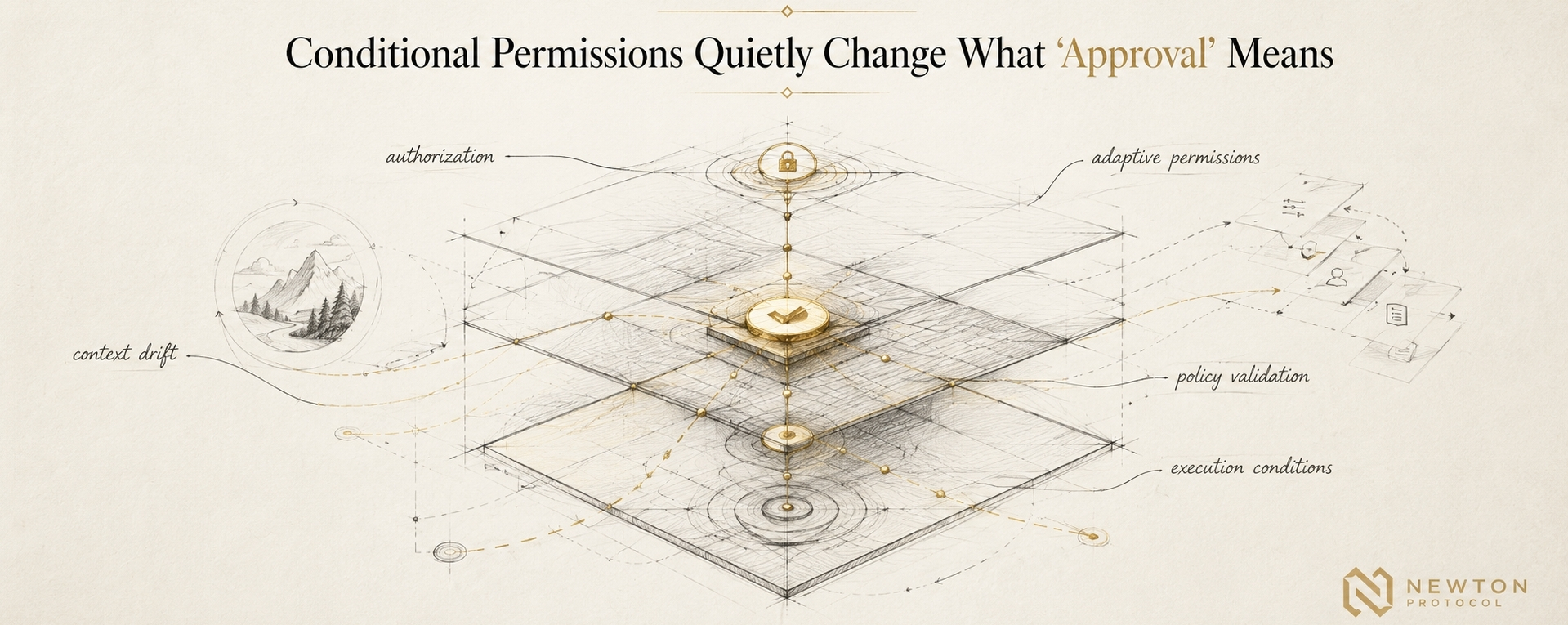
I’ve been spending more time thinking about what actually changes once systems stop treating decisions like fixed outcomes.
At first, I viewed policy validation as a simple checkpoint.
Verify
Validate
Proceed
Clean boundaries
Clear outcomes
But the more I look at systems built around adaptive execution, the harder that model feels to hold onto.
Because conditional policies don’t really behave like traditional fixed logic anymore.
They behave more like ongoing negotiation between changing conditions and active system behavior.
That difference sounded smaller when I first noticed it.
Now I’m not sure it is.
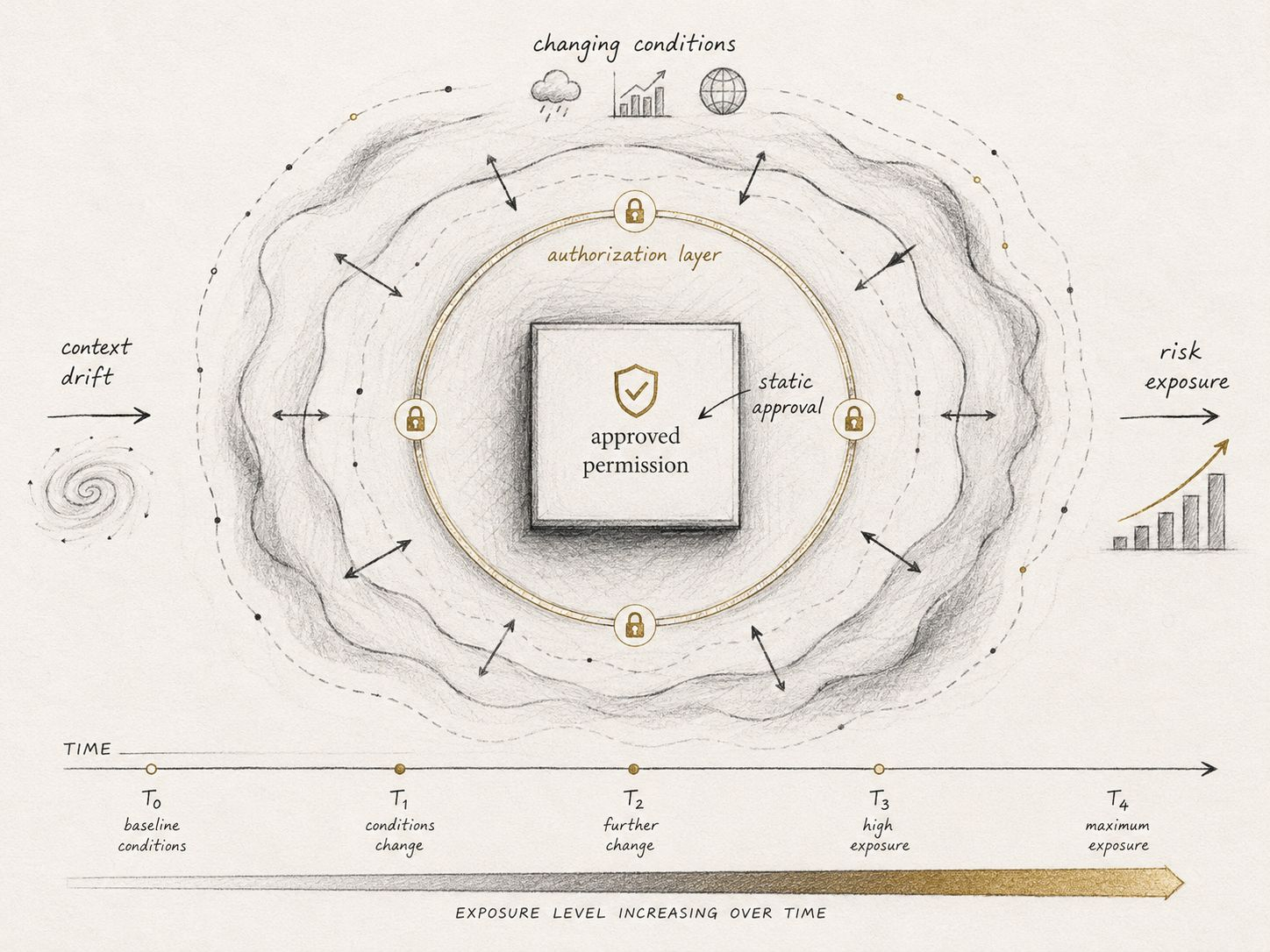
Most financial systems still treat validation as a static event. A request arrives, conditions are checked, the operation passes review, and the system moves forward. The logic mostly disappears once the process survives its initial checks.
Newton Protocol keeps pushing against that assumption in ways I don’t think people fully appreciate yet.
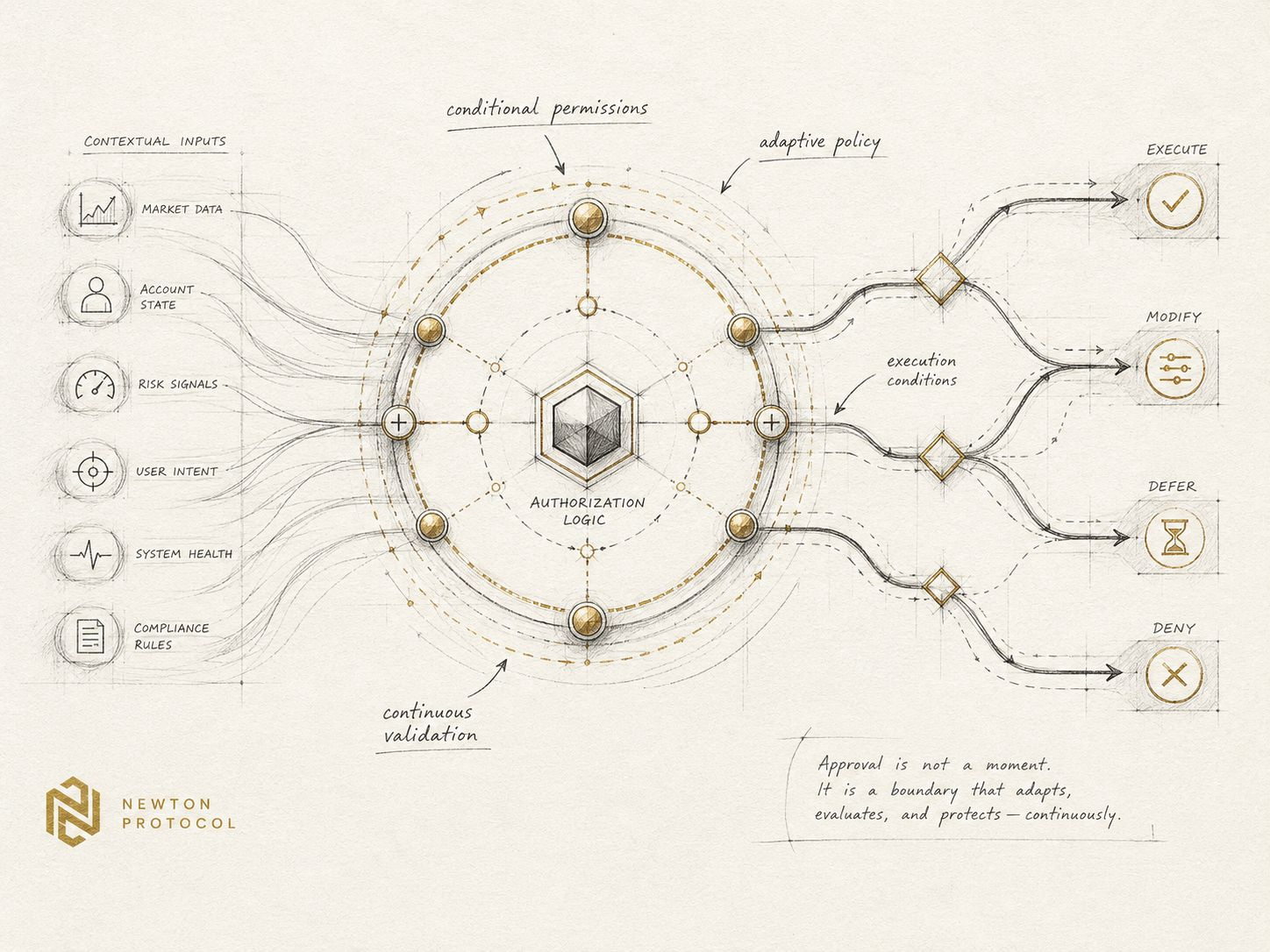
Because programmable policy layers can continuously reevaluate whether active execution conditions still satisfy evolving system constraints.
That changes the role validation plays inside financial infrastructure.
A successful decision no longer behaves like a permanent state.
It becomes dependent on surrounding conditions that may continue changing after the original validation occurred.
“The system didn’t fail.
The environment around it changed.”
I keep coming back to that sentence.
Especially when thinking about software systems interacting across environments faster than institutional review cycles were originally designed to handle.
Static decision layers age faster than most systems realize.
Because adaptive environments continuously generate new conditions around previously accepted behavior.
Risk changes.
Exposure changes.
Dependencies change.
The system state remains.
The conditions that justified it don’t.
That tension feels larger than people admit.
Most infrastructure still assumes validated behavior survives context drift.
I’m starting to think that assumption quietly breaks first.
Because the failure may not come from invalid activity.
It may come from previously accepted behavior surviving long enough inside changing conditions that the original validation quietly stops making sense.
“Validation used to be an event.
Conditional systems turn it into a living boundary.”
That shift has been sitting with me more than I expected.
Especially because programmable policy layers like Newton Protocol are not simply deciding whether systems can proceed.
They are forcing infrastructure to define the conditions under which a validated state should continue remaining valid.
That feels like a different architecture entirely.
Not execution-first infrastructure.
Condition-first infrastructure.
And I’m starting to wonder whether adaptive financial systems eventually force infrastructure to move in that direction by necessity rather than preference.
Because once execution scales faster than humans can continuously reevaluate changing conditions manually, static validation layers begin carrying assumptions they were never designed to hold.
Maybe that’s manageable for simpler environments.
I’m less certain it remains manageable once delegated coordination, automated financial systems, and cross-system interactions begin operating continuously across evolving conditions.
At some point, the validated state itself may stop being the thing systems trust most.
The surrounding conditions become the real infrastructure.
And I’m not sure most financial systems were designed for system states that age in real time.