
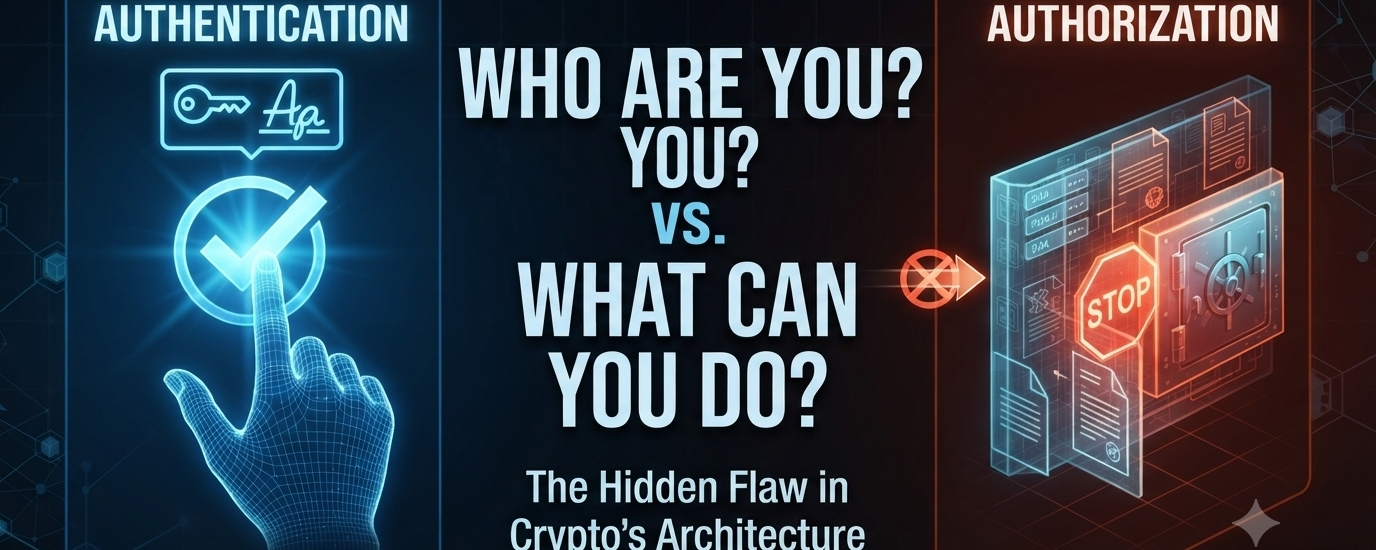
I remember sitting in a dimly lit conference room years ago listening to some devs brag about how the blockchain finally solved the identity crisis. They were convinced that because we had private keys and digital signatures we had fundamentally fixed the way the internet works.
It felt like a breakthrough at the time but looking back I realize we were just patting ourselves on the back for solving the easy half of the equation. We nailed authentication while completely ignoring the messy reality of authorization.
It is a classic case of confusing two very different things. Think about your life outside of this digital bubble for a second. Your office badge proves exactly who you are when you walk through the lobby but that piece of plastic definitely does not grant you access to the CEO’s private vault.
A pilot holds the keys to a multimillion dollar aircraft yet they are still grounded until an invisible hand in the control tower gives them the green light. We have always understood that authentication is just the entry fee while authorization is the actual work of governance.
The crypto industry spent a decade acting like a valid signature was an automatic golden ticket to do whatever you wanted. It was fine when it was just a few cypherpunks trading magic internet money in a digital basement. But now that we are dragging institutional capital and tokenized real world assets onto the chain that approach looks reckless.
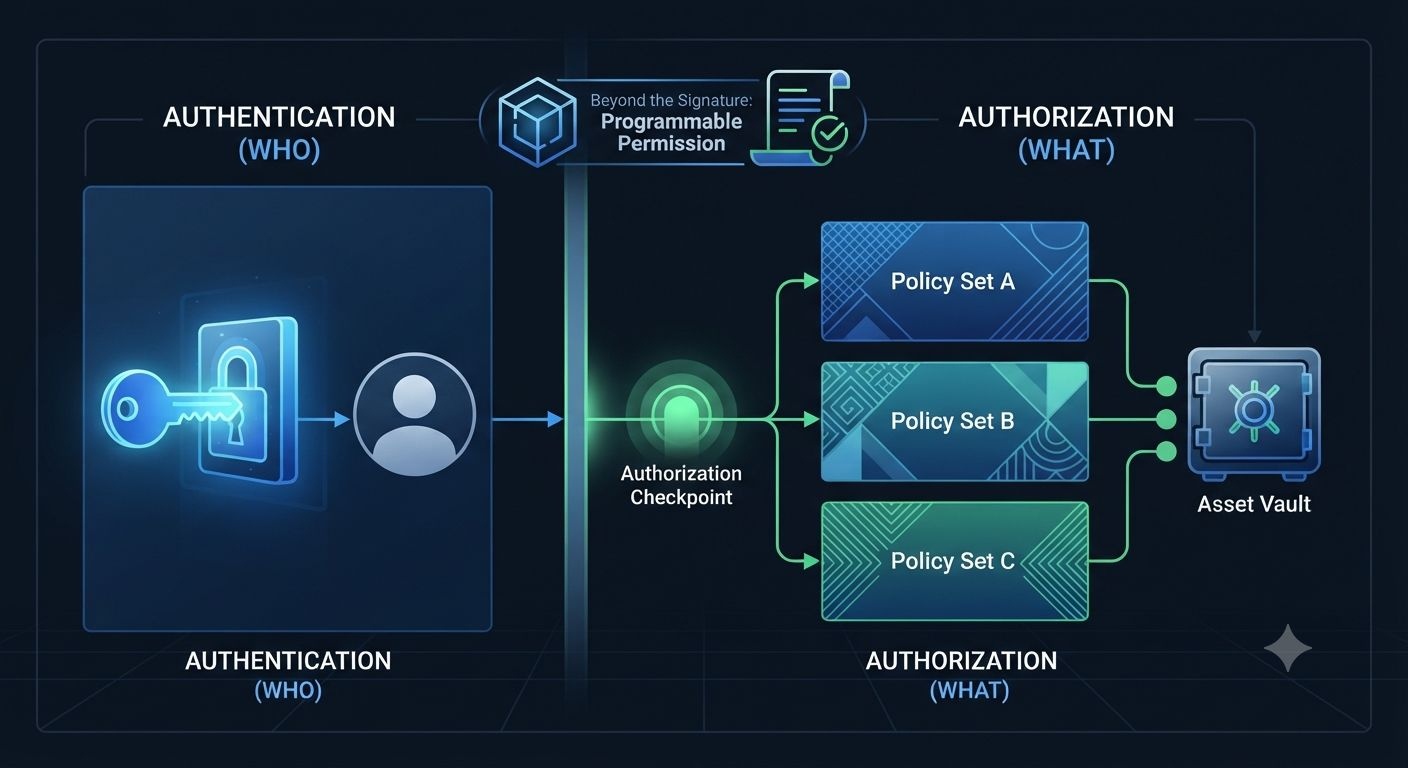
We are essentially handing people the keys to the kingdom and hoping they play nice because the current infrastructure does not know the difference between a user and an authorized operator.
That is where NEWT is trying to flip the script by finally acknowledging that we need a programmable middle layer. Instead of treating every signed transaction as a finished deal NEWT forces the network to stop and ask if the action should actually happen based on a set of pre-defined policies. It is not just about proving ownership anymore because any system worth its salt needs to bake compliance and risk management directly into the transaction lifecycle.
They are essentially building an enforcement checkpoint that runs before the ledger ever gets updated.
It feels a lot like how the legacy giants like Visa operate behind the scenes. When you tap your card at a terminal the system is not just verifying your identity. It is performing a lightning fast audit to see if that specific payment makes sense within the rules of your account.
NEWT is trying to bring that level of sanity to the chaotic world of onchain finance by moving us toward an internet of policies. It is a shift from just recording what happened to actively enforcing what is permitted to happen.
We have spent years obsessed with making blockchains faster and cheaper but maybe we were focusing on the wrong metrics all along. The real bottleneck is not the speed of the consensus engine but the lack of granular control over how assets move.
We built a high speed highway but forgot to put in any stop signs or traffic lights. Defining who can do what with t heir assets is the missing piece of the puzzle and it might just be the thing that finally brings the next wave of capital into this ecosystem.
If the first generation of crypto was about proving who owned the digital gold then the next generation is going to be about who gets to hold the leash. I am betting that the most important innovation of this decade will not be a new consensus algorithm but the realization that trust needs to be programmable before a single block is confirmed.
We are finally moving away from the wild west and toward a world where the architecture itself understands the difference between being allowed to enter a room and being allowed to burn it down.