
Walrus started with a simple but powerful idea. People should not have to trust big centralized companies to store their data or manage their digital activity. In a world where most online storage lives on servers owned by a few corporations Walrus offers a different path. It uses blockchain technology to give users more control more privacy and more freedom over how their data is stored and shared.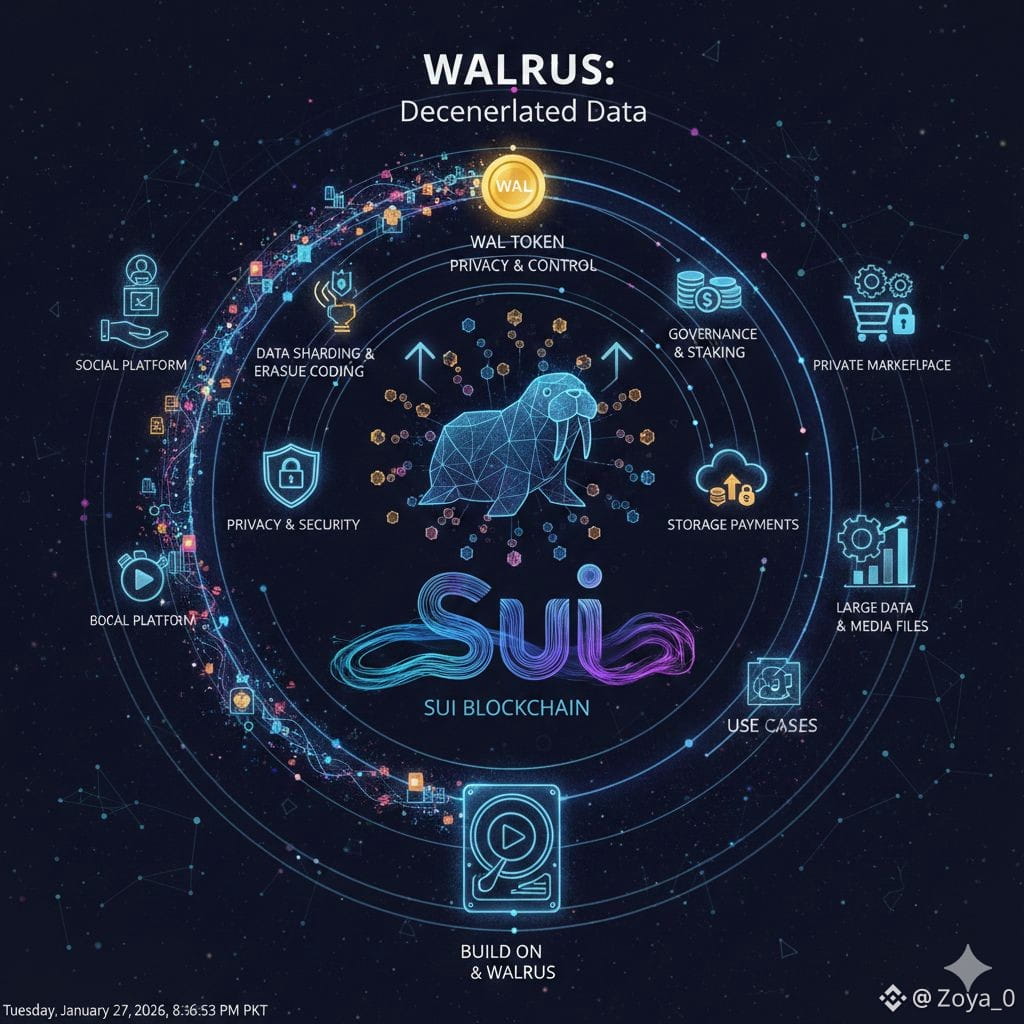
The project is built on the Sui blockchain which plays a big role in how Walrus works. Sui is designed for speed and scalability and that matters a lot when dealing with large files and constant data access. Walrus uses this foundation to create a system that feels smooth and efficient rather than slow or complicated. Instead of forcing every piece of data directly onto the blockchain Walrus spreads the work across a decentralized network while still keeping everything verifiable and secure.
At the center of the ecosystem is the WAL token. This token is what connects users to the protocol. It is used to pay for storage participate in governance and take part in staking. WAL is designed to have real purpose inside the system. The more people use Walrus the more the token becomes part of daily activity rather than just something to hold and trade.
One of the strongest ideas behind Walrus is privacy. When people use traditional cloud storage they often give up control without realizing it. Files may be encrypted but the provider still decides the rules. Walrus removes that middle layer. Data is broken into pieces and spread across many nodes. No single node can see the full file. This makes censorship much harder and greatly reduces the risk of data exposure.
The way Walrus handles data is both smart and efficient. It uses erasure coding which means files are transformed into fragments that can still be recovered even if some parts are missing. This reduces costs while improving reliability. Users do not have to worry about a single server going down or losing access. The system is built to keep working even when parts of the network change.
Walrus also focuses heavily on large data use cases. Many blockchains struggle with large files but Walrus is designed for them. Through blob storage the network can handle media files datasets and application data without losing decentralization. This makes it useful for developers who want to build applications that go beyond simple transactions.
For developers Walrus opens new possibilities. Applications can store private user data verify access and share information without relying on centralized databases. This can support social platforms private marketplaces enterprise tools and many other use cases where trust and privacy matter. Developers can focus on building experiences while Walrus handles the heavy lifting in the background.
Governance is another important part of the Walrus story. People who hold WAL tokens are not just users. They are participants in shaping the future of the protocol. Decisions about upgrades rules and direction can be influenced by the community. This creates a sense of shared ownership and long term alignment between the project and its users.
Staking adds another layer to the ecosystem. Users who stake WAL help secure the network and keep it running smoothly. In return they are rewarded for their contribution. This encourages people to think long term and support the health of the protocol rather than just using it temporarily.
From an enterprise point of view Walrus offers something very appealing. Businesses often need secure storage compliance and control over data. Walrus provides these benefits without relying on a single provider. Because the network is decentralized there is no central authority that can shut it down restrict access or change the rules overnight.
For individuals Walrus represents a shift in mindset. Instead of handing over personal data to platforms users can store their information in a system they help control. This aligns with a growing awareness around data ownership and digital rights. People want more say in how their information is used and Walrus supports that vision.
By building on Sui Walrus positions itself for future growth. As demand increases the network can scale without hitting major limitations. This is important because decentralized storage will only become more valuable as applications grow more complex and data heavy.
Walrus is not trying to be flashy. It focuses on infrastructure. Storage privacy and data availability are not always exciting topics but they are essential. Without them the decentralized world cannot truly function. Walrus quietly works on these foundations with the goal of supporting many other projects on top of it.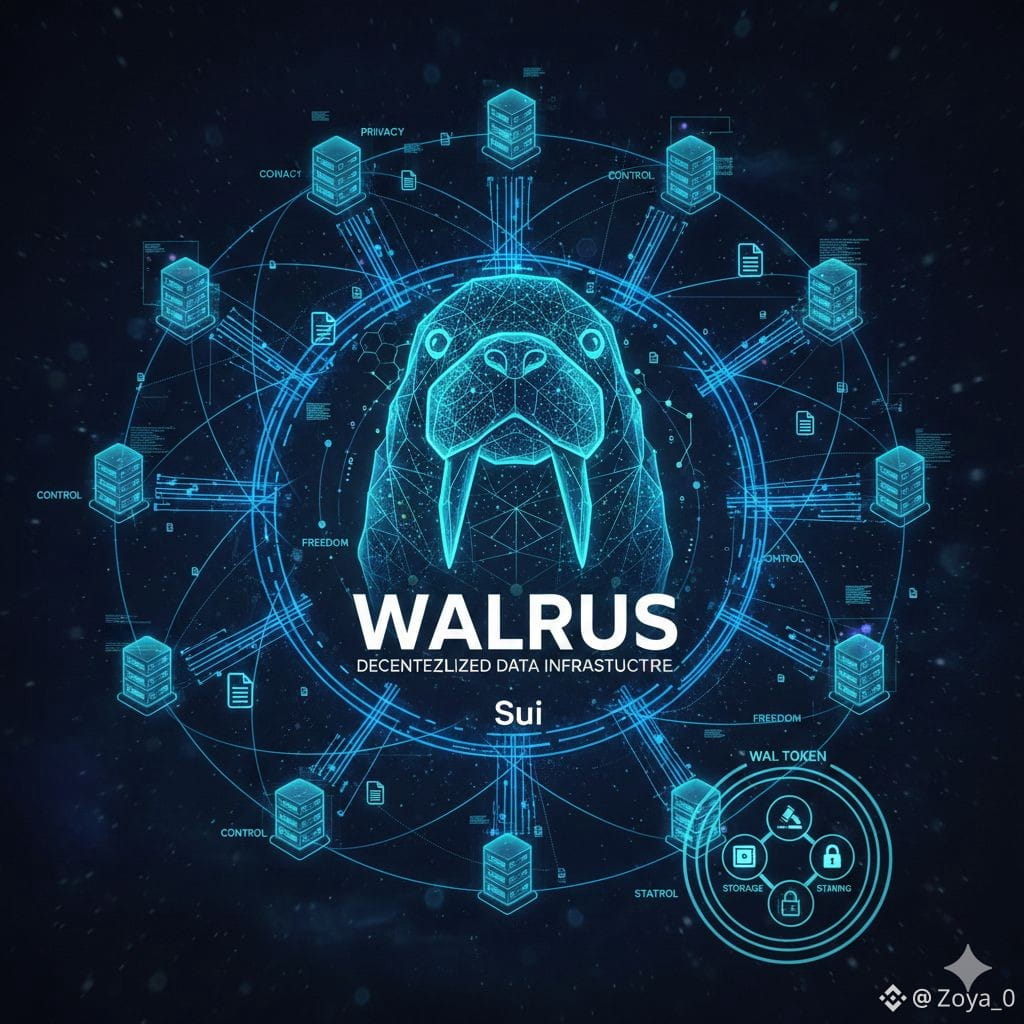
In the end Walrus is about trust without intermediaries. It shows how data can be stored securely privately and efficiently without relying on centralized systems. By combining real utility community governance and strong technical design Walrus presents a practical vision of how decentralized infrastructure can work in everyday life.

