
As 2026 begins under heightened market stress, Bitcoin (BTC) is once again testing investor conviction. Following its October 2025 all-time high above $126,000, BTC has declined to levels below $64,000, representing a drawdown of more than 50% in just over three months. While dramatic, this episode is far from unprecedented. Bitcoin’s history is defined by cycles of sharp collapses followed by equally remarkable recoveries.
This analysis examines Bitcoin’s most significant historical drawdowns through technical, on-chain, and macroeconomic lenses, and compares them to the current sell-off. By identifying recurring patterns such as market structure breakdowns, leverage cascades, whale behavior, and policy shocks, this study aims to provide insight into market recovery dynamics, risk management, and the structural resilience of decentralized networks. Whether one approaches Bitcoin as a trader, investor, or observer of financial systems, understanding these cycles is essential to navigating periods of uncertainty.
𝟭. 𝗗𝗲𝗳𝗶𝗻𝗶𝗻𝗴 𝗮 “𝗠𝗮𝗷𝗼𝗿 𝗕𝗶𝘁𝗰𝗼𝗶𝗻 𝗗𝘂𝗺𝗽”
A “major dump” in Bitcoin markets typically refers to a price decline exceeding 50%, unfolding over weeks or months. These events are rarely driven by a single factor; rather, they emerge from a convergence of speculative excess, external shocks, and structural imbalances.
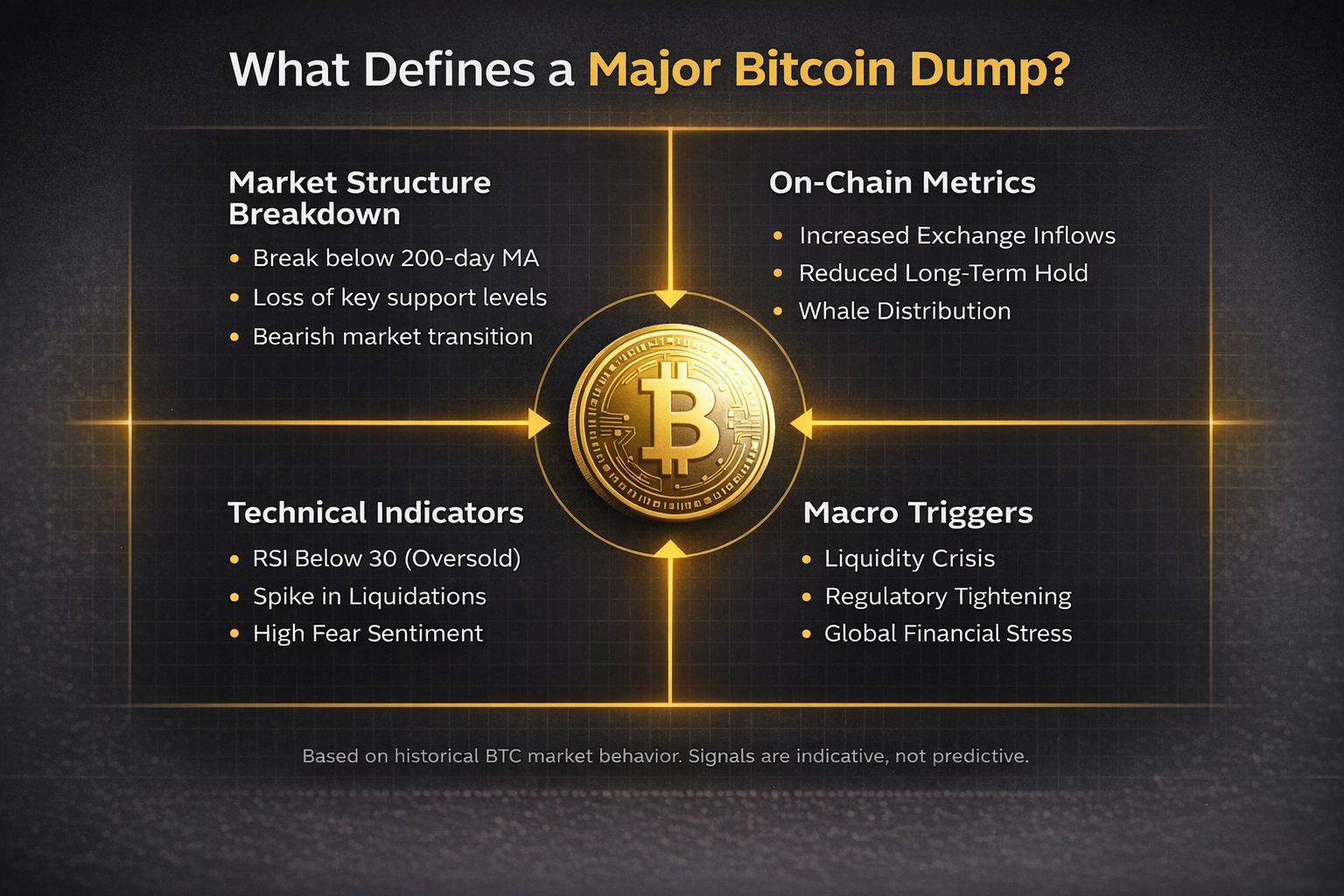
Common indicators include:
● Market Structure: Breakdown Sustained price action below key supports, particularly the 200-day moving average (MA), often signals a transition to bearish conditions.
● On-Chain Metrics: Elevated exchange inflows suggest increased selling intent, while reduced long-term holder (LTH) accumulation and whale distribution often precede or confirm capitulation phases.
● Technical Oscillators: An RSI (Relative Strength Index) below 30 typically indicates oversold conditions. While not a timing tool, such readings have historically aligned with late-stage sell-offs.
● Macroeconomic Triggers Tightening liquidity, regulatory developments, or systemic financial stress frequently amplify downward momentum.
On-chain analytics platforms track real-time wallet behavior to interpret market psychology. Exchange inflows, for example, measure assets moving from private wallets toward trading venues and are often used as a proxy for fear-driven selling. On Binance, similar insights can be inferred through tools such as 𝗕𝗶𝗻𝗮𝗻𝗰𝗲 𝗼𝗿𝗱𝗲𝗿 𝗯𝗼𝗼𝗸 𝗱𝗲𝗽𝘁𝗵, 𝘃𝗼𝗹𝘂𝗺𝗲 𝘀𝘂𝗿𝗴𝗲𝘀, 𝗼𝗽𝗲𝗻 𝗶𝗻𝘁𝗲𝗿𝗲𝘀𝘁 𝗰𝗵𝗮𝗻𝗴𝗲𝘀, 𝗮𝗻𝗱 𝗹𝗶𝗾𝘂𝗶𝗱𝗮𝘁𝗶𝗼𝗻 𝗱𝗮𝘁𝗮, which often coincide with periods of heightened selling pressure.
𝟮. 𝗛𝗶𝘀𝘁𝗼𝗿𝗶𝗰𝗮𝗹 𝗕𝗶𝘁𝗰𝗼𝗶𝗻 𝗗𝗿𝗮𝘄𝗱𝗼𝘄𝗻𝘀: 𝗖𝗮𝘂𝘀𝗲𝘀, 𝗧𝗲𝗰𝗵𝗻𝗶𝗰𝗮𝗹 𝗦𝗶𝗴𝗻𝗮𝗹𝘀, 𝗮𝗻𝗱 𝗥𝗲𝗰𝗼𝘃𝗲𝗿𝘆 𝗟𝗲𝘀𝘀𝗼𝗻𝘀
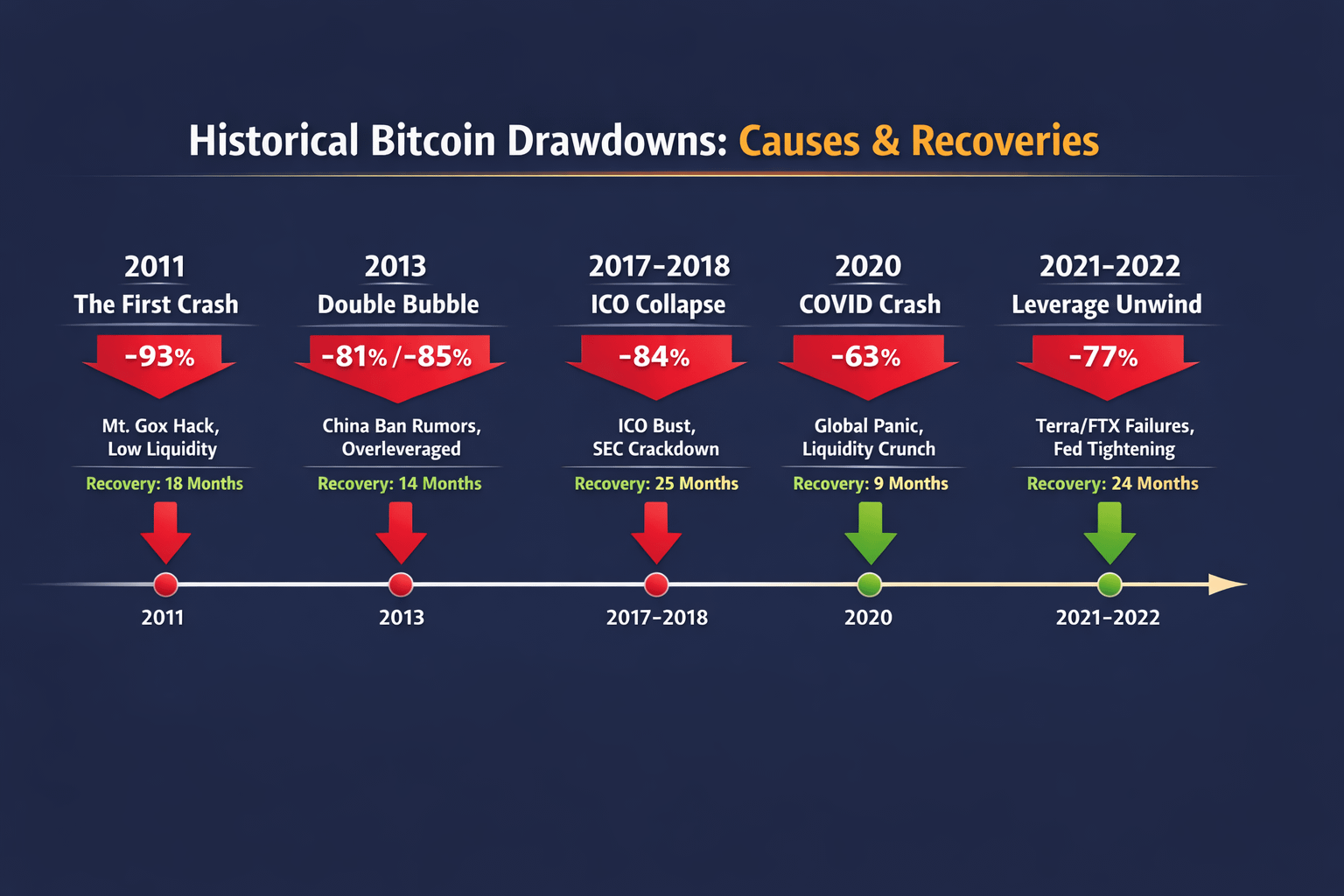
📍𝟮𝟬𝟭𝟭: 𝗧𝗵𝗲 𝗙𝗶𝗿𝘀𝘁 𝗦𝘁𝗿𝘂𝗰𝘁𝘂𝗿𝗮𝗹 𝗖𝗼𝗹𝗹𝗮𝗽𝘀𝗲 (-𝟵𝟯%)
• Price Action: BTC surged from $0.30 to $32 before collapsing to $2 within five months.
• Possible causes: The Mt. Gox security breach, compounded by extremely thin liquidity.
• Technical Insight: Severe oversold conditions and indiscriminate selling by early miners.
• Recovery: Approximately 18 months, supported by increasing adoption and the 2012 halving.
• Lesson: Early-stage markets are highly fragile; risk sizing is critical.
📍𝟮𝟬𝟭𝟯: 𝗧𝗵𝗲 𝗗𝗼𝘂𝗯𝗹𝗲 𝗕𝘂𝗯𝗯𝗹𝗲 (-𝟴𝟭% / -𝟴𝟱%)
• Price Action: Two rallies, $13 to $266 (April, 2,000% gain), crash to $50 (81%); then to $1,242 (December), and finally down to $177 (85% drop).
• Possible causes: China ban rumors, Mt. Gox issues again; overleveraged speculation in a maturing but still illiquid market.
• Technical Insight: Bollinger Bands expanded massively (high volatility); on-chain showed whale distributions as early adopters cashed out. RSI hit 15, signaling extreme fear.
• Recovery: 14 months to new highs, fueled by institutional interest and halving anticipation.
• Lesson: Regulatory shocks are temporary; watch global news for sentiment shifts.
📍𝟮𝟬𝟭𝟳–𝟮𝟬𝟭𝟴: 𝗧𝗵𝗲 𝗜𝗖𝗢 𝗖𝗼𝗹𝗹𝗮𝗽𝘀𝗲 (-𝟴𝟰%)
• Price Action: From $997 to $19,891 (peak December 2017), then to $3,122 by December 2018, an 84% crash over 12 months.
• Possible Causes: ICO mania burst; regulatory crackdowns (SEC on scams); futures launch enabled shorting.
• Technical insight : Exchange inflows surged while long-term holders accumulated near cycle lows.
• Recovery: 25 months to surpass highs, powered by 2020 halving and COVID stimulus.
• Lesson: Bubbles build on hype; use on-chain accumulation signals for bottoms.
📍𝟮𝟬𝟮𝟬: 𝗧𝗵𝗲 𝗖𝗢𝗩𝗜𝗗-𝟭𝟵 𝗟𝗶𝗾𝘂𝗶𝗱𝗶𝘁𝘆 𝗦𝗵𝗼𝗰𝗸 (-𝟲𝟯%)
• Price Action: From $10,500 to $3,850 in March, a 63% flash crash in days, amid global panic.
• Possibe Causes: Liquidity crunch from COVID lockdowns; risk-off selling across assets.
• Technical insight : RSI to 15 (oversold); massive liquidations ($1B+ in derivatives); but LTHs held firm, with reduced outflows post-crash.
• Recovery: Quick rebound in months, hitting $69K by 2021 on stimulus and adoption.
• Lesson: External shocks are short-lived; crypto's correlation to stocks decreases over time.
📍𝟮𝟬𝟮𝟭–𝟮𝟬𝟮𝟮: 𝗧𝗵𝗲 𝗟𝗲𝘃𝗲𝗿𝗮𝗴𝗲 𝗨𝗻𝘄𝗶𝗻𝗱 (-𝟳𝟳%)
• Price Action: Peak $69,000 (November 2021) to $15,599 (November 2022), 77% decline over 12 months.
• Possible Causes: Fed rate hikes, Terra/FTX collapses ($60B lost), overleverage in DeFi.
• Technical insight : Multiple death crosses (50-day MA below 200-day); on-chain showed record inflows to exchanges (selling pressure), with whale capitulation.
• Recovery: Gradual, culminating in new highs by 2025, driven by ETFs and halving.
• Lesson: Excess leverage magnifies drawdowns; funding rates and open interest are critical early-warning indicators
𝟯. 𝗧𝗵𝗲 𝟮𝟬𝟮𝟲 𝗦𝗲𝗹𝗹-𝗢𝗳𝗳: 𝗪𝗵𝗮𝘁'𝘀 𝗛𝗮𝗽𝗽𝗲𝗻𝗶𝗻𝗴 𝗡𝗼𝘄
As of February 6, 2026, BTC trades around $65,500, from $126,000 peak in October 2025 to $60,062 marking a decline of more than 50% and erasing approximately $2 trillion from the broader crypto market.
Key drivers include:
● Monetary tightening expectations following U.S. policy shifts
● Significant ETF outflows (~$1.5B in days)
● Elevated liquidation volumes exceeding $1B
● Broad risk-off sentiment across equities and commodities
Technical and On-Chain Signals:
● RSI near 25, indicating extreme oversold conditions
● Breakdown below the 200-day MA
● Sharp increase in exchange inflows and reduced LTH accumulation
● Sentiment indices registering extreme fear While the magnitude resembles historical mid-cycle corrections, the speed of the decline is notably faster, reflecting modern leverage, derivatives, and institutional market structure.
𝟰. 𝗞𝗲𝘆 𝗖𝗼𝗺𝗽𝗮𝗿𝗶𝘀𝗼𝗻𝘀 𝗮𝗻𝗱 𝗧𝗲𝗰𝗵𝗻𝗶𝗰𝗮𝗹 𝗣𝗮𝗿𝗮𝗹𝗹𝗲𝗹
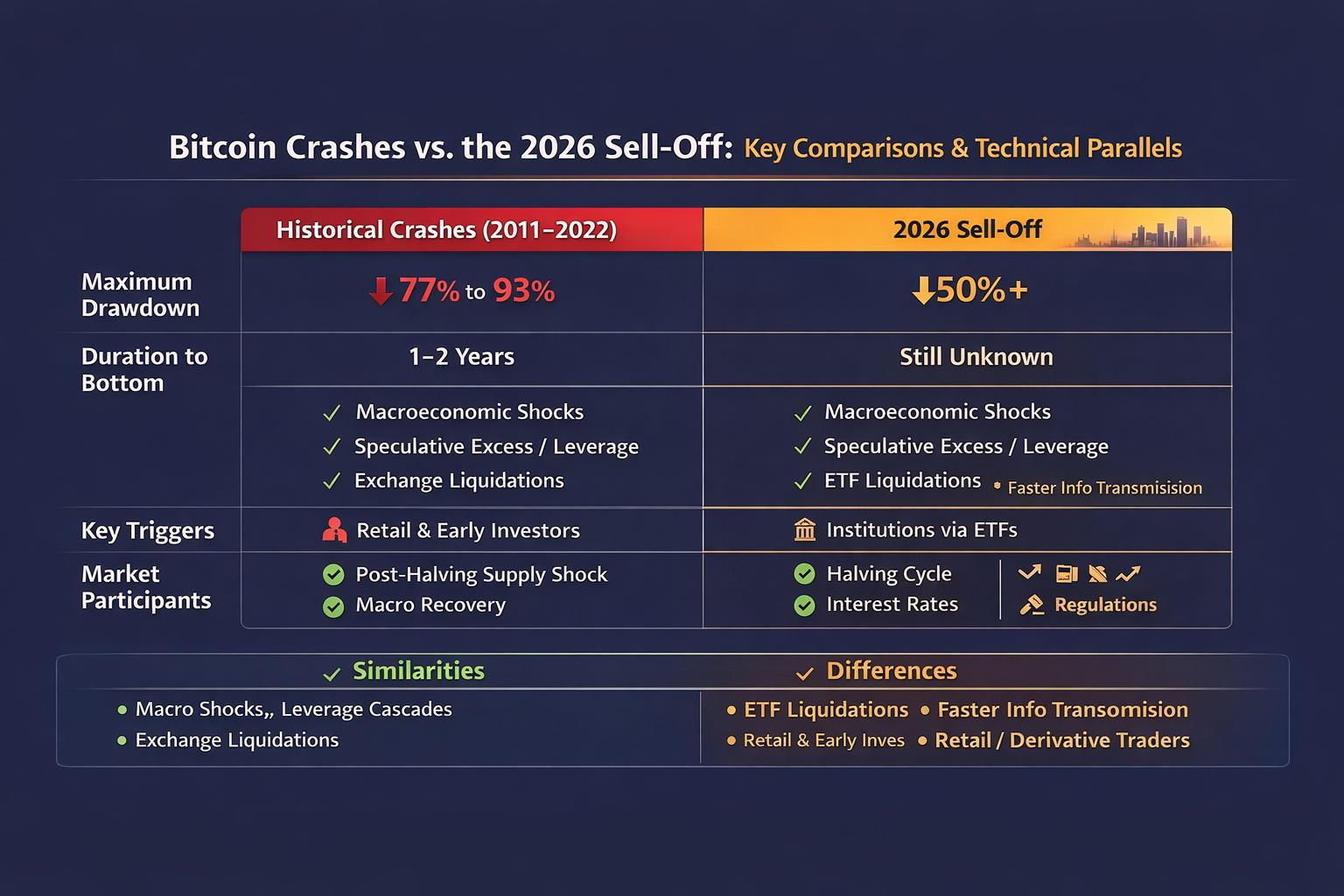
📍Recurring Patterns
• Macro-driven shocks
• Leverage-induced liquidation cascades
• Capitulation marked by extreme sentiment and oversold indicators
📍Key Differences
• Institutional participation via ETFs
• Faster information transmission amplifying volatility
• A halving cycle that may exert influence earlier than in past downturns
Historically, Bitcoin bottoms have often formed near 80% drawdowns, followed by recoveries spanning one to two years. Whether the 2026 cycle follows this template, it remains contingent on macroeconomic conditions.
𝟱. 𝗦𝘁𝗿𝗮𝘁𝗲𝗴𝗶𝗰 𝗟𝗲𝘀𝘀𝗼𝗻𝘀 𝗳𝗼𝗿 𝗜𝗻𝘃𝗲𝘀𝘁𝗼𝗿𝘀
History shows dumps are opportunities, so use these strategies to position:
● Portfolio diversification and position sizing
● Using technical signals (RSI, key support levels) for risk-adjusted entries
● Monitoring on-chain data to identify accumulation phases
● Avoiding excessive leverage during high-volatility periods
● Maintaining psychological discipline during periods of extreme fear
In sum, Bitcoin has been through some wild crashes. While sharp sell-offs, like the 2026 decline, test investor confidence, they also create opportunities for those who understand the technical signals, on-chain behavior, and macroeconomic context. Every big drop can feel scary, but history shows these moments often set the stage for a comeback. By paying attention to the market, staying disciplined, and learning from past cycles, investors can ride out the volatility and even find opportunities.