


Most people think AI is smart because it answers fast or automates tasks. But when you actually work with AI over time you notice something frustrating. AI does not really move forward. It reacts. It performs. Then it forgets. When a session ends or an agent restarts everything disappears. Context is gone decisions are lost and the system starts again from zero.
This is not a mistake in design. It is how most AI systems are built. They are made to execute tasks not to remember history. Memory is treated as something temporary not something permanent. Because of this intelligence does not grow. It repeats. What looks like learning is often just repetition.
This is where Vanar quietly stepped in and solved a problem many people did not know how to explain yet.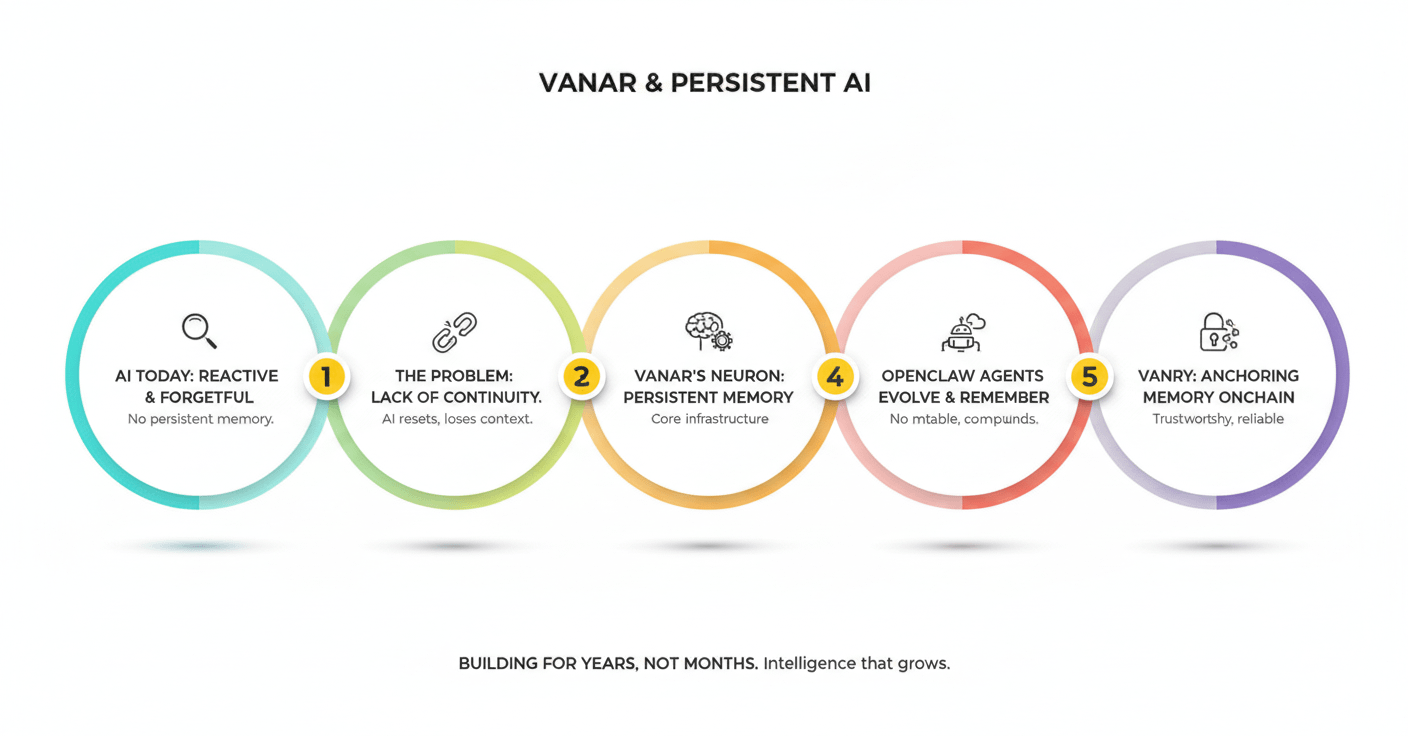
Why AI Breaks When Time Matters
AI works fine in short conversations or single tasks. But when you want autonomy when you want agents to operate for days weeks or months everything falls apart. The moment an agent crashes pauses or restarts it forgets its goals. It forgets why it made choices. It forgets what failed before.
Without continuity AI hits a hard ceiling. It cannot evolve because it cannot carry experience forward. This is why many AI agents look impressive in demos but fragile in real use. They loop. They stall. They lose direction.
Vanar recognized that intelligence without memory is incomplete.
Neutron Changes How Memory Works
Neutron is Vanar response to this problem. Instead of treating memory like short term storage Neutron treats it like core infrastructure. Memory becomes persistent structured and independent from any single agent run.
This means an AI does not need to start over. It resumes. State intent past decisions priorities and lessons remain available even after downtime. If an agent stops it does not lose itself. It continues from where it left off.
This is not a small upgrade. It changes how autonomy works.
OpenClaw Shows Real Persistent Agents
OpenClaw agents using Neutron behave differently from normal AI systems. They do not repeat the same mistakes endlessly. They do not lose goals after interruption. They remember what mattered and why.
Neutron works like an external cognitive layer. A place where intelligence can live beyond execution cycles. Once you see this in action it becomes clear how limited most AI setups really are.
This is not about making AI sound smarter. It is about making AI grow over time.
MyNeutron And Personal Memory
The same idea does not stop with agents. MyNeutron applies persistent memory to people.
Instead of rebuilding context across ChatGPT Claude Gemini documents and tools your knowledge becomes portable. Conversations do not decay. Workflows do not reset. Memory compounds instead of fragmenting.
Knowledge stops being trapped inside platforms. It becomes something you carry forward.
Most users only realize how valuable this is after wasting months re explaining themselves to machines.
Why Anchoring Memory On Vanar Matters
Memory only works if it can be trusted. If state can disappear or change continuity breaks. This is why permanence matters.
Vanar anchors memory onchain when guarantees are needed. This gives confidence that history will still exist tomorrow. This is infrastructure level reliability not a feature toggle.
Systems like this do not announce themselves loudly. They integrate quietly. Then one day people realize they depend on them.
Vanar Is Not Chasing Hype
Many chains chase attention. Big claims fast narratives quick pumps.
Vanar is doing the opposite. It is solving a problem users only notice after experiencing its absence. Continuity.
This is why people call VANRY early or underappreciated. Not because of price but because of adoption timing. The network is ahead of where user awareness is.
By the time most people understand why persistent AI memory matters the infrastructure will already be in place.
The Role Of VANRY
VANRY is not just a token. It coordinates value across memory execution automation and interaction layers. As autonomous systems generate activity VANRY becomes the settlement and incentive layer that keeps everything running sustainably.
Research from major platforms including Binance has shown that infrastructure tokens gain value through real usage not hype. VANRY fits that model more than most AI labeled assets.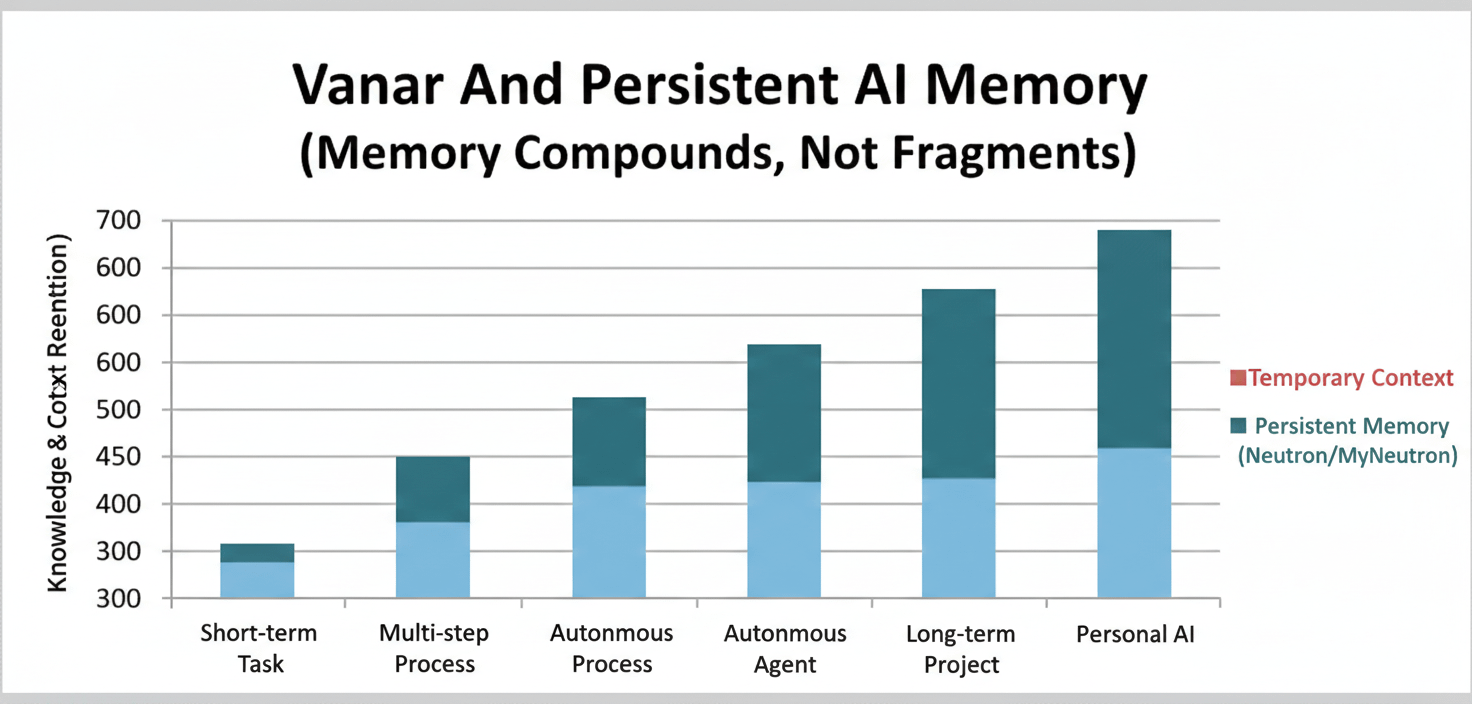
As memory driven agents scale so does coordination demand.
This Is About Years Not Months
If you are thinking short term Vanar will feel slow. There is no loud catalyst. No instant narrative.
But infrastructure rarely moves fast in public. It becomes normal before it becomes essential.
Vanar is building for persistence. AI that evolves instead of resets. Systems that remember. Humans who build once and extend over time.
In system design persistence usually wins.
That is what Vanar is betting on.