

The stablecoin payments transfer didn’t fail on @Plasma .
No red banner. No pause.
A remittance desk deep into the day. Same corridor they have been using for weeks. Same USDT amount they send dozens of times an hour. Plasma rail. Gasless. Sub-second enough that nobody watches the screen anymore.
The spinner lingers.
Not long. Just long enough to wake the finger.
Retry.
No warning. No fee prompt to interrupt the motion. The Plasma's Reth-based integration behaves like every other EVM checkout they’ve shipped. Same button. Same calm UI acting like time is available.
On Plasma, both sends land.
Cleanly.
Two receipts. Two callbacks. Two finalized states sealed before anyone finishes the thought that caused the second click. PlasmaBFT doesn’t wait for the room to catch up.
No failure state to blame. Just two “paid” events.
Two instructions arrived. Both valid. Both closed. Deterministic finality doesn’t guess intent.
The cost shows up later.
As reconciliation.
The desk doesn’t notice at first. Plasma Network Gasless USDT removes the tactile signal that something irreversible just happened. No moment where cost forces reflection. No friction that makes “try again” feel like a decision.
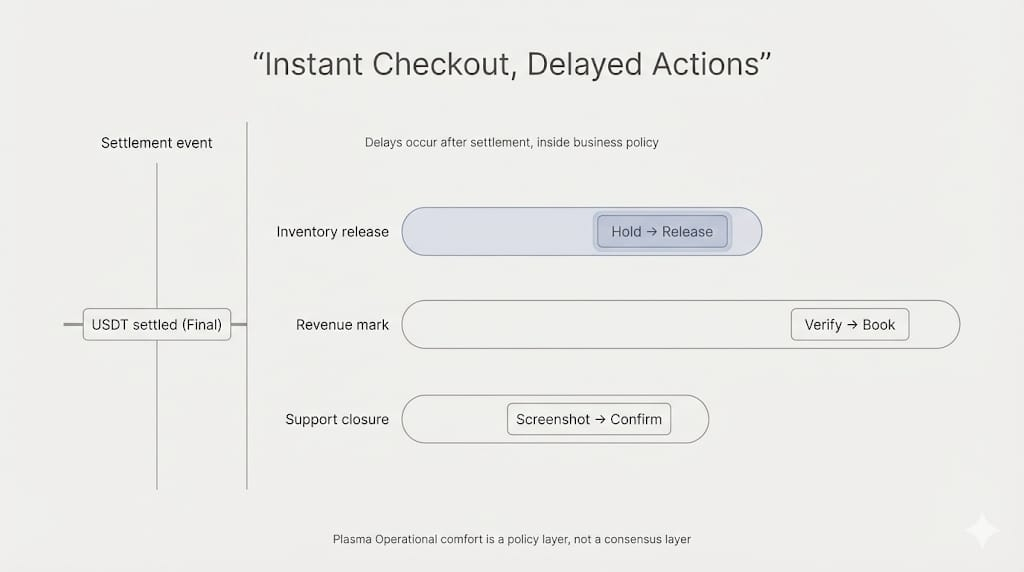
By the time the ledger export rolls in, the day is already shaped.
Same sender. Same recipient. Same amount. Minutes apart. Both marked paid. Both already downstream in the settlement report the receiving partner will book automatically.
The settlement lead pings in Slack: “Which one is the real one?”
Nobody knows.
The system doesn’t annotate second thoughts. Plasma never promised it would.
Most desks treat retry like a refresh button because older rails trained them that way. Timeout windows. Soft states. “Maybe it didn’t stick.” A habit built for hesitation.
Plasma doesn’t hesitate.
By the time the clerk notices the second receipt, both are already sitting in the partner’s view.
The receiving side books both. Why wouldn’t they? Two valid payments cleared on a stablecoin rail that never blinked. Intent isn’t part of their job. They’re paid to count, not to interpret.
So the cost moves sideways.
Support tickets. Manual offsets. Emails asking a counterparty to ignore a receipt that says otherwise. Accounting entries that cancel each other out but still leave an audit trail someone has to defend.
The retry didn’t save time. It borrowed it from later.
Remittance UX gets uncomfortable here. Not because Plasma is harsh, but because it’s literal. It executes what you send, once per instruction, even when the instruction came from impatience instead of intent.
And teams learn fast that “retry elimination” isn’t a nice polish item on a gasless rail. It’s ops survival. Idempotency keys stop being a feature. Status certainty stops being cosmetic. Because when execution removes hesitation, the only remaining brake is upstream discipline.
Someone suggests adding a delay.
Someone else suggests a confirmation modal.
Someone quietly points out the cost already happened. Not in fees. In labor. In explanations. In trust with counterparties who now have to unwind a transfer that never failed.
The error was avoided. The payment went through.
Twice.
Plasma didn’t punish the retry. It just refused to absorb it.
And in global remittance, where every adjustment crosses borders, books, and time zones, that refusal travels farther than any gas fee ever did.
The button got pressed again.
The rail didn’t ask why.
Two receipts. One apology. And an “adjustment” line that’ll still be there after the call ends.