

She had kept the ring for sixty-three years. It was not expensive by any objective measure, a simple silver band with a small sapphire that had faded slightly over decades of wear. But it was the only object her grandmother had carried across an ocean, fleeing a homeland that would soon cease to exist. The ring held stories no document could capture: the nervous laughter during the proposal in a bombed-out courtyard, the promise whispered as ships departed, the quiet strength of a woman who built a new life from nothing but memory. When she placed it in my palm, she did not hand me jewelry. She handed me a legacy.
This is the weight we understand instinctively with physical objects. We preserve them, protect them, and pass them forward because we recognize that some things transcend their material form. They are vessels of meaning. Yet as our lives migrate increasingly into the digital realm, we have constructed a peculiar paradox. We have built sophisticated systems to transfer monetary value with cryptographic precision, but we have created almost nothing to preserve the emotional and contextual value of our digital inheritance. What happens to your wallet when you can no longer access it? What becomes of the NFT commemorating your child's birth, the digital journal spanning twenty years, the virtual land where your community gathered? Who remembers the stories attached to these assets when you are not there to tell them?
This question haunts the edges of blockchain discourse, too human for discussions of throughput and too complex for simple technical solutions. Yet it is perhaps the most profound test of whether this technology can truly serve humanity. We are the first generation in history whose most significant records, creations, and relationships exist primarily as data. And we are discovering that our current infrastructure was designed for the living, not for the legacy.
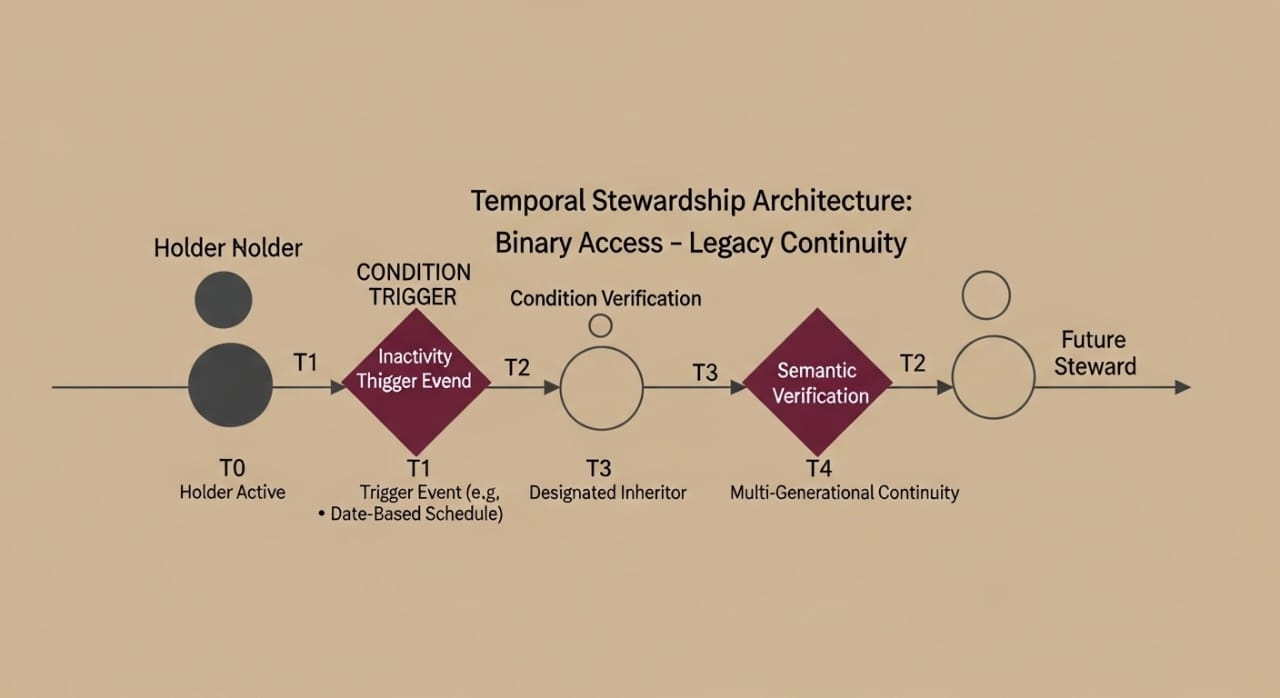
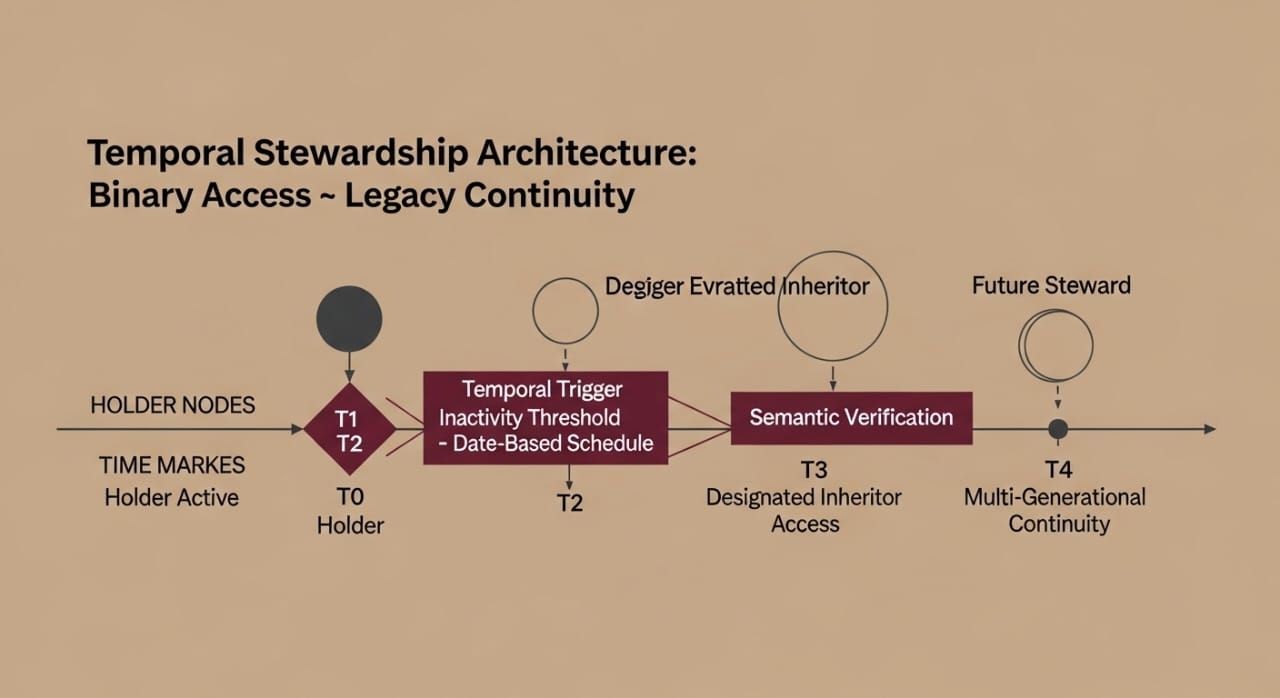
The architecture of most blockchains treats identity and access as binary: you possess the key, or you do not. This model is elegant for security but devastating for continuity. Lost keys mean lost assets, not just for individuals but for families, communities, and ultimately for history itself. We are actively building digital cemeteries of inaccessible value, not merely financial but cultural and sentimental. The cryptographic guarantee that prevents unauthorized access also prevents authorized inheritance. We have solved theft only to create a new form of digital entropy.
What if the infrastructure itself could understand not just ownership, but intention? What if a blockchain could recognize the difference between a temporary holder and a designated inheritor? What if your digital legacy could be stewarded according to your expressed wishes, verified not by a corporation subject to legal jurisdiction but by immutable code that transcends borders and outlives institutions?
This is the deeper dimension of semantic intelligence that remains largely unexplored. The ability to encode not just data, but relational meaning and temporal conditions, opens possibilities that extend far beyond financial efficiency. It allows us to embed our intentions directly into the assets we create and collect, to specify not merely who owns what, but who should own it next, and under what circumstances. It transforms a cold public ledger into a living archive of human connection across generations.
Consider the artist who wishes their unfinished digital works to be released posthumously according to a schedule they designed. Consider the parent establishing educational funds that release only upon verifiable academic milestones. Consider the community organizing a memorial space in virtual reality, funded perpetually by yield from an endowment, governed by those who shared the memory. These are not technical fantasies. They are achievable when the chain comprehends context, when contracts can evaluate conditions beyond simple date thresholds, when identity can be verified without compromising privacy.
The implications stretch beyond individual legacy to collective memory. We are witnessing the birth of entirely new forms of cultural preservation. Indigenous communities are exploring blockchain as a tool for protecting and transmitting oral traditions with verifiable provenance. Historical archives are experimenting with decentralized storage to safeguard documents against political instability. Artists are creating works that evolve based on the participation of their audiences over decades. The blockchain becomes not merely a record of what happened, but a vessel for what could happen, a bridge between past intention and future interpretation.
This requires a fundamental shift in how we conceptualize digital infrastructure. It must become not only secure and scalable but also patient. It must be designed to operate on timelines measured in decades and centuries, not quarterly reports. It must accommodate the slow rhythms of human life, the gaps between generations, the long arc of legacy. This is not the optimization metric prioritized by most blockchain projects. It does not translate easily into transaction speed or cost reduction. Yet it may be the most enduring measure of success.
The team building this intelligent infrastructure understands this responsibility. They are not merely constructing a platform for the next bull market. They are laying foundation stones for a digital civilization that may outlive its original architects. This awareness shapes their decisions, from the carbon neutrality that ensures environmental sustainability to the governance models designed for long-term resilience. They are building not for themselves, but for those who will inherit what they create.
This is the quiet dignity of their work, often invisible beneath technical discourse and market speculation. It is the recognition that the true value of any technology is measured not in the wealth it generates but in the meaning it preserves. The most significant transaction on any blockchain is not the transfer of millions in stablecoins but the transfer of a digital heirloom from parent to child, the authentication of a cultural artifact, the verification of a promise that outlived its maker.
When I think about that silver ring, I understand that its value was never in the metal. It was in the continuity of love across rupture and distance, in the stubborn human refusal to let memory die. Our digital future must honor this same impulse. It must become capable not only of securing our assets but of honoring our attachments. It must learn to recognize that behind every wallet address, every token, every smart contract, there is ultimately a person who hopes to be remembered.
The chain that thinks must also be the chain that remembers. This is the frontier now being explored, one block at a time. To witness the development of infrastructure designed for legacy as well as liquidity, follow the project at @Vanarchain . The VANRY token powers not only transactions but the preservation of intention across time. Join the conversation about building a digital world that honors our past and protects our future with #Vanar
