

Most blockchains are very good at one thing: moving value. You send, it settles, everyone sees it. Clean and simple.
But the real world is rarely that clean.
In everyday business, money almost never moves alone. A payment usually carries a story with it — an invoice number, a receipt trail, an identity check, a compliance step, maybe even a delivery condition. Traditional systems handle all of that quietly in the background. Blockchains, in many cases, still struggle here.
That’s the gap Vanar seems focused on.
It’s not really about faster blocks
A lot of Layer-1 conversations still orbit around speed and fees. Those matter, of course, but they don’t solve the deeper friction businesses run into when they try to use crypto rails in the real world.
The real friction is context.
If a company sends money on-chain but still has to manage invoices, approvals, and compliance off-chain, then the blockchain becomes just one piece of a much bigger manual process. That creates blind spots. And blind spots create trust problems.
Vanar’s direction feels different because the focus is not just on moving value faster. The focus is on helping the network understand why a payment should happen in the first place.
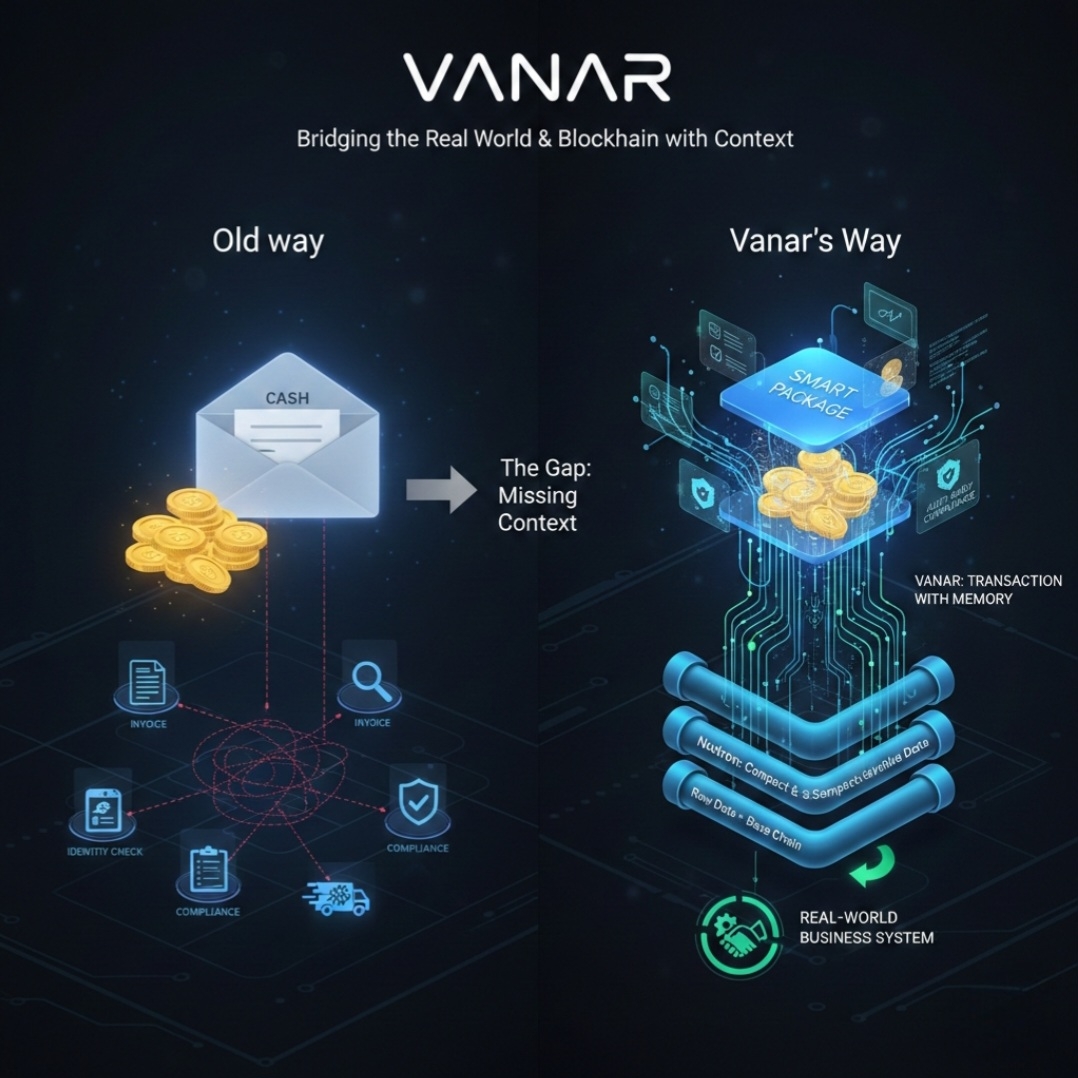
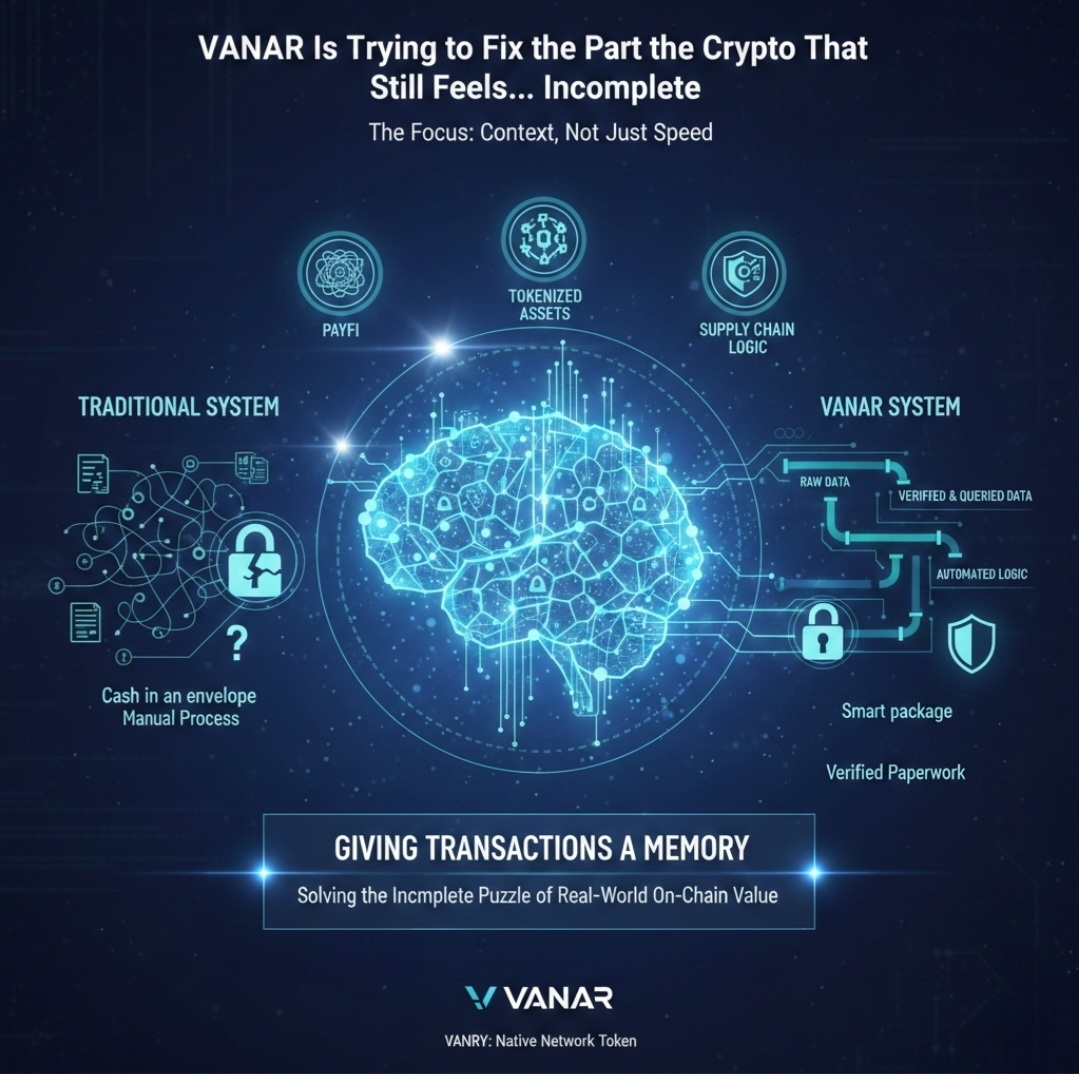
Think of it like giving transactions a memory
Here’s a simple way to picture it.
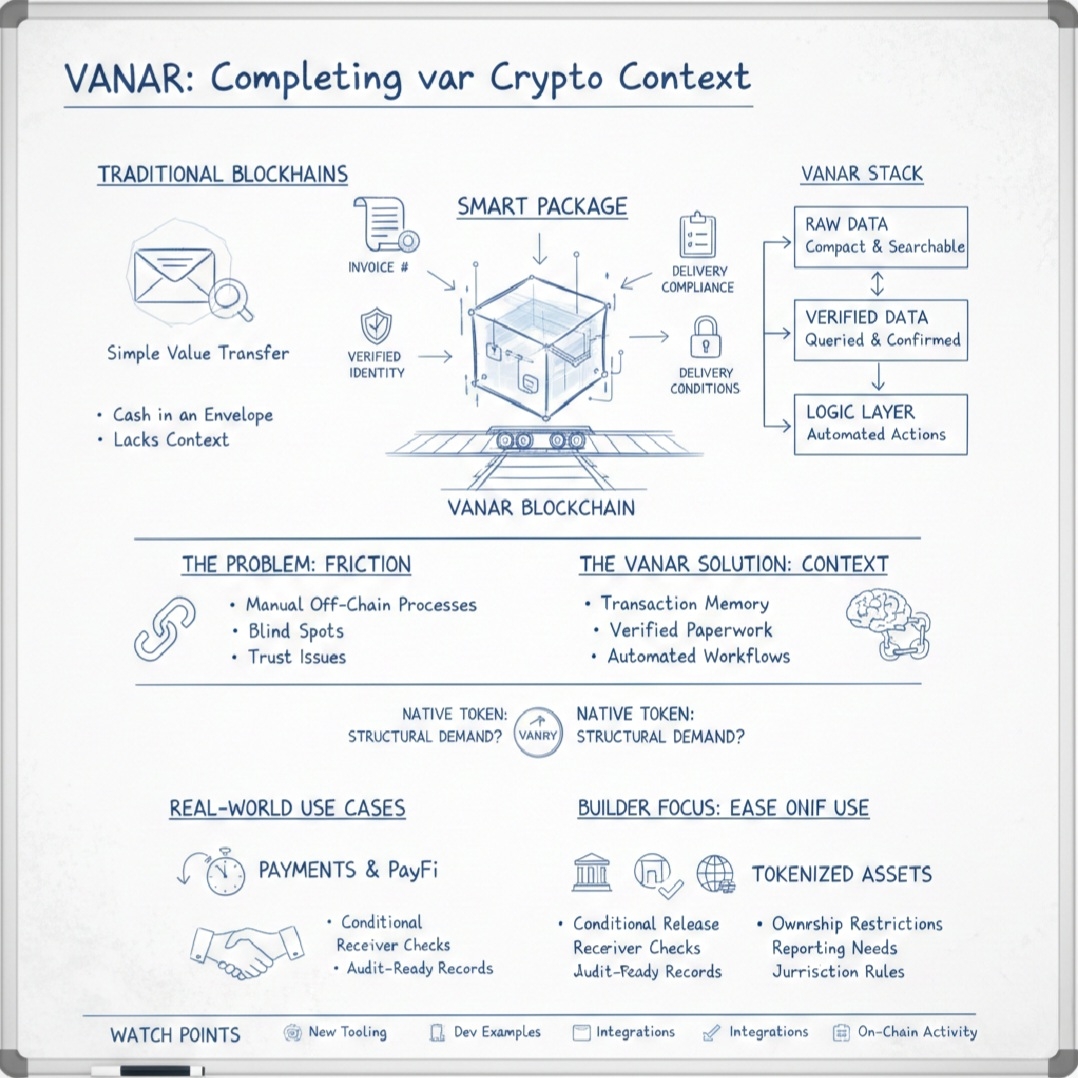
Right now, many on-chain transfers are like cash in an envelope. The money arrives, but the system doesn’t really know the full story behind it.
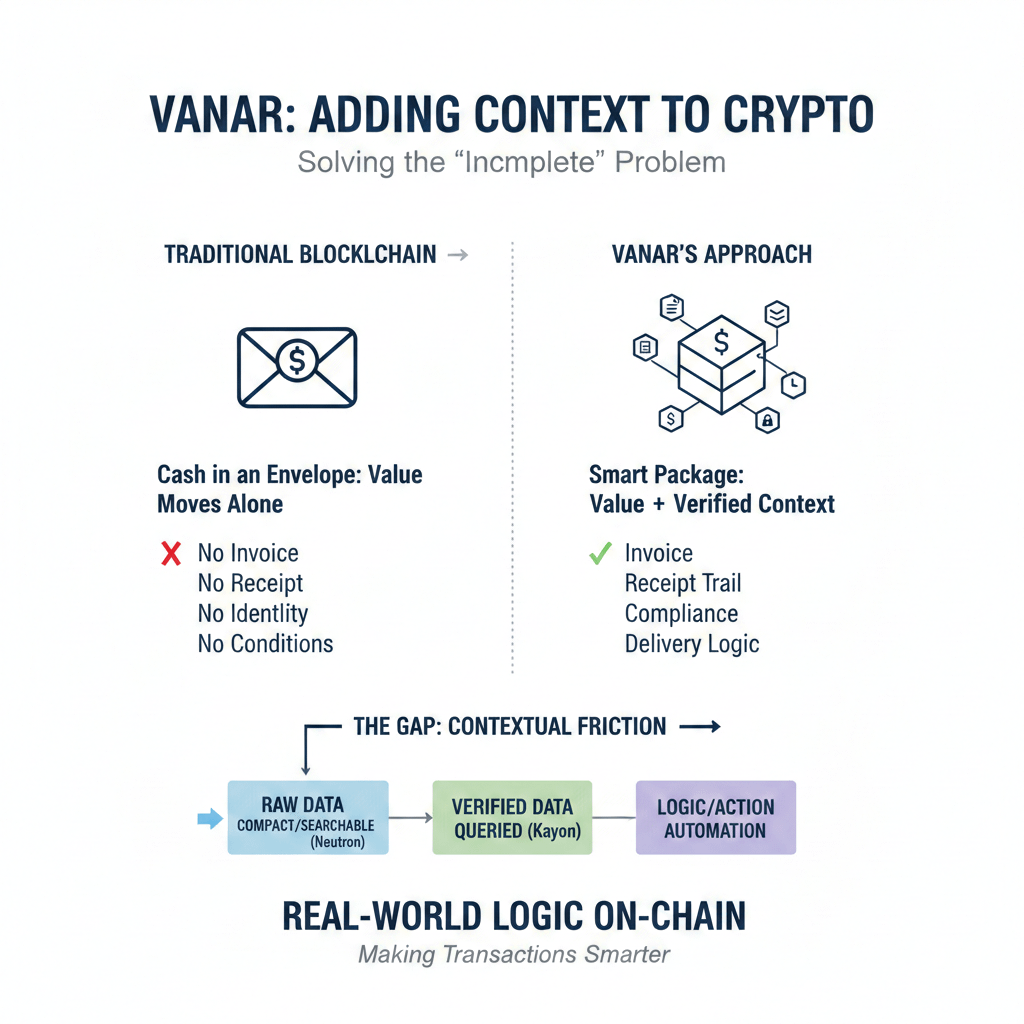
What Vanar is trying to build looks more like a smart package that carries its own verified paperwork. Not just the funds, but the proof, the conditions, and the rules that explain the transaction.
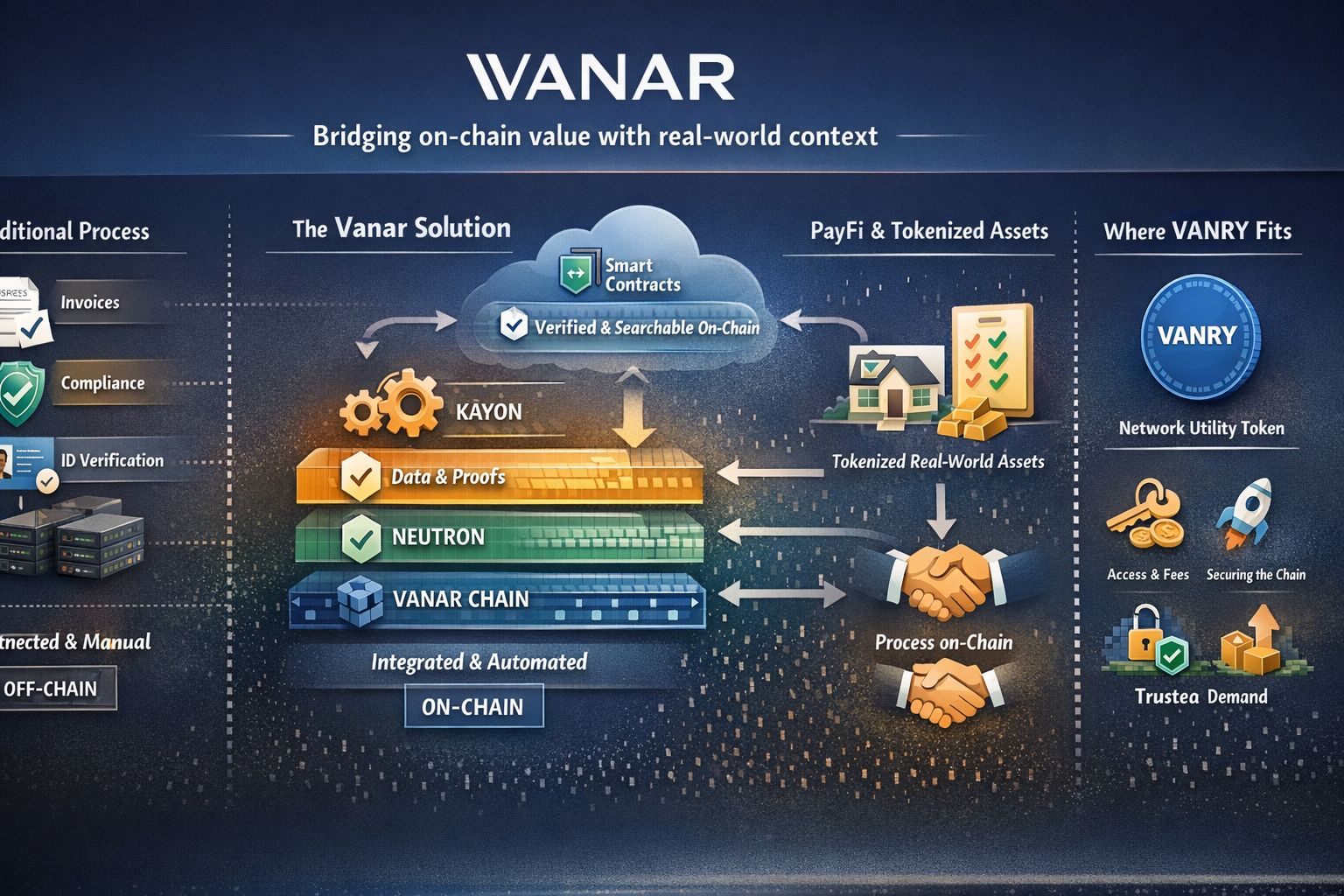
Their stack — with the base chain plus layers like Neutron and Kayon — is described as a pipeline where:
raw data becomes compact and searchable
that data can be verified and queried
and then logic can act on it automatically
If this works in practice, it could make certain payment and asset flows feel much closer to how real business systems already operate.
Why this matters for PayFi and tokenized assets
Payments tied to real activity are rarely unconditional.
Sometimes you pay only after a service is delivered.
Sometimes the receiver must pass checks.
Sometimes records must be audit-ready from day one.
Tokenized real-world assets are even more demanding. Ownership often comes with restrictions, reporting needs, and jurisdiction rules. If all of that lives outside the chain, the token only tells part of the truth.
Vanar’s approach suggests they want more of that “real-world logic” to live closer to settlement, so apps don’t have to constantly jump between on-chain transfers and off-chain verification.
Builders will care about one thing: friction
In my view, the success of this direction won’t depend on how ambitious the vision sounds. It will depend on whether builders can actually use it without slowing down their teams.
If developers can work in a familiar environment while tapping into these higher-level data and reasoning layers, adoption becomes much more realistic. If integration feels heavy, most teams will quietly stick to what they already know.
So the real test is practical, not philosophical.
Where VANRY fits into the picture
The token story is straightforward on the surface: VANRY is the native network token used across the ecosystem.
But the deeper question — the one that always matters — is whether usage pulls the token naturally.
If the chain is mainly used for basic transfers, the token behaves like many others in the market. But if applications genuinely start consuming the data and logic layers as part of real workflows, then demand starts to look more structural and less speculative.
That shift doesn’t happen overnight. It shows up slowly in developer activity, integrations, and repeat usage patterns.
What I’m personally watching next
When I look at Vanar from a progress standpoint, I’m less interested in headlines and more interested in signals like:
new tooling that makes real-world data easier to use on-chain
clearer developer examples that show full payment or RWA flows
integrations where the stack removes real operational pain
steady growth in on-chain activity tied to product releases
That’s where the story either strengthens or stalls.
Strong takeaway: Vanar’s real opportunity is not in being another fast chain, but in making on-chain payments and tokenized assets behave more like real-world systems that already depend on verified context.