Fogo isn’t trying to be “another fast chain.” It’s making a sharper bet: that if you compress block times down to roughly 40 milliseconds and keep finality tight, you can create an execution environment that feels meaningfully better good enough that traders, liquidators, and market makers start preferring it. And if that preference becomes habit, liquidity becomes loyal. That’s where the token wins. But if liquidity doesn’t stick, Fogo risks becoming one of those chains that looks incredible on paper yet struggles to build real economic gravity. Right now, the performance looks real but the liquidity flywheel is still warming up.
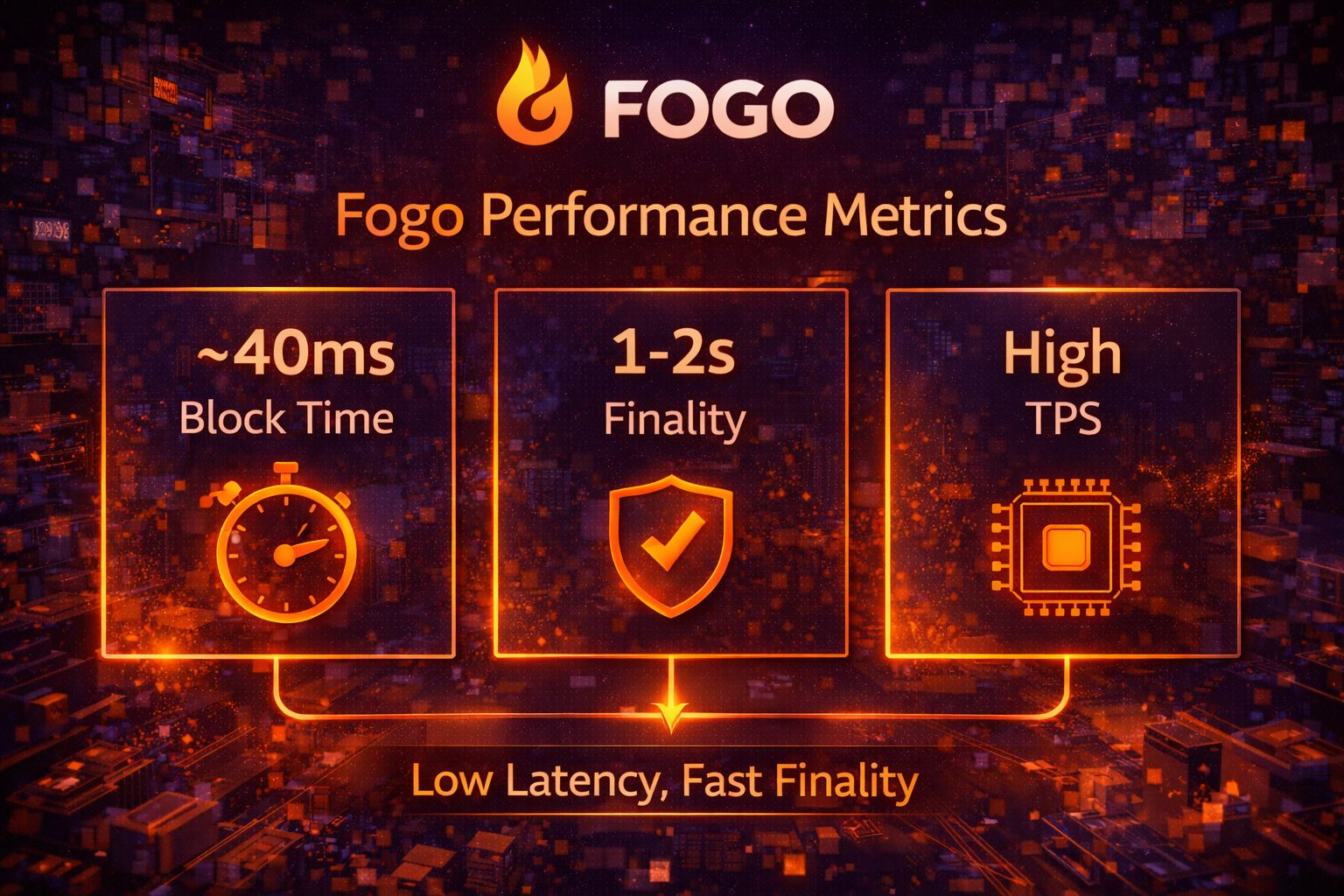
When Fogo’s mainnet went live in early 2026 with real applications and exchange exposure, the narrative shifted. It stopped being “watch our benchmarks” and became “show me production behavior.” That shift matters because crypto is full of chains that can perform in controlled environments but collapse under real usage. Fogo’s reported block time near 40ms and finality around the 1–2 second range puts it in a category where execution should feel closer to a trading system than a traditional blockchain. In theory, that should tighten arbitrage loops, improve liquidation response, and reduce the randomness that traders hate.But speed is only half the story. Trading venues don’t win because they can process transactions quickly. They win because there’s enough capital sitting inside them that spreads tighten, depth grows, and users come back because the market is alive. Speed can attract attention, but liquidity is what creates permanence.
That’s where the numbers start to feel less exciting. Stablecoin liquidity on Fogo is still small in absolute terms, and DEX volume remains early-stage. It’s not zero, and it’s not meaningless, but it’s not yet the profile of a chain that can support serious derivatives, high-frequency strategies, or deep collateral ecosystems. A trading empire doesn’t form without thick dollar liquidity. Without it, execution speed becomes a luxury feature rather than a structural advantage.
Fee economics tell a similar story. Transaction costs are essentially microscopic, and chain revenue is minimal. That looks intentional Fogo is clearly prioritizing adoption and usage rather than monetization. But the risk is obvious: if fees stay negligible even as activity grows, the token struggles to anchor value in measurable economic capture. Eventually, a venue needs to prove not only that it works, but that it can generate real demand for blockspace.
Tokenomics add another layer of pressure. Supply is large, unlocks are staggered, and allocations to insiders and foundations are meaningful. None of that automatically signals failure, but it does create time-based stress tests. Cliff-style unlock windows are moments when the market stops caring about vision and starts caring about absorption capacity. If growth is strong into those windows, unlocks get digested. If growth is weak, price becomes a function of calendar math instead of adoption.
Security and decentralization optics matter too, especially for the type of liquidity Fogo claims to want. A smaller validator set and weaker decentralization metrics compared to mature chains may not break the network technically, but perception shapes behavior. Market makers and serious capital don’t just ask “is it fast?” They ask “is it stable, credible, and politically predictable?” If decentralization doesn’t mature, liquidity may hesitate before it becomes committed.
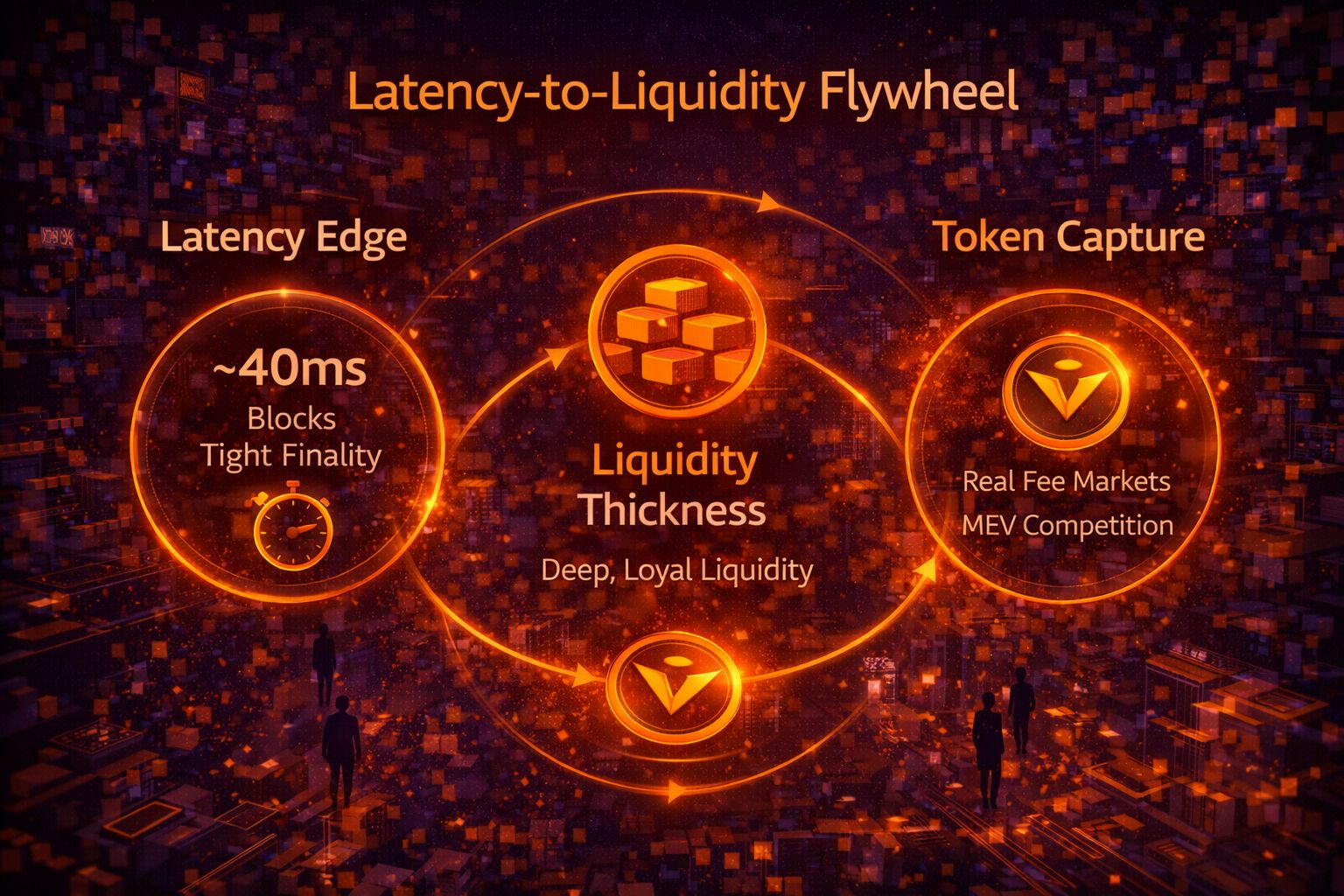
To understand Fogo’s trajectory, I think in terms of a Latency-to-Liquidity Flywheel. First comes the latency edge. Fogo clearly has it. 40ms blocks and tight finality are real differentiators. Second comes liquidity thickness. This is where the flywheel either catches momentum or stalls. Right now, liquidity exists, but it’s still fragile. Third comes token capture. Once liquidity is deep, real fee markets, MEV competition, staking demand, and priority execution create structural pressure for the token. Today, that capture is still minimal, and the system hasn’t yet proven it can convert speed into durable economic gravity.Right now, the flywheel is moving but it’s moving gently.
The most relevant comparison isn’t with random alt-L1s. It’s with Solana. Solana’s advantage has never been just speed it’s liquidity density, developer gravity, and a market culture that already lives there. If Solana continues compressing latency while keeping its liquidity dominance, Fogo’s differentiation must evolve. “We’re faster” is not a long-term moat. The real moat would be building better trading microstructure: incentives that attract makers, collateral systems that recycle liquidity efficiently, and fee markets that signal genuine competition for execution.
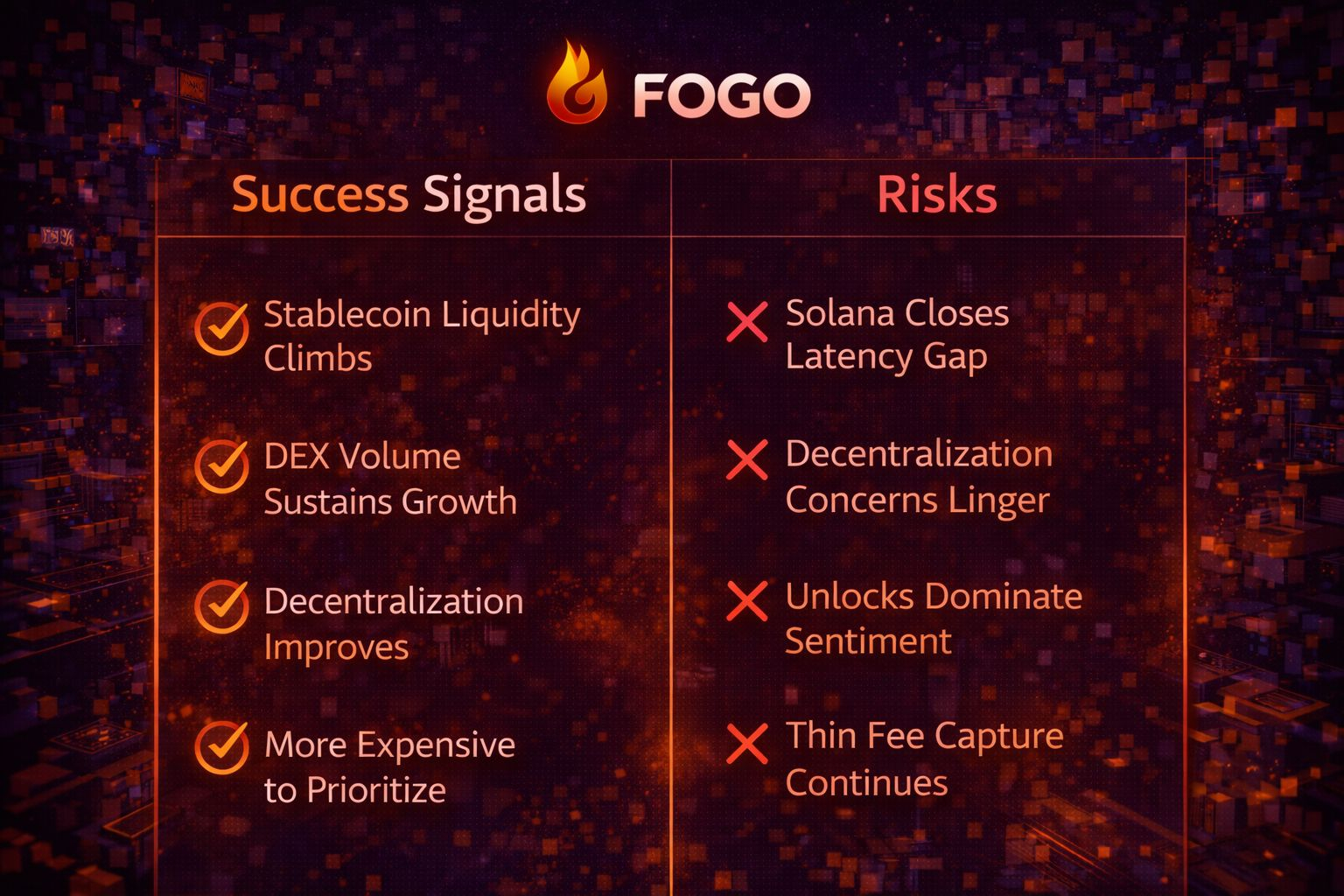
So what does success look like in practice? You’d expect stablecoin liquidity to climb into the tens of millions and stay there, not spike and disappear. You’d expect weekly DEX volumes to move from early-stage numbers into sustained multi–tens-of-millions territory. You’d expect decentralization optics to improve meaningfully. And most importantly, you’d expect the chain to shift from “almost free” to “competitive for priority,” because real markets don’t stay cheap forever. They become expensive when demand becomes real.
If those metrics strengthen ahead of major unlock windows, the narrative changes. Fogo stops being a speed experiment and starts becoming a venue. At that point, the token story becomes less about speculation and more about ownership in an emerging trading ecosystem.
But the risks are real. Solana could close the latency gap while keeping its liquidity moat. Decentralization concerns could delay institutional participation. Fee capture may remain too thin to support fundamentals. Unlock schedules could dominate sentiment if adoption doesn’t accelerate fast enough.The story of Fogo isn’t about milliseconds in isolation. It’s about whether milliseconds can compound into liquidity, and whether liquidity can compound into permanence. Speed can start the flywheel, but only loyal liquidity decides whether it keeps turning.