
People keep trying to figure out Fogo by stacking it up next to Solana, like there’s one big scoreboard and every new chain is automatically trying to steal the top spot. I get why that happens. The tech feels familiar, the “fast execution” vibes are there, and it’s an easy mental shortcut: “Solana, but newer.”
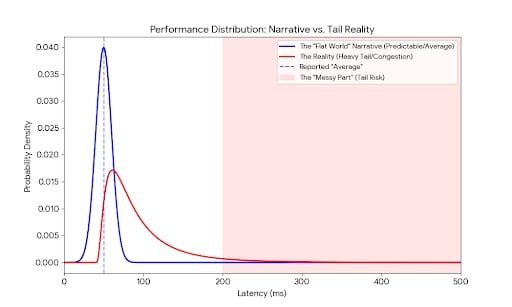
But the more you sit with what Fogo is actually pointing at, the less it feels like a direct challenger story. It doesn’t come across like it’s obsessed with winning a raw speed race. It comes across like it’s frustrated with how the whole space talks about performance—like we pretend the world is simple, distance doesn’t matter, and the internet behaves nicely if you just engineer hard enough.
In real life, distance is stubborn. Data doesn’t teleport. Sometimes it moves quickly, sometimes it doesn’t, and the worst timing shows up at the worst moments—when the network is busy and everyone is trying to do something at once. That’s the part most “fast chain” marketing avoids. They’ll talk about averages and peak numbers. But the painful part for real users isn’t the average. It’s the random delays. The weird spikes. The moments when things get messy and you realize the system doesn’t feel consistent anymore.
This is where Fogo feels like it’s coming from a different place. It’s not just saying “we’re fast.” It’s acting like it has accepted that global networks come with unpredictability, and that unpredictability is what actually wrecks user experience and market behavior. Once you accept that, your priorities change. You stop thinking only in terms of “more validators everywhere right now.” You start thinking about where consensus happens, how far messages have to travel, and how to reduce the parts of the process that are at the mercy of network chaos.
So when people say “Fogo isn’t trying to beat Solana,” it shouldn’t sound like a polite dodge. It’s more like: they’re trying to solve a different problem.
Solana’s bet is huge and broad: make a high-performance chain that’s widely permissionless and keep raising the ceiling through engineering improvements and ecosystem scale. Fogo feels more focused: create an environment where execution timing is calmer, more predictable, and less prone to nasty surprises—especially for apps that fall apart when timing gets weird.
And those apps aren’t hypothetical. Some kinds of DeFi don’t really care if things are slightly delayed. But others absolutely do. Order books, auctions, liquidations, strategies that depend on quickly canceling and replacing orders—these things are extremely sensitive to timing. In that world, a few extra moments aren’t just “slower.” They can be the difference between saving yourself and getting hit.
That’s the uncomfortable truth: latency isn’t only about convenience. It’s about who gets to react first. Who lands their transaction at the right second. Who gets their cancel through in time. And who gets picked off because the network didn’t behave consistently.
If you’ve watched on-chain markets during heavy traffic, you’ve probably seen how quickly things start to feel hostile. Not because everyone suddenly became evil, but because the environment rewards speed and punishes hesitation. When timing gets unpredictable, the system naturally tilts toward people who have better infrastructure, better automation, and often just better geographic positioning. And regular users feel it, even if they can’t always explain it.
So if Fogo is building around lower variance—trying to keep timing more stable—it’s not about bragging rights. It’s about changing the “feel” of these markets. If execution is consistent, spreads can tighten. Quoting behavior becomes healthier. Risk management becomes less stressful. Participation becomes less of a game of “who has the fastest setup.”
But the second you design around tight timing, you run straight into tradeoffs people don’t like talking about. You can’t have perfect openness, perfect geographic neutrality, perfect permissionlessness, and perfect performance guarantees all at the same time, right away. Something has to give.
Fogo seems like it’s choosing to control more variables early on so the system behaves predictably. That can be a smart choice. But it also creates a responsibility: you have to be very clear about what’s being controlled and why, and you need a believable plan for how it evolves without turning into a network where participation is quietly restricted.
Because there’s a real difference between “we’re standardizing the environment so performance is stable” and “we’re standardizing who gets a seat at the table.” Those two things can blur over time if the project isn’t disciplined. And markets notice. If fairness becomes something you’re expected to trust socially, instead of something you can verify structurally, people get cautious. They might still use the chain because it’s effective, but the deeper trust doesn’t form.
Another thing that gets overlooked: “performance” isn’t only consensus. A lot of chains can be fast on paper and still feel slow in practice because the user loop is clunky. Wallet prompts, repeated signatures, session resets, annoying friction—those little delays add up. And for timing-sensitive apps, those delays aren’t just annoying. They create advantage for the people who can automate everything and disadvantage for everyone who’s clicking buttons.
If Fogo really wants to be the place where timing-sensitive systems behave cleanly, it has to shrink that friction too. Fewer pointless signatures. Smoother sessions. Less click fatigue. Faster, cleaner transaction submission. Not for aesthetics, but because it keeps the playing field from tilting toward the people running private pipelines.
Of course, this strategy can fail. One way is obvious: it feels great early, but once real usage and adversarial behavior show up—spam, congestion games, priority tactics—the stability disappears, and it starts behaving like every other chain under stress. Then the whole “predictable execution” story collapses right when it’s needed most.
A second failure is quieter: it stays fast, but fairness becomes hard to pin down. Nothing breaks, yet certain actors seem to consistently get better timing. It’s not easy to prove, but it’s easy to feel. And once that suspicion takes root, it’s really hard to reverse.
If Fogo does work, it probably won’t look like some dramatic moment where it “defeats” Solana. It’ll look like a slow shift in where certain builders and traders choose to operate. People will use it because certain mechanisms feel less stressful to run there. Execution will feel dependable on busy days, not just on quiet ones. The chain will build trust by behaving consistently, not by posting the biggest number.
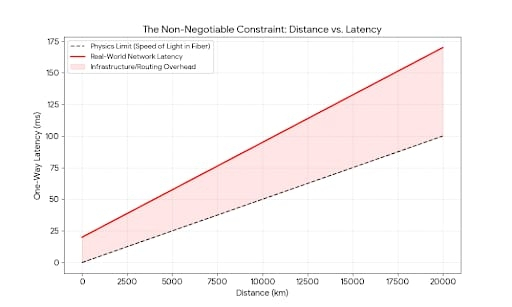
That’s why “Fogo vs Solana” isn’t really the point. The real question is whether a chain can offer a genuinely reliable, inspectable environment for timing-sensitive markets—without drifting into opaque control as the pressure rises. If it can, it doesn’t need anyone’s crown. It just needs to become the place where a certain class of applications stops fighting the network and starts leaning on it.