
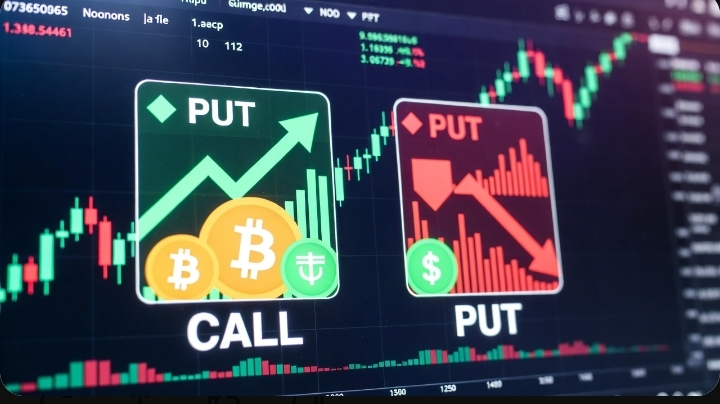
Call options give the buyer the right, but not the obligation, to purchase an underlying asset (like a stock, cryptocurrency, or commodity) at a predetermined strike price within a specific timeframe or on the expiration date. Traders typically buy calls when they anticipate the asset's price will rise above the strike price, allowing them to buy low and potentially sell high for profit. The seller (writer) of the call is obligated to sell the asset if exercised, and the buyer's maximum loss is limited to the premium paid for the option.Put options, in contrast, give the buyer the right, but not the obligation, to sell an underlying asset at a predetermined strike price within the timeframe or on expiration. These are often used when expecting the asset's price to fall below the strike, enabling the buyer to sell high (at the strike) despite a lower market value. The put seller must buy the asset if exercised, and again, the buyer's risk is capped at the premium.The key differences: Calls bet on upward price movements and can provide unlimited upside potential (minus the premium), while puts bet on downward movements and offer protection against losses in a declining market. Both can be used for speculation, hedging, or income generation, but factors like volatility, time decay, and intrinsic value affect their pricing. In platforms like Binance, these are European-style options, exercisable only at expiration.#CallOptions #PutOptions #OptionsTrading #CryptoDerivatives #FinancialEducation


