
Artificial Intelligence is no longer limited to software assistants or digital tools. Today, intelligent machines are beginning to operate in the physical world working in factories, assisting in hospitals, supporting education, and helping in daily human activities. As this transformation accelerates, one critical question emerges: how can we ensure these systems remain safe, aligned with human values, and accessible to everyone? The Fabric Foundation was created to answer this question.
The Fabric Foundation is an independent, non-profit organization focused on advancing open robotics and Artificial General Intelligence (AGI). Its mission is not to build robots for profit, but to build the foundation that allows humans and intelligent machines to work together safely and productively. This includes governance systems, economic frameworks, and coordination infrastructure that support responsible development and real-world deployment.
Unlike traditional technology organizations, Fabric Foundation focuses on ecosystem development. This means creating standards, tools, and partnerships that allow researchers, developers, and institutions to collaborate openly. By supporting open innovation, the foundation ensures that the benefits of AGI and robotics are shared widely, rather than controlled by a few private entities.
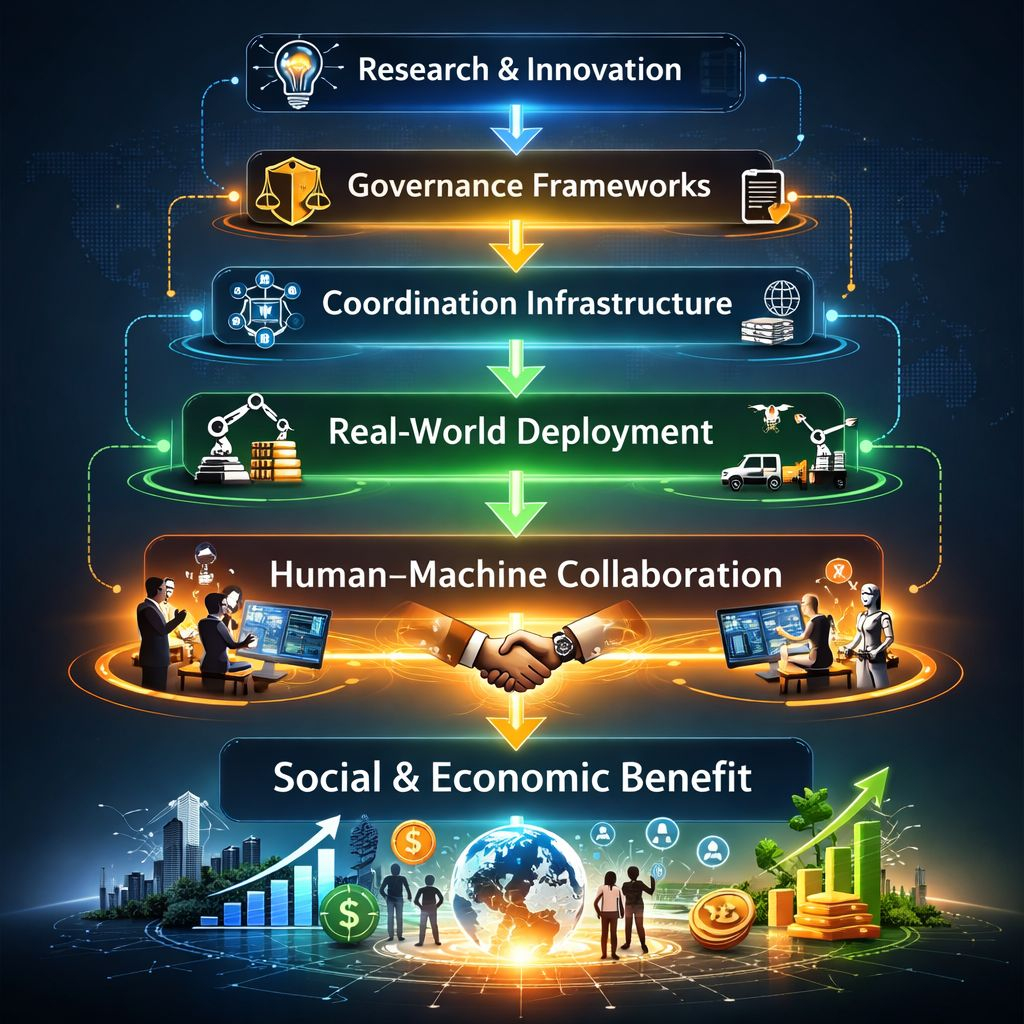
One of the key priorities of the Fabric Foundation is alignment. As machines become more capable of reasoning and decision-making, it is essential that they operate in ways that reflect human ethics and priorities. The foundation works on creating systems that ensure transparency, accountability, and safety.
The organization also focuses on economic accessibility. Advanced robotics and AGI have the potential to reshape global economies. Fabric Foundation promotes models that ensure these technologies create opportunity rather than inequality. By supporting open platforms and shared infrastructure, it helps lower barriers to entry for innovators around the world.
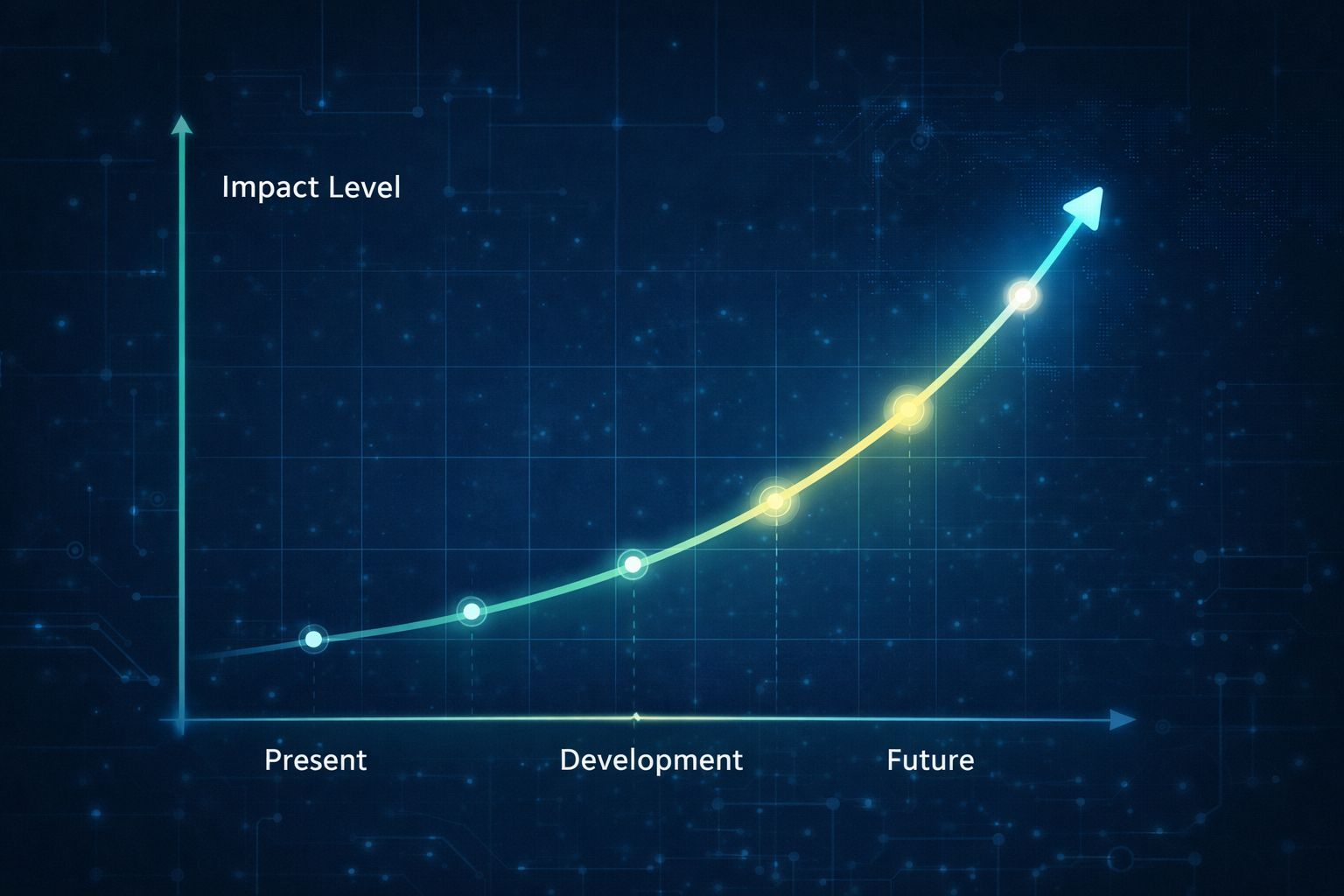
This graph represents the expected growth of positive impact as governance, infrastructure, and collaboration improve over time.
Fabric Foundation represents a new approach to technological progress one that prioritizes safety, openness, and shared benefit. Instead of focusing only on innovation, it focuses on responsibility. Instead of building isolated systems, it builds connected ecosystems.
As robotics and AGI continue to evolve, organizations like Fabric Foundation will play a critical role in shaping a future where intelligent machines enhance human potential rather than replace it. By building the foundation today, it is helping create a future where humans and machines work together to solve the world’s most important challenges.