I used to think I was “doing my homework” when a dashboard looked clean. Then one trade slapped me: a token showed exploding wallets and volume, and I convinced myself it was organic. Later I checked the transfers and it was basically a choreographed dance of dusting and wash activity. The numbers weren’t fake, but they were telling the wrong story. That’s why this whole “from data to decisions” angle matters to me now, especially when people pitch big narratives like collaborative robot networks. Fabric Protocol, and specifically the $ROBO ecosystem, is basically trying to turn coordination into something measurable and enforceable. The Fabric Foundation frames $ROBO as a protocol participation unit that helps coordinate the “genesis and activation” of robot hardware, and it talks about routing protocol revenue toward buying $ROBO in the open market. That’s an ambitious blueprint: contributors and operators bring resources, the network assigns work, and token incentives are supposed to keep everyone honest enough to keep building.
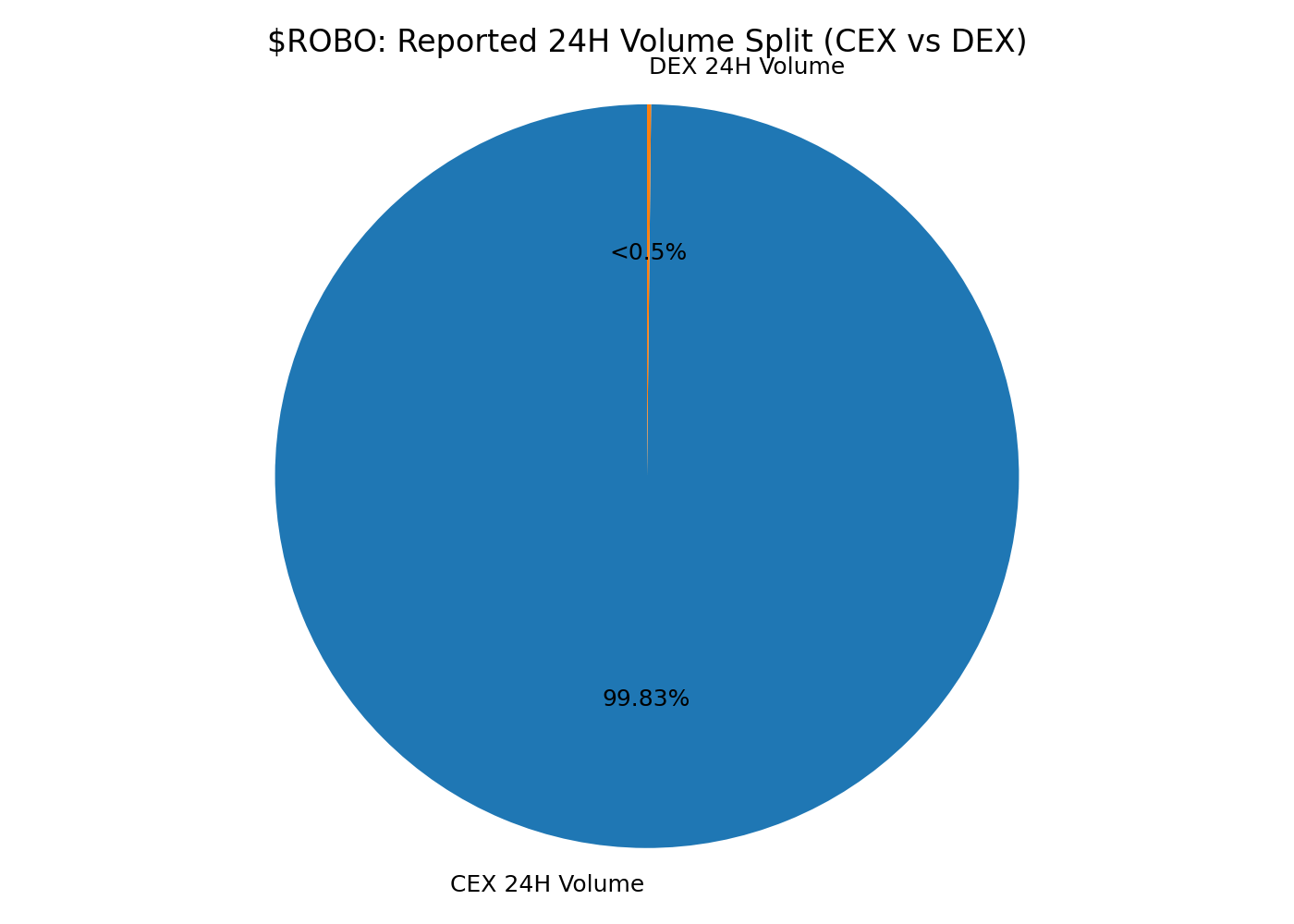
But as a trader, I have to start where the chain is today, not where the whitepaper wants to be. Right now, ROBO is trading around the $0.038 area, with centralized venues reporting very large 24 hour volume and an implied circulating supply in the low billions, with max supply stated at 10 billion. On the DEX side, the footprint looks smaller and more “early market” than the CEX volume suggests. For example, a Uniswap V3 ROBO USDC pool shows roughly a couple hundred thousand dollars of 24 hour volume and a few hundred transactions, with liquidity in the high six figures. That split matters because it tells you where price discovery and liquidity stress might actually show up when sentiment flips. And here’s the retention problem, the part most people skip. If the majority of on chain activity is claims, transfers, and exchange deposits, you can get impressive looking charts for a week without any durable usage. Some recent on chain commentary has explicitly warned that current activity appears dominated by airdrop flows and CEX oriented behavior rather than real robotic infrastructure usage. If Fabric’s “data to decisions” loop is real, it has to produce repeat users, repeat task settlement, repeat revenue, and repeat participation that isn’t bribed by one time incentives. Otherwise it’s just metrics theater, but with robots in the marketing copy. So what could go wrong? Plenty. Execution risk is the obvious one: building a credible, open coordination layer for machines is hard, and “agent native infrastructure” can stay a slogan if there’s no sticky demand. Market structure risk is next: if liquidity is thinner than headlines imply, you can get violent squeezes both directions. And governance risk is real too: early networks often centralize decision power in practice even when the token says “community.” What am I watching that would actually change my mind in a good way? Fewer airdrop shaped spikes and more boring consistency: steady growth in non exchange wallet interactions, protocol level fee generation, evidence that tasks are being allocated and settled on chain, and any transparent reporting that ties robot uptime or completed work to economic flows. If this turns into a network people keep using when there’s no free candy, that’s when “collaborative robot evolution” stops being a story and starts being a signal. If you’re trading it, do the unsexy work: track where volume is coming from, watch liquidity, and treat early narratives like hypotheses, not facts. Then decide your risk like a grown up, size small enough to stay rational, and don’t outsource conviction to a chart that can be gamed. The whole point of better data is better decisions, and the market doesn’t forgive us for confusing activity with retention.
@Fabric Foundation #ROBO $ROBO