
The rapid evolution of robotics and artificial intelligence is transforming the way humans interact with technology. However, as robots become more capable and autonomous, an important question emerges: how can we ensure transparency, coordination, and trust between machines and the people who rely on them? This is where @Fabric Foundation introduces a powerful vision for the future.
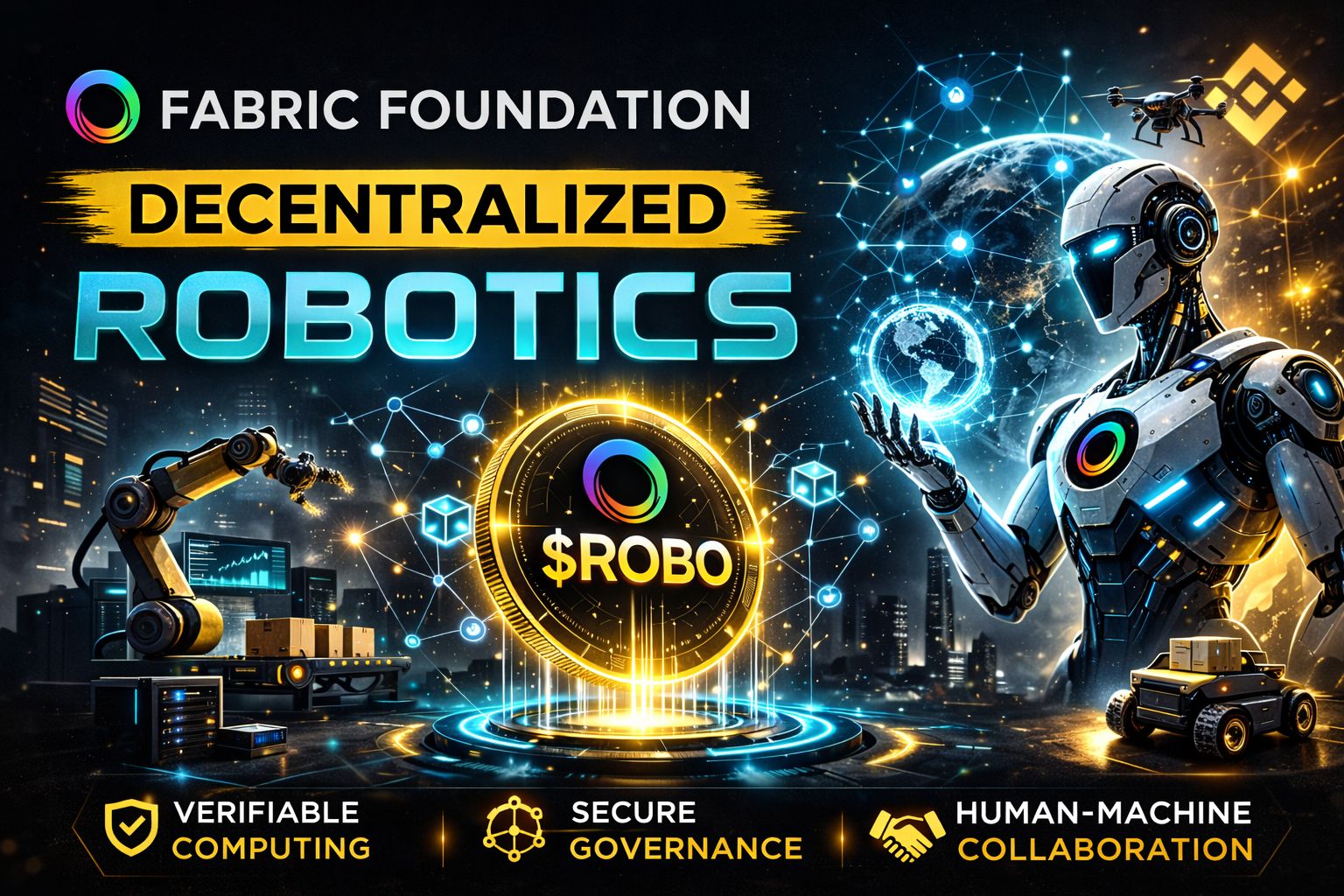
Fabric Protocol is designed to build an open and decentralized infrastructure for general-purpose robotics. Instead of relying on isolated systems controlled by a few centralized entities, Fabric creates a network where robots, developers, and data can interact through verifiable computing and transparent on-chain coordination. This approach not only increases trust but also enables a new level of collaboration between humans and intelligent machines.
One of the biggest challenges in robotics today is ensuring that machines can safely share information and coordinate actions across different environments. Fabric Protocol addresses this by providing a modular architecture that allows robots to communicate, process data, and make decisions in a secure and accountable way. Through blockchain-based verification, every action within the network can be traced and validated, which helps create a reliable foundation for autonomous systems.
The role of Robo within this ecosystem is critical. $ROBO powers incentives, supports network operations, and encourages participation from developers, researchers, and operators around the world. By aligning economic incentives with technological development, Fabric helps build a sustainable ecosystem where innovation can thrive while maintaining transparency and accountability.
Another important aspect of the Fabric vision is human-machine collaboration. Instead of replacing humans, the goal is to create systems where intelligent machines assist, enhance productivity, and solve complex challenges across industries. From logistics and manufacturing to healthcare and research, decentralized robotic networks could unlock entirely new possibilities for global progress.
As AI and robotics continue to advance, the need for open, trustworthy infrastructure will only become more important. Fabric Protocol represents an ambitious step toward that future — a world where robotics is not controlled by closed systems, but powered by open networks, community participation, and verifiable technology.
The combination of decentralized governance, verifiable computing, and robotic intelligence creates a powerful foundation for the next generation of automation. With @FabricFoundation leading the development and #ROBO fueling the ecosystem, the path toward decentralized robotics is becoming clearer than ever.
The future will not simply be automated — it will be transparent, collaborative, and globally connected. And platforms like Fabric are helping turn that vision into reality.