The impact of Iran conflicts on the cryptocurrency market is a complex interplay of "Digital Gold" theory versus "Risk-Off" investor behavior. Historically, when geopolitical tensions rise, crypto becomes a focal point for both speculation and utility.
Here is a description of the primary impacts:
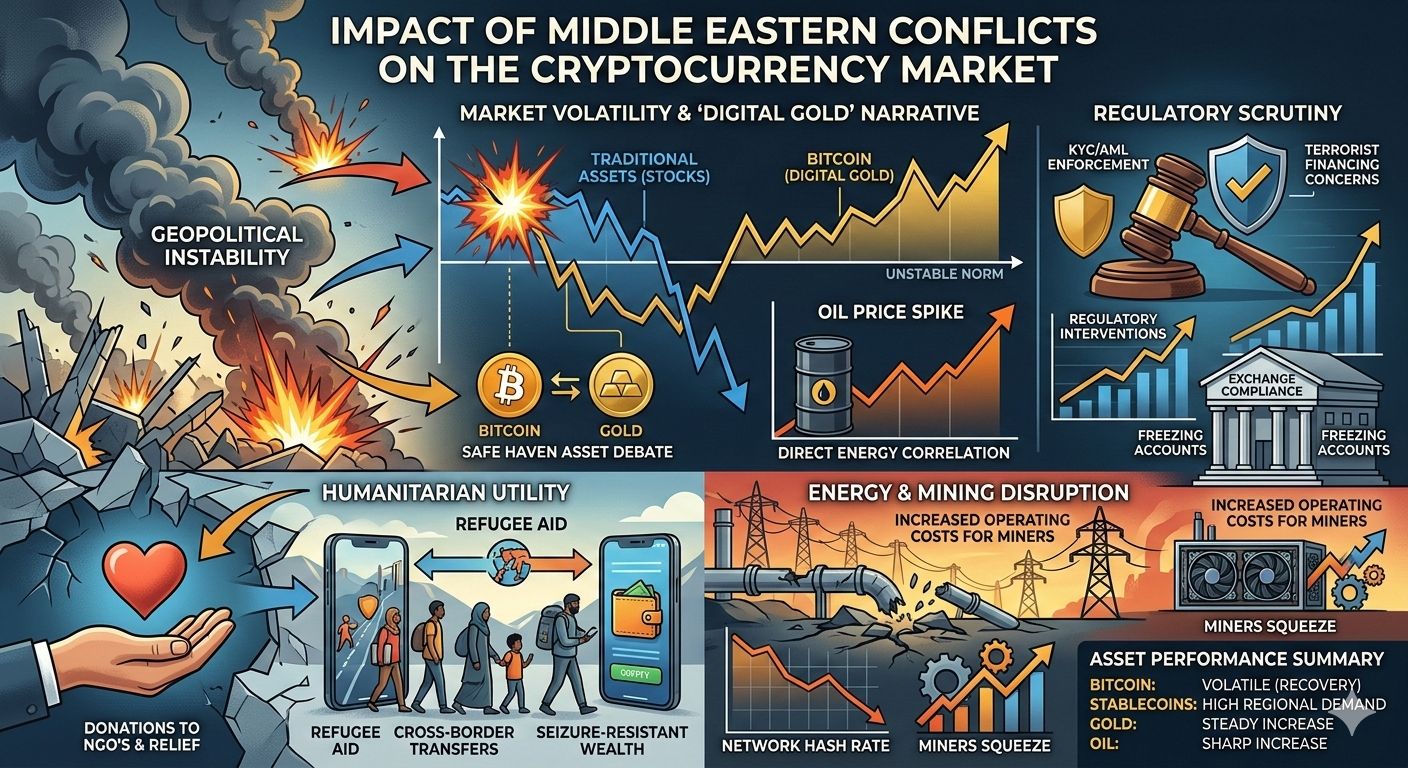
1. Increased Market Volatility
The immediate reaction to conflict is usually a "flash crash" in prices. Institutional investors often liquidate "risky" assets—including Bitcoin and Ethereum—to cover losses in traditional markets or to move into safer havens like Gold or the US Dollar.
2. The "Safe Haven" Narrative Shift
While Bitcoin is often called "Digital Gold," its behavior during Middle Eastern crises has been inconsistent:
Initial Drop: It often falls alongside the stock market during the first hours of an escalation.
Rapid Recovery: Once the initial panic subsides, Bitcoin frequently rebounds faster than stocks as people look for a borderless, seizure-resistant way to store wealth.
3. Humanitarian and Practical Utility
In conflict zones, traditional banking systems often freeze or collapse.
Cross-border Transfers: Crypto becomes a lifeline for refugees and civilians to receive financial aid or move their savings across borders without needing a functioning bank.
Fundraising: Both NGOs and various entities use crypto for rapid, global fundraising to bypass the delays of international wire transfers.
4. Regulatory Scrutiny
Middle Eastern conflicts often trigger intense debates regarding Terrorist Financing (TF).
Regulators in the US and EU typically increase pressure on exchanges to freeze accounts linked to conflict regions.
This often leads to stricter KYC (Know Your Customer) and AML (Anti-Money Laundering) policies globally.
5. Energy and Mining Disruption
If the conflict involves major energy producers (like Iran or neighboring oil-rich nations), global energy prices spike.
* Mining Costs: Since Bitcoin mining is energy-intensive, a surge in electricity costs can squeeze the profit margins of miners, potentially leading to a drop in the network's hash rate if miners are forced to shut down.
Summary Table: Asset Performance During Tensions
| Asset | Immediate Reaction | Long-term Trend |
| Bitcoin | Highly Volatile (Down) | Recovery / Hedge against inflation |
| Stablecoins | High Demand (In-region) | Used as a USD proxy in local markets |
| Gold | Steady Increase | Traditional Safe Haven |
| Oil | Sharp Increase | Direct Correlation to Middle East Supply |
> Note: While crypto offers financial freedom during crises, it remains a high-risk asset class. The "Digital Gold" thesis is still being tested in real-time with every new geopolitical event.
$ETH
$BTC

مقالة
The impact of Iran conflicts on the cryptocurrency market.
إخلاء المسؤولية: تتضمن آراء أطراف خارجية. ليست نصيحةً مالية. يُمكن أن تحتوي على مُحتوى مُمول. اطلع على الشروط والأحكام.
0
0
27
استكشف أحدث أخبار العملات الرقمية
⚡️ كُن جزءًا من أحدث النقاشات في مجال العملات الرقمية
💬 تفاعل مع صنّاع المُحتوى المُفضّلين لديك
👍 استمتع بالمحتوى الذي يثير اهتمامك
البريد الإلكتروني / رقم الهاتف