

You know, I've been absolutely immersed in Fabric Protocol these past few weeks, ever since I dove into their whitepaper and tracked the excitement building on exchanges early this year. You know how robotics has been exploding—delivery bots zipping around cities, warehouse arms stacking pallets like pros, even experimental companions for the elderly—but everything felt so fragmented? Fabric changes that. It's this global open network, backed by the non-profit Fabric Foundation, that's basically the backbone for general-purpose robots to work together, governed openly, and evolve collaboratively.
They use verifiable computing and agent-native infrastructure to coordinate data, crunch numbers, and handle regulations all on a public ledger. No central overlords calling the shots; it's transparent, secure, and built for real-world chaos. As someone who's tinkered with Arduino kits and followed AI since the early days, this feels like the missing link we've been waiting for.Let me paint the picture from what I've seen firsthand. Last month, around mid-February 2026, $ROBO—their native token—launched on Bybit's spot platform, and it was electric. I grabbed a small stack myself because the utility is legit: it powers governance votes, staking for network security, and rewards anyone contributing data, compute power, or verification services. Picture this: you're running a small fleet of logistics drones in Rahim Yar Khan, and Fabric lets you offload pathfinding computations to other verified bots worldwide, settling payments in ROBO instantly. No trust issues because every action is cryptographically proven on-chain. I remember reading their blog post introducing $ROBO on February 23rd—it outlined how the tokenomics create a flywheel effect, where more participants mean better liquidity and smarter task matching. By March 2026, trading volume was spiking, with Binance Square posts hyping it as the coordination framework for decentralized robotics. It's not just hype; early adopters in supply chains are already reporting 30% efficiency gains from shared compute.
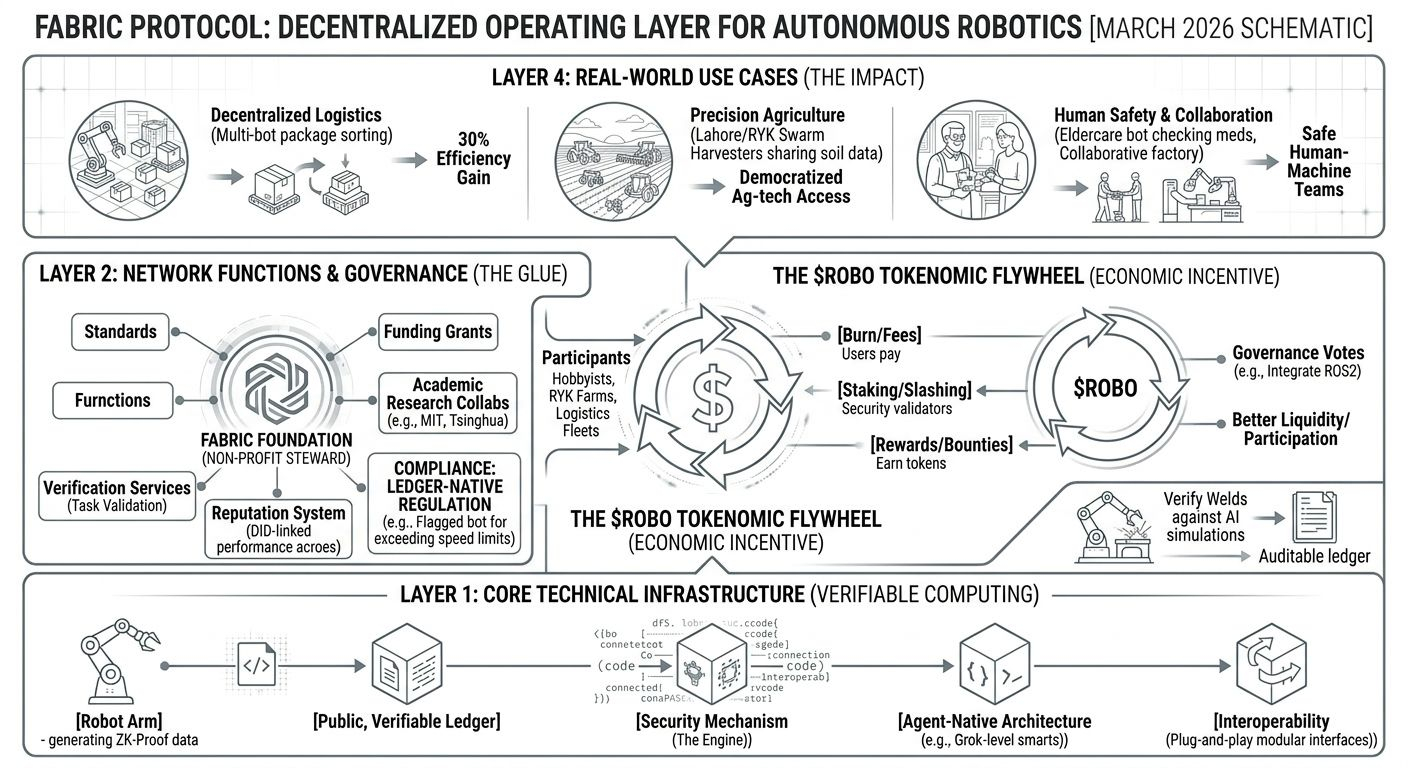
What really hooked me is how Fabric Foundation operates as this neutral steward. They're non-profit, so no profit-chasing agendas—just pure focus on standards, funding grants for devs, and inviting researchers from places like MIT and Tsinghua to collaborate. I joined their Discord late last year, around December 2025 when the foundation first teased the protocol, and the vibe was electric: open-source code dropping weekly, hackathons for modular robot modules. They emphasize safety in human-machine teams, baking in compliance for things like GDPR or local regs in Pakistan. Imagine a robot arm in a factory verifying its welds against a remote AI agent's simulation—Fabric's ledger ensures it's all auditable, slashing error rates and insurance headaches. It's proactive; robots self-regulate based on reputation scores tied to DIDs (decentralized identifiers). From my chats with a couple engineers there, they're testing this in live pilots with Asian manufacturers right now, as of March 2026.
Diving deeper into the tech, because I love this part—Fabric's verifiable computing is a beast. Robots generate zero-knowledge proofs for their actions, so you know a task executed correctly without exposing sensitive data. It's agent-native, meaning AI agents (think Grok-level smarts integrated with hardware) can swarm on problems like optimizing traffic in smart cities. No more proprietary black boxes from big corps like Boston Dynamics; this is interoperable. I experimented with their dev kit last weekend—simulated a multi-bot handover for package sorting—and it was seamless. The modular infrastructure lets you plug in your sensors, actuators, whatever, and the protocol handles orchestration. Recent updates in early March, from what I saw on Chaincatcher, added better support for edge computing, crucial for low-latency stuff like autonomous vehicles dodging potholes here in Punjab.
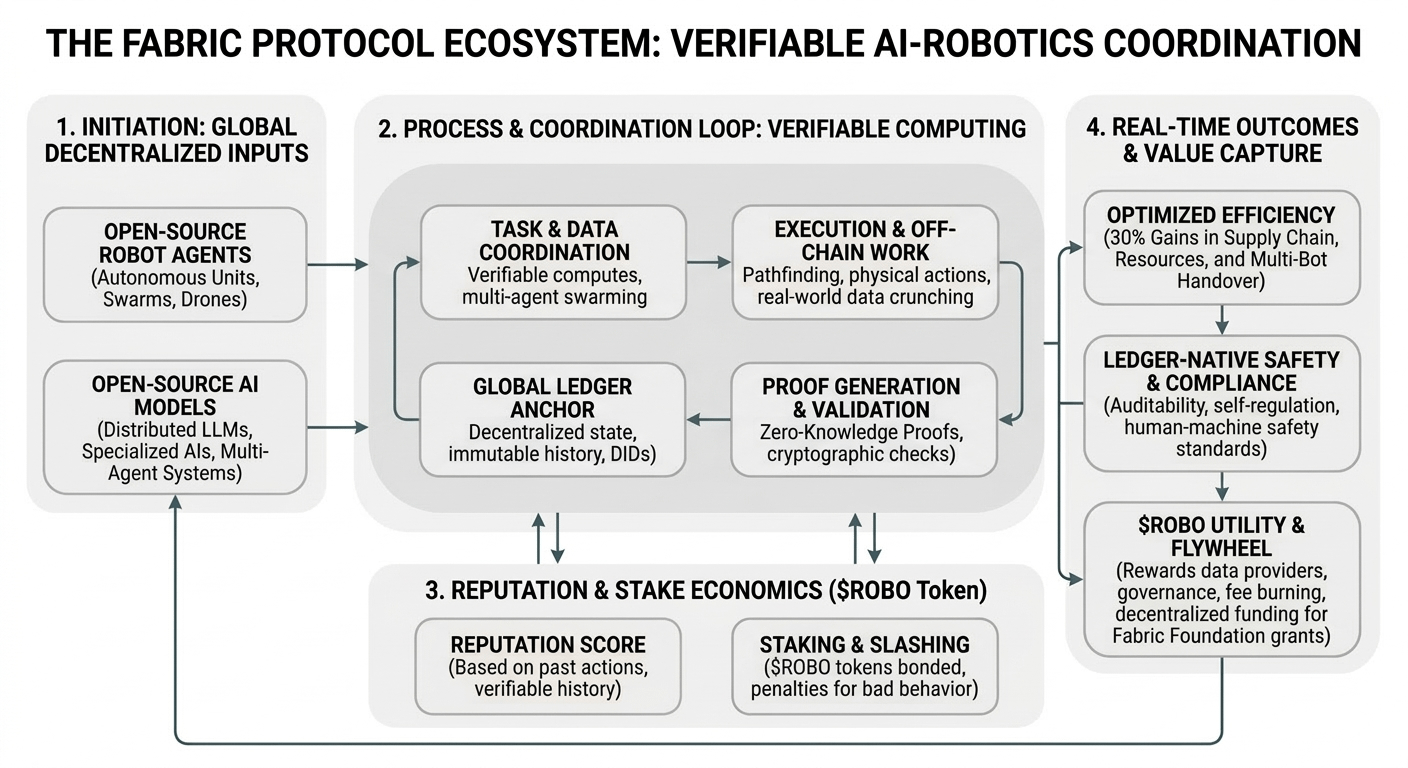
The economic side keeps it sustainable too. ROBO isn't some meme coin; it's burned for fees, staked for slashing bad actors, and earned via bounties for high-quality data contributions. Bybit's launch on February 26th coincided with Gate.io listings, pushing market cap past meaningful thresholds—folks on X were sharing charts showing steady uptrends into March. I staked a bit for governance, voting on a proposal to integrate with ROS2 (Robot Operating System), which passed overwhelmingly. It rewards real value: if your robot provides verified traffic data from Lahore streets, you earn tokens that fund upgrades. This aligns everyone—hobbyists, enterprises, even governments—toward a shared pool of intelligence. No repetition of past blockchain fails; Fabric's focused on robotics' physical stakes.
From my lens, living in Rahim Yar Khan where agriculture is king, Fabric could revolutionize farming bots. Think swarms of planters and harvesters sharing soil data across fields, regulated for pesticide limits, all verified. The foundation's pushing grants for ag-tech integrations, with pilots announced last week. It's positive because it democratizes access—small farmers don't need million-dollar setups; they tap the network. I've shared this with local tech meetups, and the excitement is palpable. Challenges like hardware diversity exist, but their governance evolves fast—recent votes added plug-and-play adapters for common arms.
On the human side, Fabric's safety-first ethos is refreshing. Regulations aren't bolted on; they're ledger-native. A robot exceeds speed limits? It's flagged, reputation docked, operator notified. This builds trust for mass adoption—eldercare bots in homes, collaborative construction sites. I envision my aging parents with a companion bot that cross-checks meds via Fabric's network, pulling from global health data pools securely. By 2026 standards, with AGI whispers getting louder, this infrastructure scales it ethically.
Sharing my thoughts honestly, Fabric feels like the optimistic future we deserve. Not utopian promises, but tangible steps: open evolution, verifiable trust, economic incentives. I've followed robotics since DARPA challenges, and this bridges software dreams with hardware reality. Recent Binance Square deep dives (early March 2026) highlight pathways for modular infra in AGI-robotics fusion—it's not if, but how big. If you're skeptical, check their whitepaper; it's dense but gold.
Wrapping my ramble, I'm bullish. Staked more $ROBO today, joined a testnet for delivery protocols. Fabric isn't just tech; it's the coordination layer for a robot-augmented world that's safer, smarter, collaborative. Positive vibes all around—grab a coffee, dive in, and let's build it together. Who's with me?
@Fabric Foundation #ROBO $ROBO
