
The world of robotics is evolving rapidly, and new technologies are shaping how humans and machines interact. One of the innovative initiatives in this field is Fabric Protocol ($ROBO), a global open network designed to support the development, coordination, and governance of general-purpose robots.
Fabric Protocol aims to create a collaborative ecosystem where both humans and machines can work together efficiently. The protocol is supported by the Fabric Foundation, a non-profit organization dedicated to maintaining an open, transparent, and innovative environment for robotics development.
The Problem Fabric Protocol Addresses
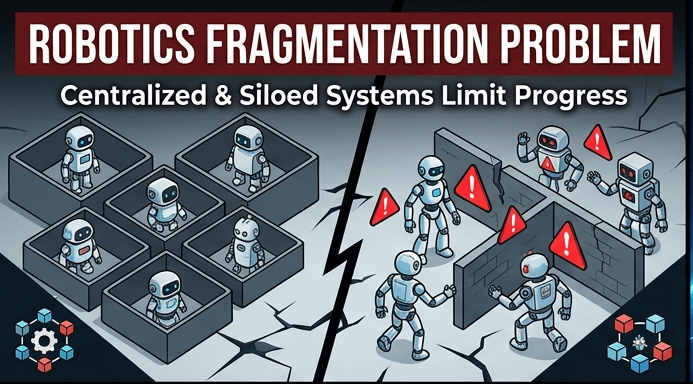
One of the biggest challenges in robotics today is the lack of coordination and trust across different systems. Most robotics platforms operate within closed environments where data, computational processes, and decision-making are controlled by a single organization.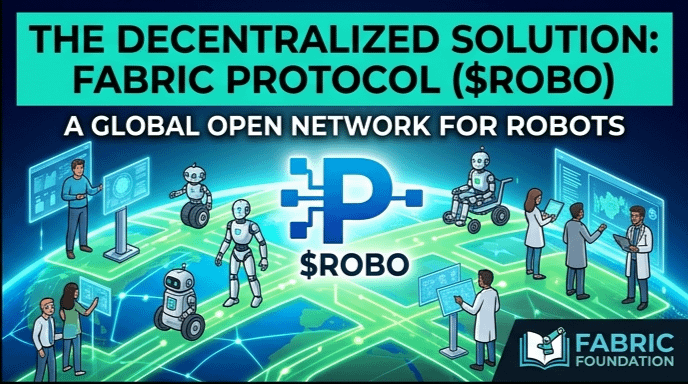
This centralized structure limits collaboration and transparency. Fabric Protocol addresses this challenge by introducing a decentralized framework where multiple participants—developers, researchers, and organizations—can work together to build and improve robotic systems.
Verifiable Computing: A Key Innovation
A core feature of Fabric Protocol is verifiable computing, a technology that ensures the actions and computations performed by robots can be verified.
In simple terms, verifiable computing allows systems to confirm that robots are performing tasks exactly as intended, without hidden manipulation or unauthorized processes. This significantly increases trust, accountability, and security in robotic operations.
The Role of Fabric Foundation
The Fabric Foundation plays an essential role in maintaining and guiding the ecosystem. As a non-profit entity, its mission is to ensure the platform remains open, fair, and sustainable for long-term innovation.
The foundation focuses on research, governance standards, and ecosystem development, helping maintain reliability and transparency within the network.
Human–Robot Collaboration
Fabric Protocol also promotes deeper collaboration between humans and machines. Within the system, robots operate as agents that can safely interact with humans and share data across the network.
This approach allows robots to become more adaptive, intelligent, and responsive in real-world environments, expanding their usefulness across multiple industries.
Transparency Through a Public Ledger
Another important element of Fabric Protocol is the use of a public ledger to coordinate data and computational activities. This ledger records important events and interactions within the network.
By maintaining this transparent record, participants can verify processes and ensure that the system operates fairly and reliably.
Enabling Open Innovation
Unlike traditional robotics systems that are often closed and proprietary, Fabric Protocol is built around the concept of open innovation. Developers and researchers from around the world can collaborate to design, test, and improve robotic technologies.
Through its decentralized infrastructure, transparent governance model, and verifiable computing capabilities, Fabric Protocol is laying the foundation for a new era of robotics—one where collaboration, trust, and innovation drive the future of human-machine interaction.
@Fabric Foundation #ROBO $ROBO
