
Blockchain technology was originally designed to create transparent and trustless systems. Every transaction is recorded on a public ledger that anyone can verify. While this transparency improves security and accountability, it also creates a major challenge: privacy. In many blockchains, transaction details such as wallet addresses and balances can be viewed publicly, which may expose sensitive information or user behavior.
To solve this issue, a new generation of blockchain systems is adopting ZeroKnowledge (ZK) proof technology. This cryptographic method allows networks to verify information without revealing the underlying data, enabling utility while protecting ownership and privacy.
Understanding Zero-Knowledge Proofs
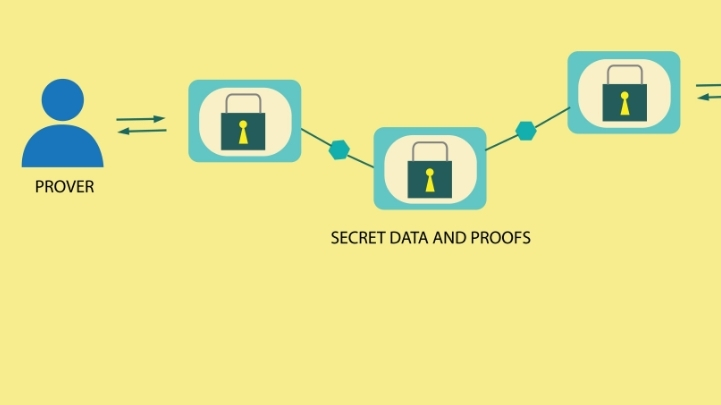
A zero-knowledge proof is a cryptographic technique that allows one party (the prover) to prove to another party (the verifier) that a statement is true without revealing any additional information about the statement itself.
Instead of exposing sensitive data, the system only proves that the data satisfies certain conditions. For example, a user could prove they have enough funds for a transaction without revealing the exact balance in their wallet.
This approach introduces three essential components in the verification process:
Witness the hidden data or secret information
Challenge a verification request from the network.
Response a mathematical proof that confirms the statement is correct.
Through this process, the network can verify validity while keeping the underlying data privat
Why Traditional Blockchains Need ZK Technology
Public blockchains like Bitcoin and Ethereum prioritize transparency. While this ensures trustless verification, it also means transaction details are often visible to everyone on the network.
This openness can lead to several issues:
Exposure of financial activity
Loss of personal privacy
Traceability of wallet addresses to real identities
Zero-knowledge systems address these problems by separating verification from data disclosure. The network confirms that a transaction is legitimate without revealing who sent it, who received it, or how much value was transferred.
Core Technologies Behind ZK Blockchain
Modern ZK-based systems rely on advanced cryptographic constructions. Two of the most widely used are:
zk-SNARKs
Short for Zero-Knowledge Succinct Non-Interactive Arguments of Knowledge, this technology allows compact proofs that can be verified quickly by the network.
zk-STARKs
A newer method that improves scalability and removes the need for trusted setup while allowing verification of large computations.
These technologies enable blockchains to process complex operations privately while still maintaining cryptographic proof of correctness.
Practical Applications of ZK Blockchains
Zero-knowledge technology is expanding the capabilities of blockchain networks in several areas:
1. Private Transactions
Privacy-focused cryptocurrencies such as shielded systems use ZK proofs to validate transactions without revealing the sender, receiver, or amount transferred.
2. Layer-2 Scaling
ZK rollups process transactions off-chain and submit a proof to the main chain confirming that all transactions are valid. This reduces congestion and lowers transaction costs while maintaining security.
3. Identity Verification
Users can prove they meet certain requirements (age, citizenship, or credentials) without sharing personal information, protecting identity while enabling compliance.
4. Data Ownership
Instead of storing raw data on-chain, systems can store proofs of data validity. This allows users or organizations to maintain control of their data while still participating in decentralized networks.
Benefits of Zero-Knowledge Blockchain Systems
The integration of ZK proofs brings several advantages to blockchain infrastructure:
1. Privacy Protection
Sensitive information remains hidden while the system still verifies correctness.
2. Data Ownership
Users maintain control over their personal or financial data rather than exposing it publicly.
3. Scalability
ZK rollups allow large batches of transactions to be verified efficiently.
4. Security
Proof-based verification reduces the need to trust intermediaries.
5. Compliance-Friendly Design
Proofs can demonstrate compliance or eligibility without revealing confidential information.
Challenges and Limitations
Despite its advantages, ZK technology still faces several technical challenges.
High computational cost:
Generating proofs requires significant computing resources in some systems.
Complex development:
Building circuits and cryptographic proofs requires specialized expertise.
Infrastructure maturity:
Many ZK systems are still evolving, and toolimproving gradually.
Even with these limitations, ongoing research is rapidly improving efficiency and accessibility.
The Future of ZK-Powered Blockchain Networks
Zero-knowledge technology is becoming one of the most important innovations in the blockchain ecosystem. Instead of forcing users to choose between transparency and privacy, ZK systems create a balance between verification, ownership, and confidentiality.
As blockchain adoption expands into finance, identity systems, supply chains, and artificial intelligence, ZK infrastructure will likely play a central role in enabling secure and scalable decentralized applications.
Takeaway
Zero-knowledge proof technology represents a major shift in how blockchain systems handle privacy and trust. By allowing networks to verify transactions and computations without exposing underlying data, ZK blockchains protect user ownership while maintaining the integrity of decentralized systems.
In simple terms, the technology changes the core model of verification: the network no longer needs to see your data to confirm it is valid.
This ability to combine privacy, scalability, and trustless verification is why zero-knowledge systems are increasingly viewed as a foundational layer for the next generation of blockchain , @MidnightNetwork $NIGHT #NİGHT
