The Convergence of AI and Hardware
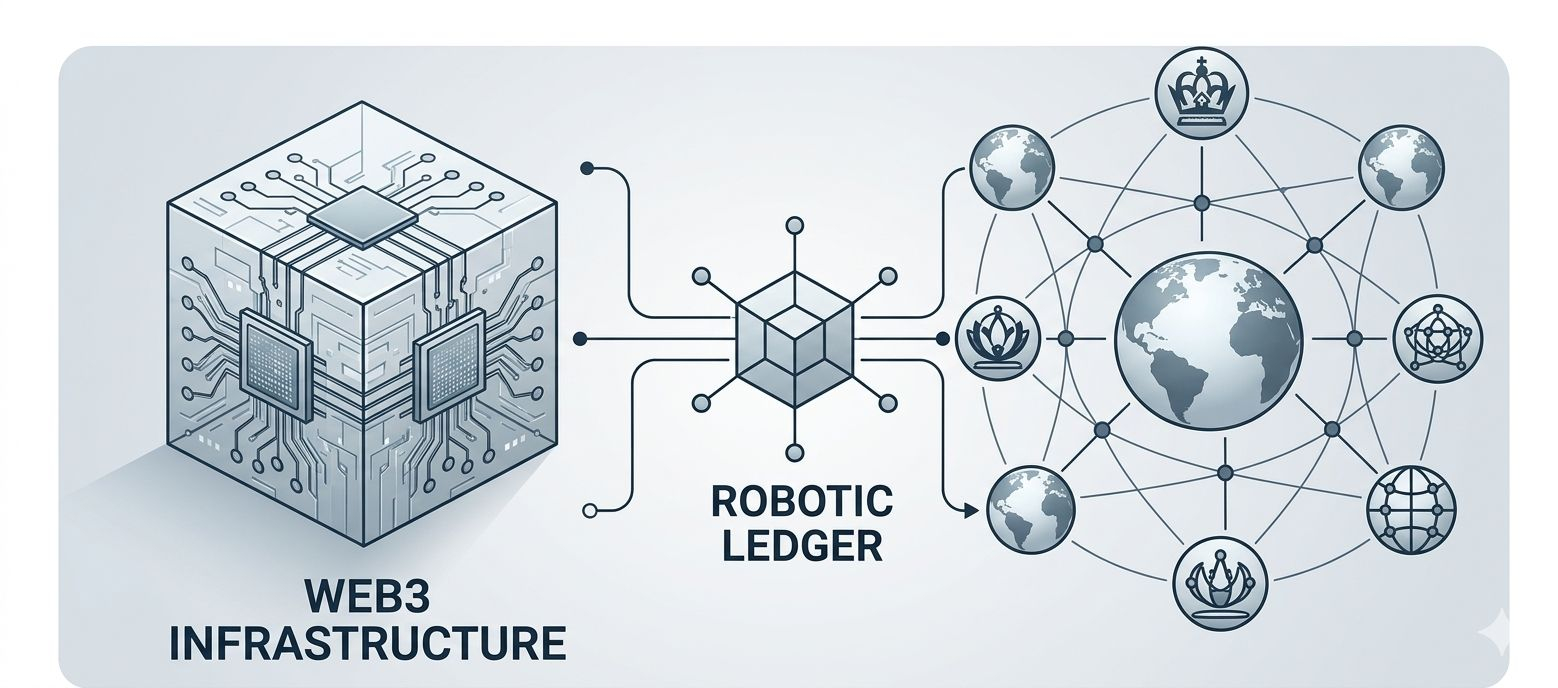
We are entering the era of Embodied AI. While the last decade focused on digital agents like chatbots, the next will be defined by intelligence that interacts with the physical world. However, general-purpose robots require more than just "brains" they need a decentralized, verifiable, and scalable infrastructure. This is where th Fabric Protocol and the @Fabric Foundation come in, creating the fundamental nervous system for the global robotics industry.
1. Breaking the Robotics Bottleneck
Currently, robotics development is siloed within large corporations. This creates three critical failures:
Lack of Interoperability: Systems cannot share data or learning protocols.
Centralization Risks: Single points of failure create privacy and security concerns.
Computational Costs: Local hardware is often too weak or expensive for high level AI.
The Fabric Protocol solves this by providing a global open network that ensures innovation isn't trapped behind corporate walls.
2. Verifiable & Agent-Native Architecture
The core of the Fabric Foundation is its verifiable computing environment. In an "Agent-Native" world, robots must verify their tasks and data. The protocol coordinates:
Data: Secure environmental sharing for collective learning.
Computation: Offloading tasks to a decentralized network.
Regulation: Ensuring machine actions meet safety standards through a public ledger.
3. Scalability via Modular Infrastructure
Traditional robotics is rigid. Fabric introduces a modular setup where developers can "plug in" modules for vision or logic. This allows small-scale innovators to contribute to the global network, with the $ROBO token acting as the incentive layer for providing data and computation.
4. The Utility of $ROBO
The $ROBO token is the fuel of this ecosystem:
Governance: Holders influence the Foundation’s direction.
Incentivization: Rewards for developers and robotic agents.
Security: Secures the public ledger through network participation.
5. A Shift in Human-Machine Collaboration
Safety shouldn't be a patch; it must be infrastructure. Fabric’s verifiable computing allows robot logic to be audited in real time, creating a "trustless" environment for safe human machine interaction. This democratizes access to high level automation, allowing a breakthrough in one lab to be implemented by robots globally within minutes.
The Road Ahead
We are at the "dial-up" phase of robotics. As the Fabric Protocol matures, we anticipate mass adoption of affordable general-purpose robots and the rise of a self-sustaining Robot Economy.
#ROBO #FabricFoundation #Web3 #Robotics #Aİ