
&Fabric Foundation 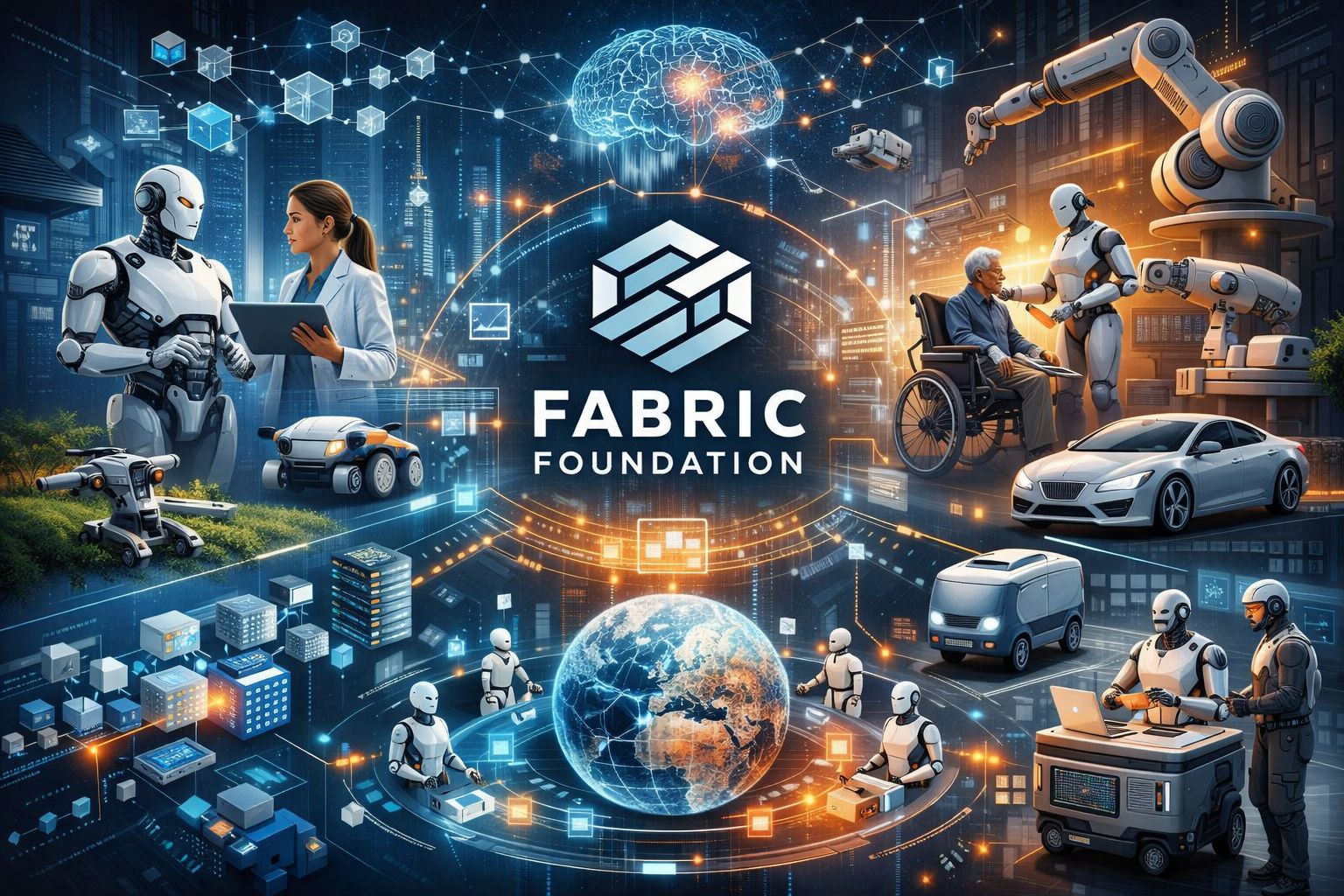
The world is entering a new era where robots are no longer isolated machines working in factories. Instead, they are becoming intelligent partners capable of collaborating with humans across industries. At the center of this transformation is Fabric Protocol, an innovative global network supported by the non-profit Fabric Foundation. This initiative aims to create an open ecosystem where robots can be built, governed, and improved collaboratively through secure, transparent, and verifiable technologies.
Fabric Protocol introduces a revolutionary concept: a shared digital infrastructure where robotics, artificial intelligence, and decentralized computing come together. By combining these technologies, the protocol allows developers, researchers, companies, and communities around the world to contribute to the development of general-purpose robots. These robots are not limited to a single task. Instead, they can evolve continuously, learning new abilities and adapting to different environments through shared knowledge and decentralized coordination.
One of the core components of Fabric Protocol is verifiable computing. In traditional systems, verifying the reliability of data and computational results can be difficult. Fabric solves this challenge by ensuring that every action, update, or computation can be verified on a public ledger. This approach increases transparency and trust within the network. Developers can confidently build robotic systems knowing that data integrity and operational results can always be validated.
The protocol also introduces agent-native infrastructure, a system designed specifically for autonomous agents such as robots and AI software. In this environment, intelligent agents can communicate, coordinate tasks, and exchange data seamlessly. For example, a delivery robot could access shared navigation data from other robots in the network, improving efficiency and safety in real time. Similarly, industrial robots could share performance data to optimize manufacturing processes across different locations.
Another important aspect of Fabric Protocol is decentralized governance. Instead of a single organization controlling the development of robotics infrastructure, Fabric enables a community-driven governance model. Contributors, developers, and stakeholders can participate in decision-making processes regarding protocol upgrades, data standards, and regulatory frameworks. This ensures that the technology evolves responsibly while reflecting the needs and values of the global community.
Safety and regulation are also central to the Fabric ecosystem. As robots become more integrated into daily life, ensuring safe human-machine collaboration is essential. Fabric Protocol coordinates data, computation, and regulatory mechanisms through its public ledger, allowing transparent oversight and compliance. This framework helps prevent misuse while encouraging innovation in robotics and AI.
The modular design of Fabric’s infrastructure allows developers to build applications and robotic systems more efficiently. Instead of starting from scratch, they can integrate pre-built modules for communication, verification, computation, and governance. This modularity accelerates innovation and reduces barriers for startups, researchers, and independent developers entering the robotics field.
In the long term, Fabric Protocol could become the backbone of a global robotics network. Imagine a world where autonomous vehicles, service robots, industrial machines, and personal assistants all operate within a shared ecosystem, constantly learning and improving from one another. Such a system could transform industries including logistics, healthcare, agriculture, manufacturing, and urban infrastructure.
The Fabric Foundation plays a crucial role in supporting this vision. As a non-profit organization, it focuses on research, community development, and the long-term sustainability of the protocol. By maintaining an open and transparent approach, the foundation ensures that the network remains accessible and beneficial to developers, businesses, and society as a whole.
In conclusion, @Fabric Foundation Fabric Protocol represents a powerful step toward the future of robotics and decentralized technology. By combining verifiable computing, agent-native infrastructure, decentralized governance, and modular design, it creates a foundation for safe and collaborative human-machine interaction. As the global community continues to contribute and innovate within this ecosystem, Fabric could redefine how robots are built, governed, and integrated into our everyday lives.
Here are some relevant hashtags you can use for your post about Fabric Foundation / Fabric Protocol:
#FabricFoundation
#FabricProtocol
#BlockchainTechnology
#DecentralizedNetwork
#Web3Innovation
#AIInfrastructure
#RoboticsTechnology
#FutureOfRobots
#HumanMachineCollaboration
#VerifiableComputing
#AgentNativeInfrastructure
#DecentralizedGovernance
#TechInnovation
#DigitalFuture
#AIandRobotics
#OpenTechnology
#SmartInfrastructure
#NextGenTechnology
#CryptoEcosystem
#Web3Development 🚀