
Most days I check out fresh blockchain setups. What makes some thrive while others gather dust isn’t fancy economics. Not future plans either. Success comes down to if coders can work on it without constant frustration. The real test is how smoothly they create things.
Quietly, many privacy centered blockchains stumble here. On paper, the tech seems strong. Yet when attempting a smart contract, it hits: without serious crypto circuit knowledge, progress stops fast. This is where users typically walk away.
From the start, Midnight saw it another way.
The Language Question
Choosing a smart contract language means shaping the kind of builders a new blockchain attracts. Chains have gone different ways some created fresh tools from nothing. A few borrowed what was already out there. Midnight went quiet one day and emerged with Compact, a tool shaped by an odd choice: grounding it firmly in TypeScript.
Small it may seem. Yet here, size doesn’t tell the truth.
Reading TypeScript means picking up Compact feels familiar. Its design leans heavily on TypeScript’s patterns. Surprise gaps between the two barely exist. Writing in TypeScript prepares you well for Compact. The shape of things stays close throughout. Differences hide where few notice them 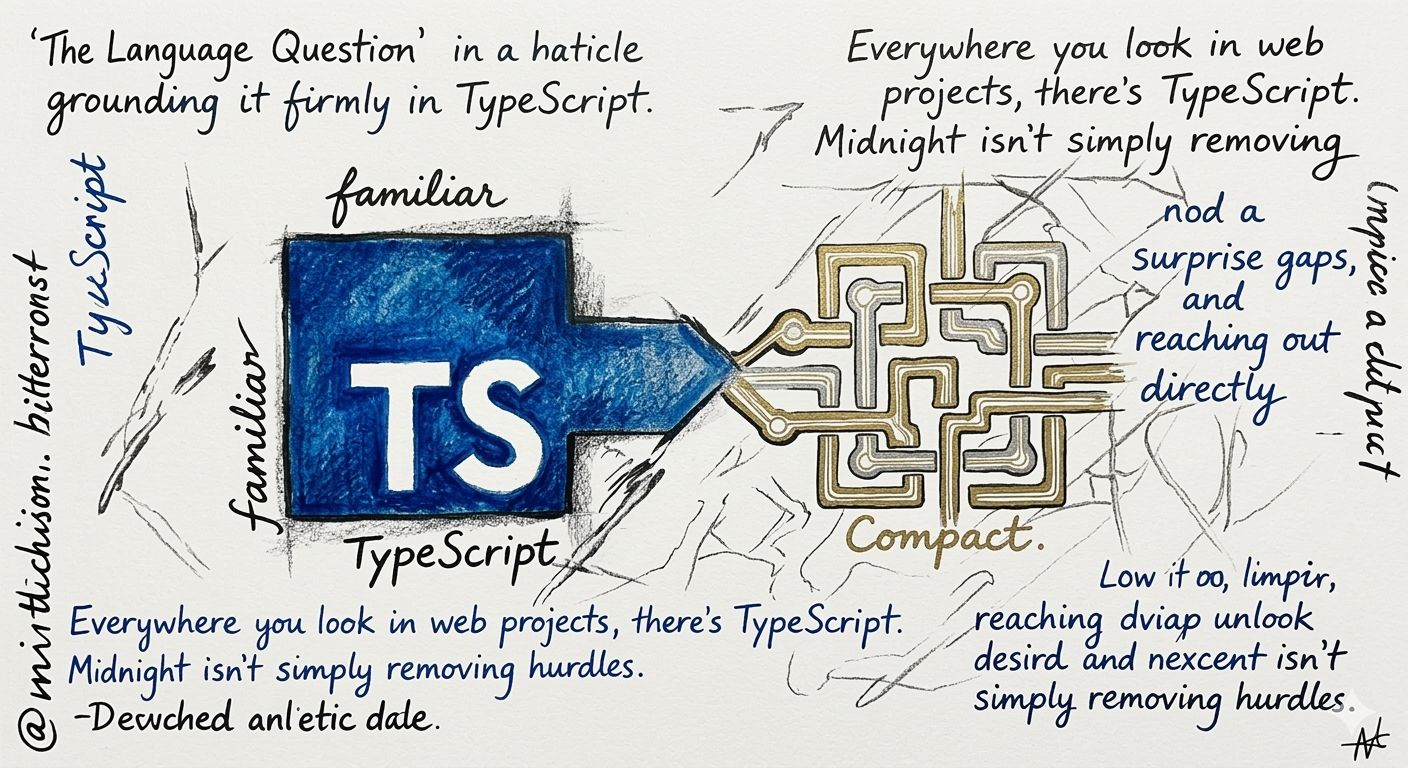
Everywhere you look in web projects, there's TypeScript. Day after day, millions of coders use it without pause. Frontend apps run on it, while servers behind the scenes depend on it too. Tools, interfaces, scripts, they lean on its structure now. Slowly but surely, most groups adopted it as their go to during recent years. Midnight isn’t simply removing hurdles when it claims its smart contract language resembles TypeScript. It’s reaching out , directly, to a vast pool of developers already fluent in that world. These are folks who might step right into building, no retraining needed.
This crowd isn’t the one usually drawn to crypto development scenes.
What a contract really looks like
Now things start making sense. The setup of a Midnight smart contract differs from how Ethereum handles them. Instead of living entirely onchain and running when triggered, it breaks apart. Each part lands somewhere specific, placed there deliberately.
A tiny agreement holds three key parts together: think ledger first, then circuits tag along, followed by witnesses bringing up the rear.
Out in the open sits the ledger. This piece of data rests onchain, viewable by whoever looks. Think of it as a tally kept for everyone to see. It holds information plainly, no secrets involved. What you get is transparency, just numbers, entries, promises etched where they can’t be hidden.
A circuit holds the rules. Not quite like most blockchain actions though. Running outside the chain, a witness works where secret details live. With that setup, apps guard hidden states beyond the ledger. Proof builds from information staying far from open view 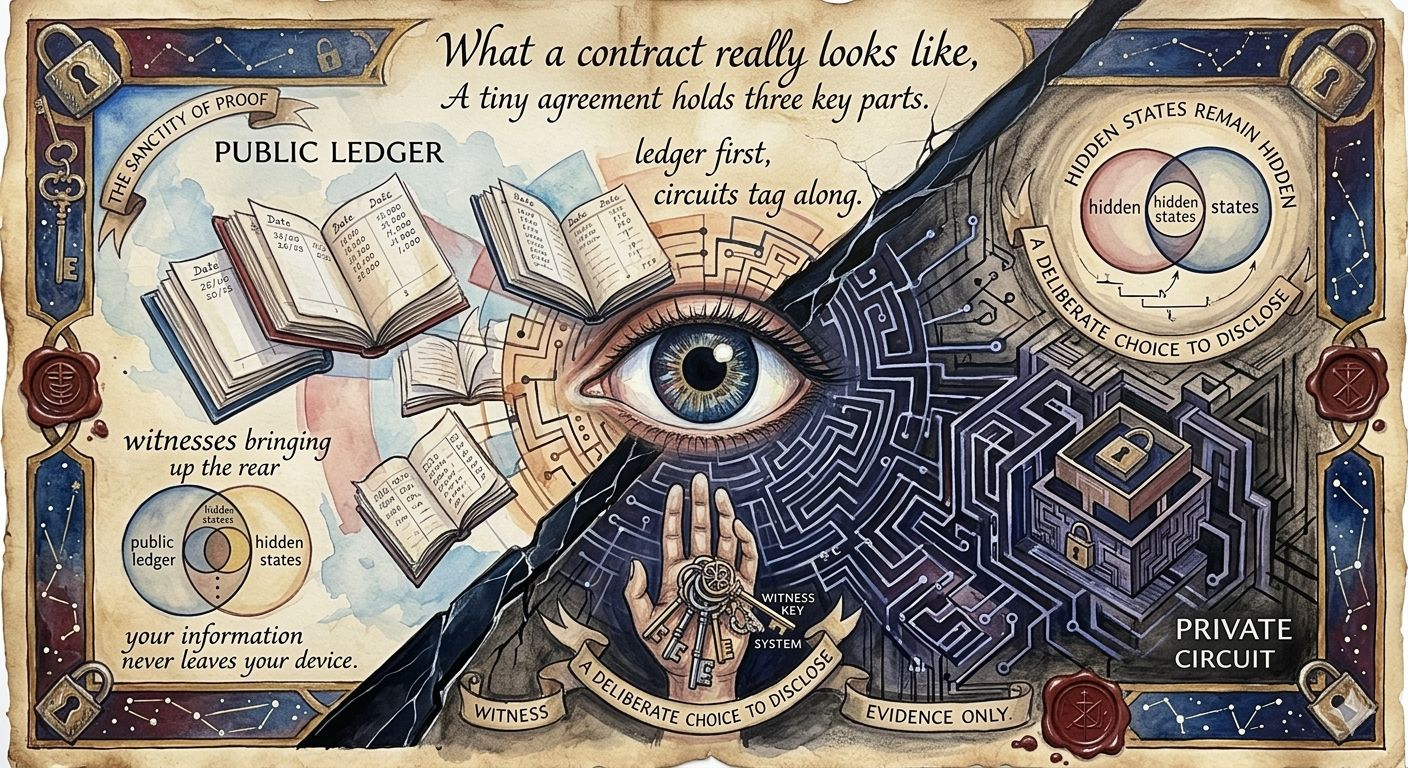
Here's how it works: your information never leaves your device. On your computer, the process completes start to finish. Sent to the network isn't raw details but confirmation the steps happened right. Only evidence of correct execution moves forward.
That way of thinking isn’t what people usually meet in blockchain work. You need some quiet time to let it sink in. Yet when it finally lands, the design suddenly feels obvious.
How compilers handle your code automatically
This piece hits hardest when you write code but never studied crypto, true for plenty of coders.
Building zero-knowledge proofs from scratch means drawing circuits yourself, wrestling with constraints, handling keys for proof and verification. This isn’t common know-how. That’s why only tight groups of specialists tend to make these tools work.
When midnight strikes, its compact language eases complexity, transforming code similar to TypeScript into circuits without manual steps.
Your words shape the rules. Yet it's the tool that manages secret codes. When compilation runs, your tight script becomes hidden math puzzles, builds key sets, also delivers TypeScript tools alongside working JavaScript for the agreement.
Infrastructure shifts beneath your feet, quietly. Tools you know already reach down into it without fuss. Output feels like home, because it is. An editor works beside you, whispering hints as code takes shape. Type safety wraps around logic, gently. Proofs run close by, inside the same room where ideas form. Everything stays within arm's reach, always.
Here is why devs start using a new platform. It isn’t about forcing them to begin over. Instead, it works when it slips right into what they’re already doing. 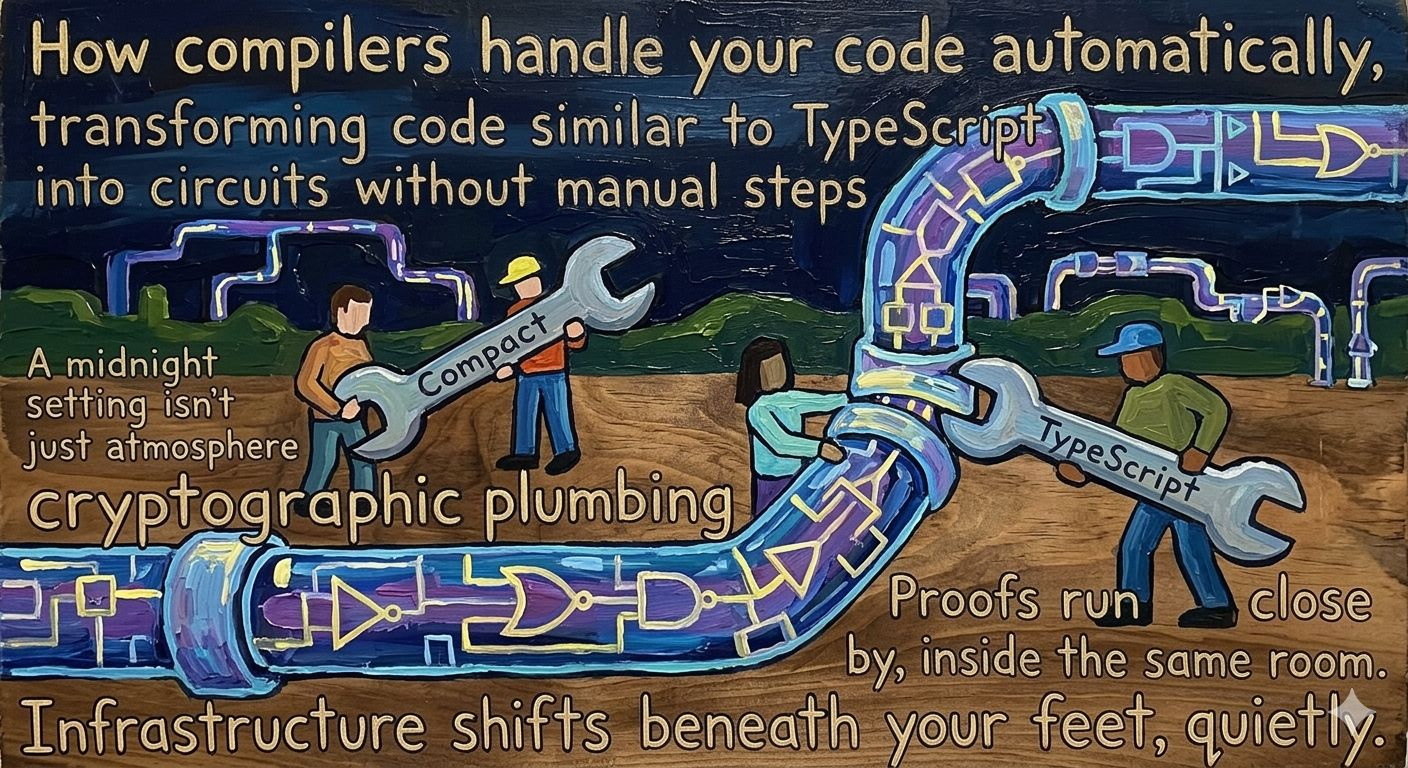
Private by Default
After some time looking at Compact's design, something stands out, privacy doesn’t get added later. Right from the start, it’s already there.
Something shows up on the public record only if you make it appear there. By default, everything inside the circuit stays hidden. To reveal data, you need a specific command made for that job. That tool is called disclose. It runs when you mean to share. Only then does information move into view.
Most setups do things backward. Visibility comes first, protection later. This one hides everything at the start. What shows up is decided on purpose.
That quiet detail quietly guides developer choices during creation. Safety comes first without anyone needing to act. Reaching outward takes deliberate effort instead.
The Bigger Picture
Out here in the code woods, Minokawa - that open piece under Linux Foundation Decentralized Trust , flips how contracts usually work. It builds right in privacy for both data and rules, not just what's visible. When things run, proofs form on their own. Circuits fire without nudging. Checks happen behind the scenes. All that noise fades, leaving room to build actual features. Midnight carries it through.
Still echoes in my mind. That term ,cryptographic plumbing. It fits too well. What’s blocked most groups from making private tools isn’t lack of will. It’s the setup. Fiddling with low level layers takes time. These pieces demand rare skills. They live apart from the thing you actually want to create.
Out of sight, pipes let builders do extra work. Software works that way too. Databases made dealing with files disappear into the background. Cloud systems hid the machines running everything. This keeps happening again and again.
Happening again right here? That’s down to many factors. Without tools, progress stalls - yet tools alone change nothing. People building stuff require clear guides, working samples, somewhere to talk through problems, plus real reasons to keep going.
A midnight setting isn’t just atmosphere, it shapes how ideas take root. Learning unfolds step by step, starting with privacy logic, then moving into code layout, yet always circling back to layer connections between what's visible and hidden. This setup rarely appears unless builders care about who stays after the first login.
What Gets Built Next
A world of words sits ready. Over there, the compiler waits. Tools line up, already in place. Someone wrote it down ,proof is near.
It remains unclear which direction builders will go once the system launches. The possibilities are truly undefined. Real work needs real time. Ideas that appear straightforward often run into trouble. What feels small at first sometimes fits a hidden need perfectly.
Something feels different when tools get used in ways creators never planned. Midnight isn’t quite there yet. Still, the pieces needed are finally within reach.
Worth keeping in mind. Said softly, with nothing extra added.