
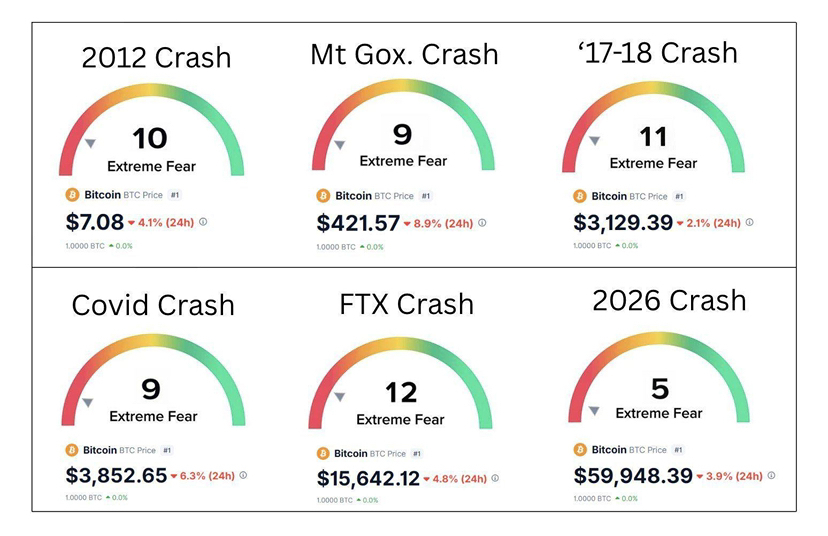
 Most big drops in Bitcoin’s price happen when panic takes over.
2012 crash fear lingers at level ten
Mt. Gox Crash Fear: 9
2017–2018 bear market fear level 11
Covid Crash Fear Nine
Fear After FTX Collapse
And now…
2026 market fear peaks
Fear often opens doors few notice. BTC climbs back to 70k
This round, fear barely shows up at all compared to earlier downturns.
Different structure.
Stronger hands.
Bigger players.
Bouncing back from disaster - that's something Bitcoin knows well. Each steep plunge brought loud claims it was done for, whispers that the whole thing had collapsed for good. Still, those dark phases frequently became doorways, hidden chances appearing just as most gave up hope. Looking close, panic peaked right where smart openings began.
Back then, right after the 2012 meltdown, Bitcoin barely made a blip on most radars. With few buyers and even fewer believers, it teetered like a house of cards. Sliding down toward $7, its value seemed to echo doubts rippling through early users - would this thing last? Hushed tones carried dread wherever talk surfaced online. Yet looking back now, those shaky months quietly laid ground for what came next: slow buildup by patient hands ahead of wider notice.
Back then, Mt. Gox fell apart much like others before it. That platform handled more Bitcoin trades than any other at the time, yet when it crashed, shock rippled through every corner. Faith in how things were built started cracking, some thinking everything would just fade away. Mood turned sour fast - fear took over while values stayed stuck near small numbers. Even so, the core system kept running without pause, silent and steady beneath the noise. Later on, a new phase kicked in, dragging Bitcoin out of shadows and into bright public view.
Later on, the fallout from the 2017 surge brought yet another sharp drop. Nearly hitting $20,000, Bitcoin then slid into a long slump - losses piled past 80%. Talk shifted back to doubt; claims spread that the frenzy was truly over. Mood swung deep into worry when values neared $3,000. Still, within that fall sprouted seeds for what came next: fresh systems, trading platforms, and bigger recognition took root while things stayed quiet
Fear gripped markets worldwide when the pandemic triggered a financial meltdown in 2020. As infections rose, so did chaos - stock exchanges tumbled together like falling dominoes. The price of Bitcoin plunged fast, mood soured quickly, while investors scrambled toward safety instead of gains. Still, beneath that turmoil, something surprising took root. A powerful upward climb began soon after, lifting cryptocurrency into record territory even as major firms started watching closely for the first time.
When FTX fell apart in 2022, the sector faced yet another tough moment. Once among the biggest names in crypto trading, it crumbled fast - sparking huge financial damage and weakening faith in centralised systems. Panic returned, spreading quickly through markets. Doubt grew about whether any platform could be trusted, authorities began digging deeper, while available funds dried up overnight. Still, beneath all the chaos, the underlying system kept running just like before. $BTC.
Right now feels different because people aren’t reacting like they used to when markets wobbled before. While swings and steep drops have happened again, dread isn’t spreading nearly as fast or deep as it did in past meltdowns. That raw, jittery terror which used to flood trading floors seems quieter this time around.
This change could mean the market's foundation looks different now. Not just tech fans and small investors track Bitcoin anymore. Because big players are involved, along with deeper funding sources and stronger systems, how prices move has shifted. Even though swings still happen, people react in calmer ways compared to earlier phases.
Looking back, Bitcoin's biggest chances showed up when panic hit hard and nobody believed anymore. These moments felt like curtains closing, even though that was never how it ended. Truth is, each one just marked another step forward in tech progress and money changes. Scary times turned out to be turning points all along.
Something feels different now. Not because everyone agrees, but because reactions have shifted - where once there was rushing toward exits, today holds stillness, pockets of steady buying. Volatility remains, yes, yet fear doesn’t grip like before. That absence might mean something bigger: a change not in price, but in mindset. Buyers aren’t shouting; they’re waiting, placing moves without drama. The cycle could be aging, trading frenzy for patience.
Only time can show if this turns into a defining chapter. Yet lessons from earlier Bitcoin phases suggest doubt often paves the way forward.
Simple it sounds, yet the core of it cuts deep
Folks often wonder - could this dip be just a pause instead of defeat? Hmm
