
It fails when it is too difficult to use.
There is something paradoxical in Web3.
Everyone says privacy matters.
Everyone agrees that protecting data will become more important as blockchain grows.
And yet, for many builders, privacy still feels far away.
Not because they reject it.
Not because they do not see the need.
But because the path toward it often looks too technical, too abstract, too difficult to enter.
That is where the real barrier begins.
For a long time, blockchain has been associated with visibility.
Open ledgers.
Traceable activity.
Permanent records.
That transparency created trust, but it also created a limit.
At some point, every ecosystem has to ask a harder question:
How do you preserve verification without exposing everything?
That is why privacy is no longer a side topic in Web3.
It is becoming infrastructure.
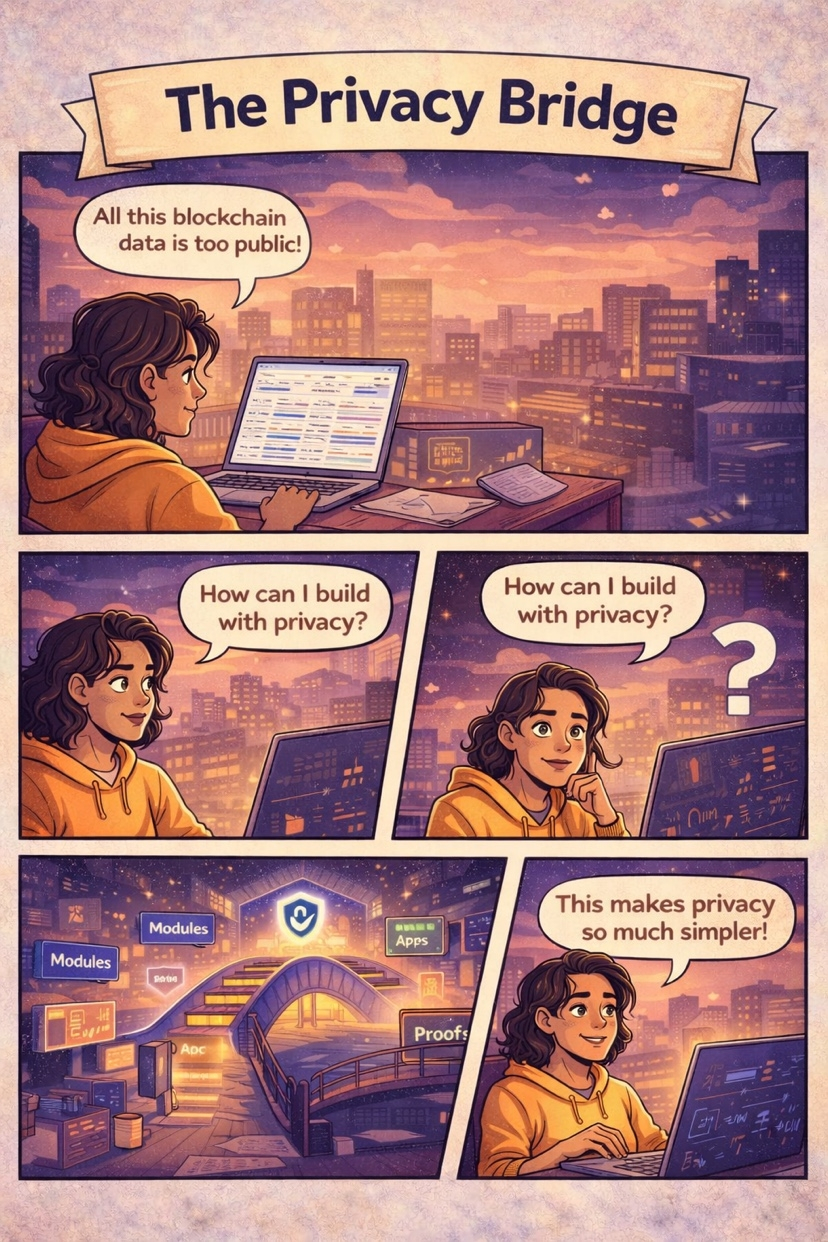
While exploring the ecosystem around $NIGHT, one idea kept standing out to me:
the challenge is not only building privacy technology.
The real challenge is making privacy feel usable.
That sounds simple, but it changes everything.
Because most builders do not want to spend months buried inside cryptographic theory just to understand where to begin.
They want tools they can explore.
Systems they can test.
Environments that feel closer to creation than to academic survival.
And that changes the conversation.
Instead of asking whether privacy is powerful, the better question becomes:
Can real developers actually build with it?
That is where projects around @MidnightNetwork start to feel interesting.
Not only because of what they promise in theory,
but because of what they are trying to make possible in practice.
Open ledgers.
Traceable activity.
Permanent records.
That transparency created trust, but it also created a limit.
Because once blockchain moves beyond speculation and starts touching identity, business logic, user behavior, and sensitive interactions, visibility stops feeling like a pure advantage.
That is why privacy is no longer a side topic in Web3.
It is becoming infrastructure.
A lot of technologies fail at the exact same point:
they are impressive, but not accessible.
From the outside, privacy in Web3 sounds elegant.
Selective disclosure.
Proof without exposure.
Verification without surrendering the data.
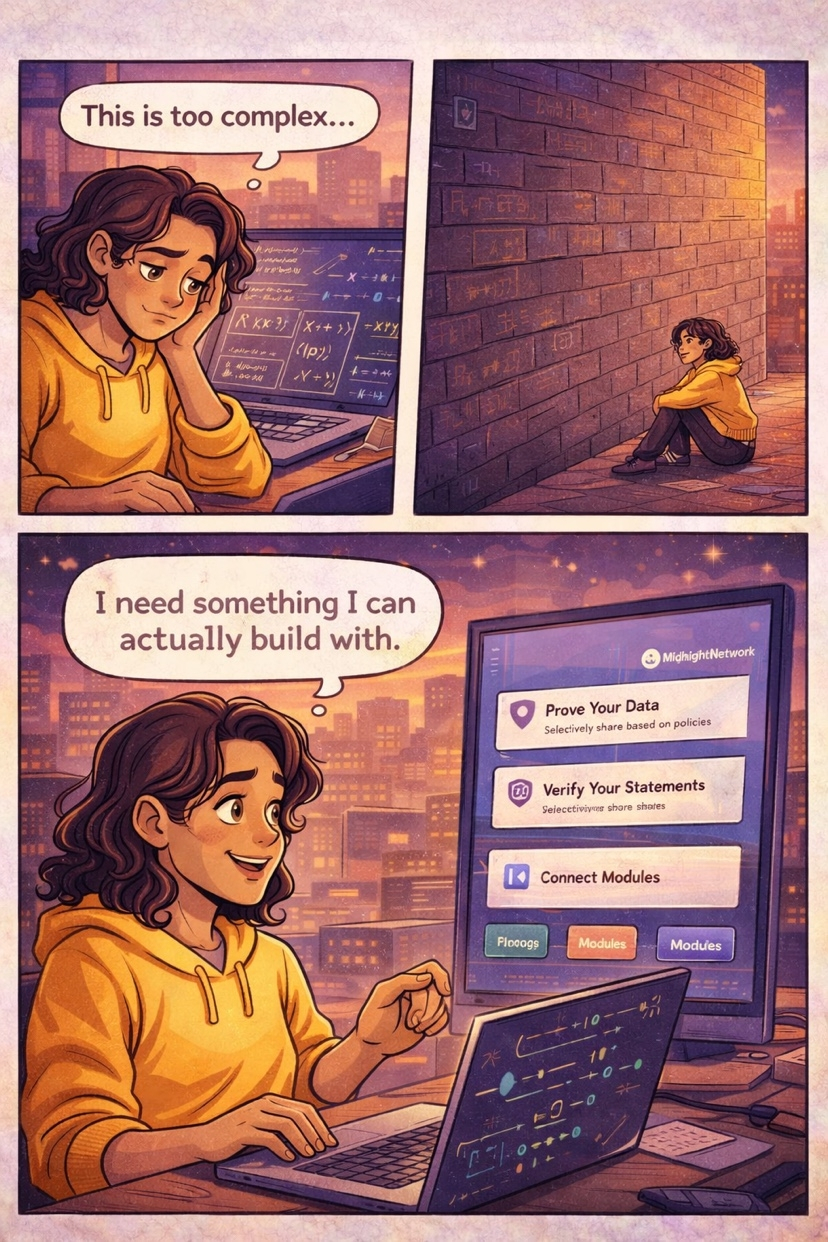
But from the inside, many developers still experience it as a wall.
A wall of complexity.
A wall of terminology.
A wall that separates those who understand the math from those who simply want to build useful things.
And this matters more than people think.
Because adoption does not happen when a concept is brilliant.
Adoption happens when someone can actually use it without feeling excluded by it.
In that sense, usability is not a cosmetic layer.
It is the bridge between innovation and reality.
That is why I think one of the most important shifts in Web3 will not come only from faster chains, louder narratives or bigger token attention.
It will come from protocols that know how to reduce friction.
Protocols that understand a simple truth:
if privacy remains too hard to build with, it will remain an idea admired from a distance.
But when privacy becomes understandable, testable and buildable, it changes category.
It stops being a niche concept.
It becomes part of the architecture of the next internet.
And maybe that is the deeper significance of $NIGHT.
Not only as a token inside an ecosystem,
but as part of a broader attempt to make privacy less theoretical and more usable.
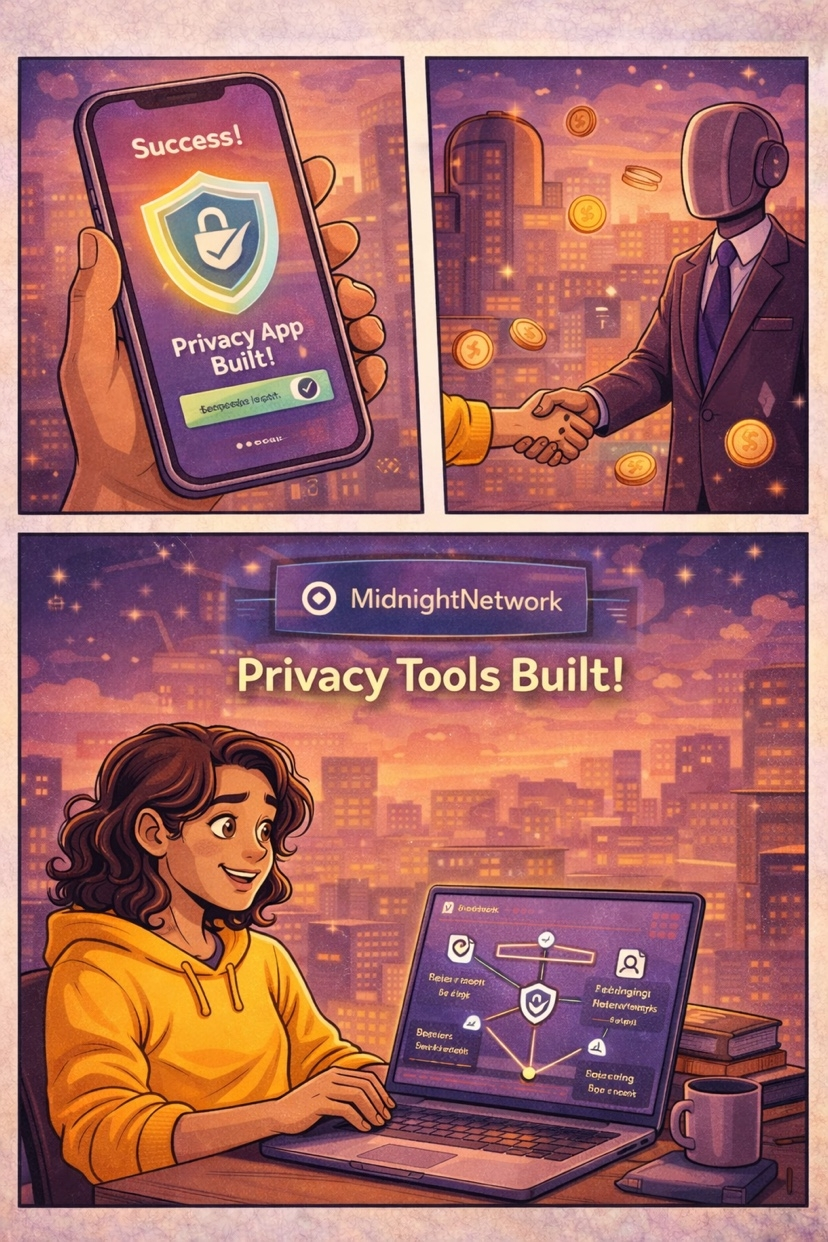
Because the future of Web3 will not be decided only by what sounds revolutionary.
It will be decided by what people can actually build.
Final line
Privacy is not waiting for better marketing.
It is waiting for better usability.