
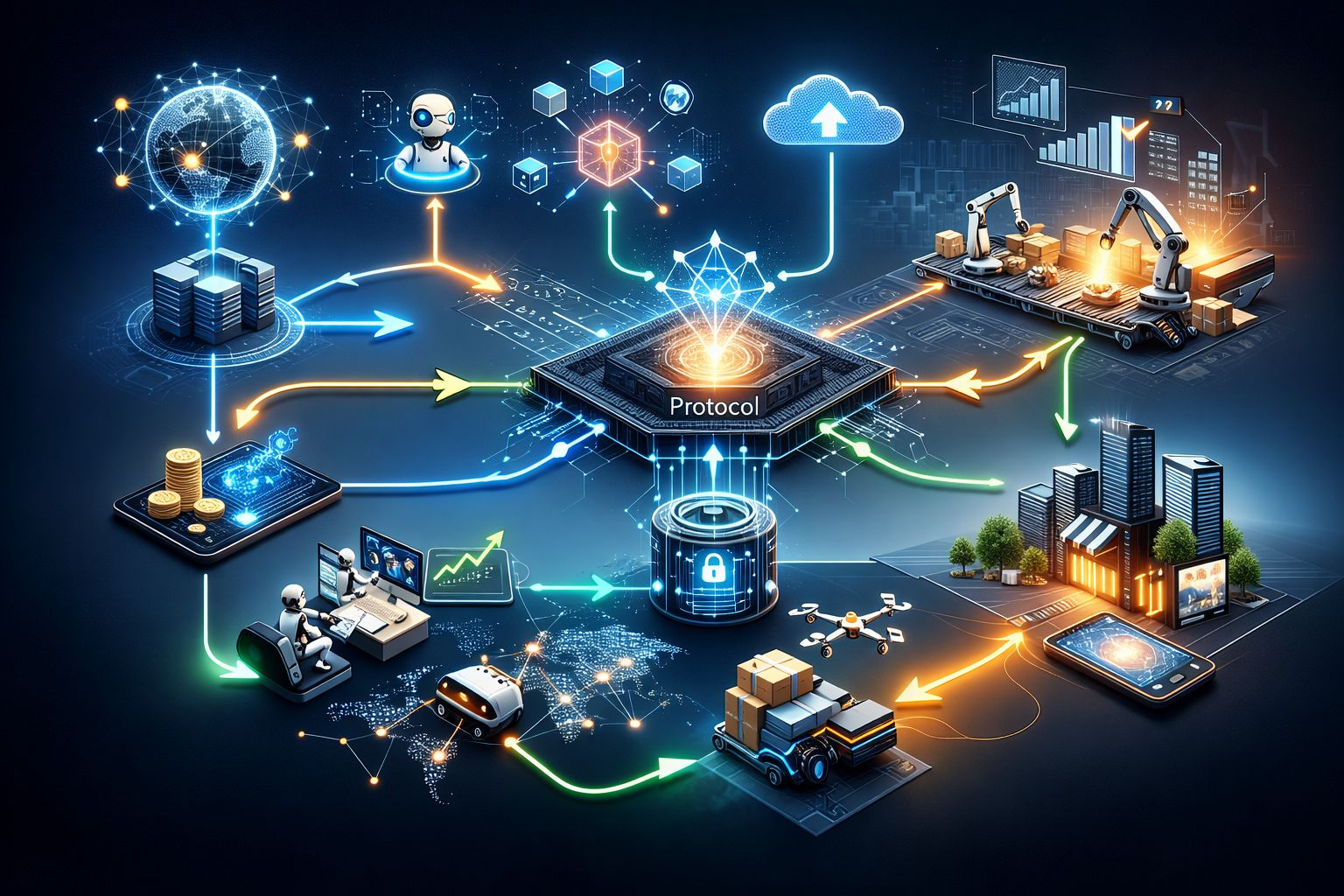
The most important technological changes rarely announce themselves loudly. They emerge quietly, first as infrastructure, then as coordination systems, and finally as economic realities that feel obvious only in hindsight. The internet followed this path. Cloud computing followed it as well. Artificial intelligence is moving along a similar trajectory, but with a new layer that markets are only beginning to recognize. That layer is machine participation in economic networks.
Fabric Protocol sits precisely at that intersection.
At a glance, it may appear to be another blockchain infrastructure project attached to the current wave of AI narratives. A deeper look reveals something more structural. Fabric Protocol is designed as a decentralized coordination network for robots, autonomous agents, and intelligent systems, enabling machines to participate in economic activity through verifiable computing and agent-native infrastructure. The network assigns robots on-chain identities, allows them to interact economically, and records their work in a transparent public ledger.
CoinMarketCap +1
This may sound futuristic, but the underlying logic is straightforward. The robotics industry has historically operated in isolated ecosystems where machines from different manufacturers rarely interact or share capabilities. Fabric attempts to solve that fragmentation by creating an open protocol where robots can collaborate, share skills, and perform tasks in a decentralized marketplace.
NFT Evening
From a market perspective, the more interesting question is not whether robots will eventually participate in economic networks. The question is who builds the coordination layer that makes it possible.
Every technological wave eventually converges around infrastructure. Operating systems defined the personal computing era. Cloud platforms defined the software era. In the coming decade, agent coordination networks may define the AI robotics era.
Fabric Protocol is positioning itself as one of those networks.
The concept begins with identity. Humans operate in economic systems through legal identities, bank accounts, and contractual relationships. Robots have historically lacked those equivalents. Fabric introduces a system in which each machine receives a verifiable on-chain identity that functions like a digital passport. This identity allows robots to authenticate themselves, record their actions, and interact with other agents and humans in a transparent environment.
CoinMarketCap +1
Once identity exists, coordination becomes possible.
Fabric’s architecture enables robots to bid for tasks, complete them, and have the results verified through a mechanism known as Proof of Robotic Work. This model records real-world actions on-chain and rewards operators through the protocol’s native token, ROBO, which functions as the settlement layer for work performed within the network.
NFT Plazas +1
From a purely technological standpoint, the idea is ambitious. From a market standpoint, the implications are even more interesting.
Financial markets tend to recognize new infrastructure long before the broader economy does. Traders observe where coordination layers form, where incentives align, and where network effects may begin to compound.
The early internet was not valuable because of websites. It became valuable because it allowed new forms of coordination between users, businesses, and information systems. Blockchain networks introduced a similar coordination layer for digital value. Fabric attempts to extend that logic to physical machines and autonomous agents.
If that framework holds, the robot economy becomes less about hardware and more about network participation.
In other words, the real asset may not be the machines themselves but the infrastructure that allows them to collaborate.
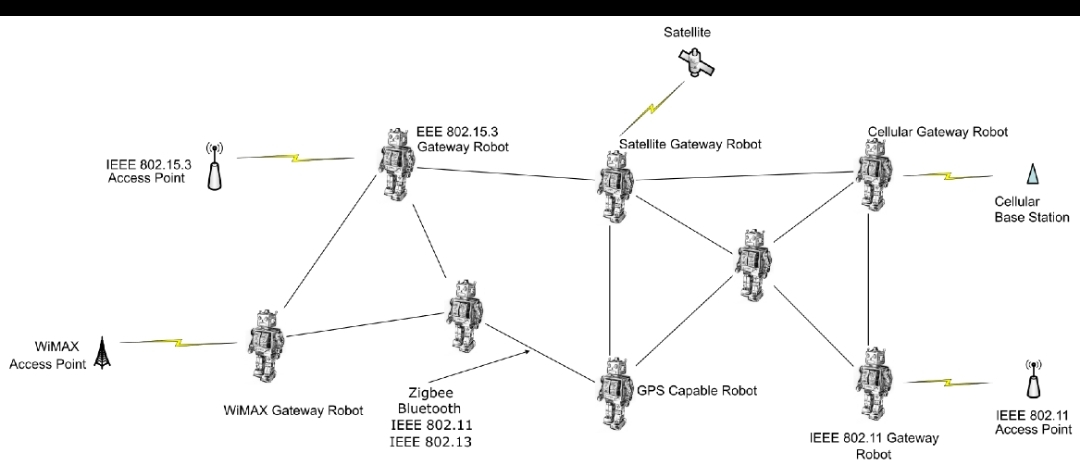
Fabric Protocol’s design reflects this perspective. The system coordinates three critical resources: data, computation, and physical robotic hardware. These resources interact through a public ledger that records contributions, verifies work, and distributes incentives.
IQ.wiki
This structure allows robots to operate not as isolated tools but as participants in a shared ecosystem.
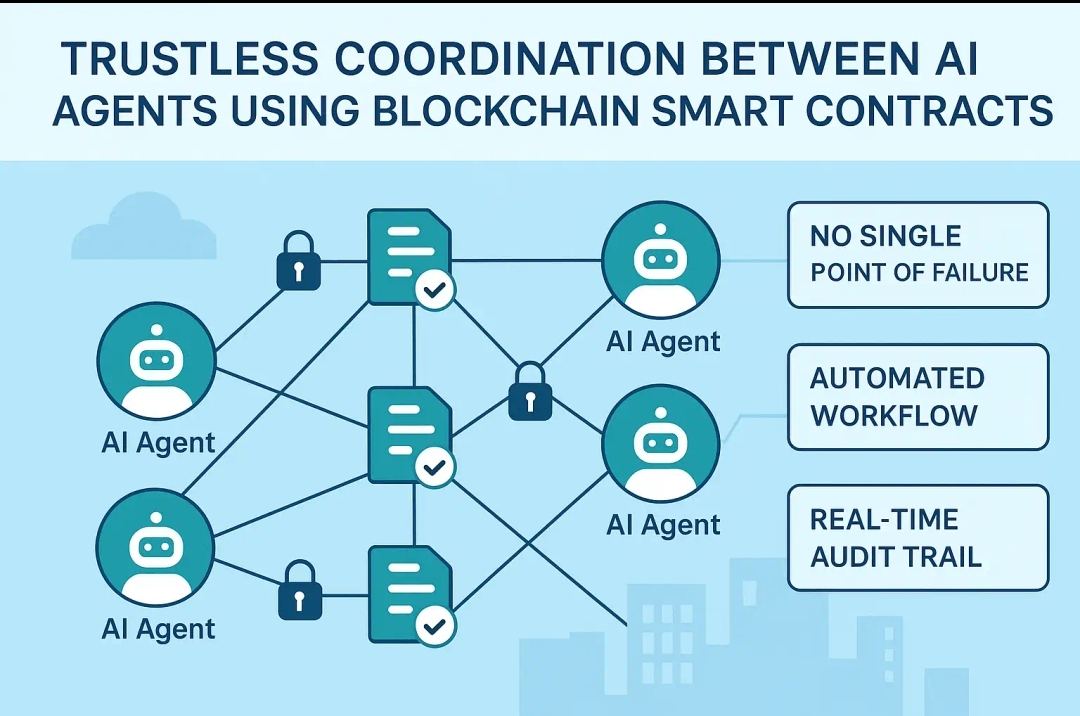
The broader implication is that robots could eventually function as independent economic agents. A machine that performs delivery services, warehouse operations, or maintenance tasks could receive payments, purchase compute resources, and interact with other machines through automated smart contracts.
For the first time, machines would not only execute instructions but participate in economic exchange.
This concept is often described as the “robot economy,” a system where intelligent machines interact with both humans and other machines through decentralized infrastructure.
NFT Evening
Markets are only beginning to process what that might mean.
The current AI narrative has largely focused on software models and data processing. Robotics introduces a different dimension because it bridges digital intelligence and the physical world. Once machines operate autonomously in physical environments, coordination becomes far more complex.
Supply chains, maintenance networks, data verification, and real-world task execution require systems that establish trust between actors that may never directly interact.
Fabric attempts to solve this through verifiable computing and decentralized governance. The protocol’s public ledger ensures that robotic actions can be recorded, verified, and audited, creating a transparent record of machine behavior.
IQ.wiki
This approach is particularly relevant in a world where concerns about AI safety, data integrity, and machine accountability are increasing.
A decentralized registry for robots creates traceability. Each machine’s capabilities, ownership history, and activity logs can be recorded on-chain, allowing the network to maintain accountability across thousands or potentially millions of machines.
From a governance perspective, this also prevents control from concentrating in a single corporate entity.
The Fabric Foundation oversees the development of the protocol as a non profit steward, emphasizing open participation and long term ecosystem governance rather than centralized ownership.
Bitget +1
For observers of decentralized technology, this governance structure is familiar. The goal is not merely to build software but to establish a public infrastructure layer that multiple stakeholders can rely on.
What makes Fabric particularly notable is that it extends this philosophy beyond purely digital networks.
The protocol is designed to support various robotic forms, including humanoid robots, drones, wheeled systems, and quadrupeds, creating a hardware-agnostic environment where different machines can participate in the same ecosystem.
IQ.wiki
This interoperability is critical for scaling.
The robotics industry has historically struggled with fragmentation. Different manufacturers build machines with incompatible software stacks and proprietary control systems. As a result, knowledge gained by one machine rarely transfers to another.
Fabric attempts to address that problem by enabling shared skill distribution and collaborative learning across the network.
A robot that develops a capability in one location could theoretically share that capability with other machines connected to the protocol. The network becomes a repository of robotic intelligence.
In practical terms, this transforms robotics development from a hardware challenge into a network growth problem.
Markets understand network growth.
Infrastructure networks tend to follow similar adoption curves regardless of the technology involved. Early stages are dominated by experimentation and skepticism. Over time, the network begins to accumulate participants, data, and economic activity.
Eventually, the infrastructure becomes invisible because it simply works.
Whether Fabric reaches that stage remains an open question, but the underlying thesis is aligned with broader technological trends.
Artificial intelligence is moving toward autonomous agents. Robotics is moving toward scalable manufacturing and deployment. Blockchain infrastructure is evolving toward real world coordination systems.
Fabric Protocol sits precisely at the intersection of those three movements.
For traders and market observers, the significance lies less in short term price movements and more in structural positioning.
Projects that attempt to build foundational infrastructure often appear quiet in their early stages. The signals are subtle. Developer activity increases. Ecosystems begin forming around shared standards. Conversations shift from speculation to experimentation.
Gradually, the network begins to attract builders.
Fabric’s ecosystem already reflects elements of this process. The protocol has attracted collaboration with robotics developers and has received venture support connected to the broader ecosystem, including participation from firms such as Pantera Capital and Coinbase Ventures in funding rounds related to the underlying development infrastructure.
Bitget
This type of backing does not guarantee success. It does, however, indicate that serious capital is paying attention to the idea of decentralized robotics infrastructure.
In markets, attention often precedes adoption.
Another notable feature of Fabric’s architecture is its long term roadmap toward a dedicated machine native blockchain. Early development stages leverage existing Ethereum compatible infrastructure, but the protocol envisions eventually migrating to a specialized network optimized for high frequency machine interactions.
CoinMarketCap
That shift would reflect a broader trend already visible in crypto infrastructure.
General purpose networks often serve as experimentation platforms, while specialized networks emerge later to support specific use cases that require unique performance characteristics.
Machine to machine transactions may eventually require extremely high throughput and low latency, particularly if thousands of robots interact simultaneously within physical environments.
A machine native blockchain could provide the performance layer required for that scale.
The market implications of such a system extend beyond robotics.
If autonomous agents can interact economically through decentralized infrastructure, entire categories of digital and physical services may evolve in unexpected ways. Machines could purchase data feeds, hire compute resources, or subcontract tasks to other machines without human intervention.
In effect, the economy gains a new class of participants.
Historically, technological revolutions expand economic participation. The internet connected billions of humans to digital markets. Mobile technology extended that participation even further.
The robot economy represents a similar expansion, but with machines joining the network alongside humans.
Fabric Protocol is one of the first serious attempts to build the coordination layer for that reality.
Markets often underestimate the importance of coordination layers. They appear technical and abstract compared to consumer applications or hardware products. Yet coordination layers tend to capture significant long term value because they become embedded within the ecosystem itself.
Operating systems, payment networks, and communication protocols rarely dominate headlines, but they quietly define how entire industries function.
Fabric is attempting to play a similar role in the emerging robotics economy.
The project’s vision can be summarized simply. Robots need identity, trust, and economic coordination in order to operate autonomously. Fabric provides the infrastructure designed to enable those capabilities.
Whether that infrastructure becomes widely adopted will depend on the ecosystem that forms around it.
Developers must build applications. Manufacturers must integrate hardware. Operators must deploy machines that participate in the network.
Those processes take time.
Markets, however, rarely wait for full adoption before recognizing structural shifts.
They look for signals.
Fabric Protocol represents one such signal. It suggests that the next stage of AI development may not revolve solely around software models but around networks that coordinate autonomous machines in the physical world.
The idea may still feel distant. Many transformative technologies do at first.
Yet the logic behind the robot economy is becoming increasingly difficult to ignore. As robotics hardware improves and artificial intelligence systems become more capable, the need for shared infrastructure will only grow.
Machines will require identities, marketplaces, and governance systems.
Fabric Protocol is building exactly that.
And like many infrastructure projects that preceded it, its significance may only become obvious after the network has already begun to scale.