I’m watching the crypto space the way someone watches weather after living through many seasons. Not with excitement anymore, but with a kind of quiet attention. After enough years around this industry, the patterns begin to feel familiar. A new narrative appears, the market leans toward it, and suddenly everything sounds revolutionary again. Then time passes, the noise fades, and the cycle resets.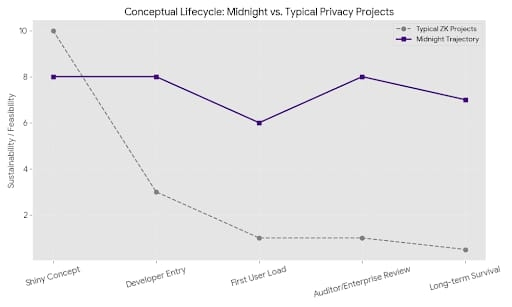
I’ve seen that rhythm play out more times than I can count.
In the beginning it was easy to believe every new idea was the one that would finally push the space forward. Whitepapers felt important. Launches felt historic. But experience slowly changes that perspective. After watching projects rise quickly and disappear just as fast, you start to approach things differently. You slow down. You stop reacting to the headlines and instead look at the underlying problems people are trying to solve.
Because when you strip away the marketing language, crypto has been circling the same few tensions for years.
One of the biggest is privacy.
Blockchains were designed around transparency. That openness is what made them powerful in the first place. Transactions are visible, histories are permanent, and anyone can verify what happened without needing to trust a central authority. For a long time, that idea felt almost philosophical — a system where truth lives on a public ledger instead of inside institutions.
But over time another side of that transparency became harder to ignore.
When everything is visible, nothing is really private.
Wallets can be tracked. Transaction histories can be analyzed. Entire financial behaviors can be mapped out if someone spends enough time looking. What was supposed to empower individuals sometimes ends up exposing them in ways people didn’t fully think about in the early days.
It’s a strange contradiction when you step back and look at it. Crypto talks constantly about ownership, sovereignty, and personal control. Yet in many blockchain systems, participating means leaving a permanent public trail of activity.
That tension has been sitting quietly inside the industry for years.
So when I first came across something like Midnight Network, my initial reaction was cautious. Privacy-focused ideas aren’t new in this space. Many teams have tried to approach the problem from different directions. Some built impressive cryptography. Others created systems that were technically clever but never really found adoption.
Over time you learn not to get too excited too quickly.
At first glance, Midnight looked like it might fall into that familiar category — another project trying to tackle privacy in blockchain. But the more I looked into it, the more it felt like it was circling a deeper question rather than just building another tool.
The project revolves around zero-knowledge proof technology, which on the surface sounds almost abstract. The idea is that something can be verified as true without revealing the information behind it. A system can confirm that a rule was followed or a condition was met without exposing the actual data involved.
It’s a strange concept at first. Almost counterintuitive.
But the longer you sit with it, the more you realize how powerful that idea could be. In a world where data is constantly being collected, shared, and analyzed, the ability to prove something without revealing everything might become incredibly important.
That seems to be the space Midnight is exploring.
Instead of forcing a choice between transparency and privacy, the project appears to be asking whether both can exist at the same time. Whether a network can remain verifiable while still protecting sensitive information.
That’s not a small design challenge.
Too much secrecy and a system loses accountability. Too much transparency and it risks exposing users in ways that discourage real participation. Finding a balance between those two forces is far more complicated than writing a clever piece of code.
And that’s where experience in crypto makes you cautious.
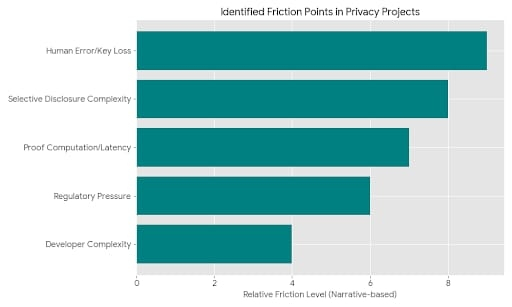
Ideas in this industry often look beautiful in theory. Whitepapers describe elegant systems where incentives align perfectly and technology solves everything. But reality tends to be less cooperative. Networks have to deal with scaling issues, developer adoption, regulation, and the unpredictable behavior of people themselves.
Many strong ideas simply don’t survive that collision with the real world.
Zero-knowledge infrastructure is especially complex. It requires advanced cryptography, careful engineering, and an ecosystem willing to build around it. Without those pieces coming together, even a brilliant concept can remain mostly theoretical.
That’s why I try to look at projects like Midnight without rushing toward conclusions. The idea is interesting, no doubt. The problem it touches is real. But the distance between a thoughtful design and a functioning network is still very large.
Crypto history is full of projects that felt promising in their early stages.
Still, there’s something about this particular direction that keeps my attention. For years the industry has celebrated transparency almost as a moral principle. But real life rarely operates that way. People need privacy. Businesses need confidentiality. Even governments rely on controlled access to information.
A system that ignores those realities will always struggle to move beyond experimentation.
Midnight seems to be acknowledging that complexity instead of pretending it doesn’t exist. It’s trying to explore whether blockchain systems can verify truth without forcing every piece of data into the open.
Whether that vision works is something only time will answer.
Crypto moves quickly on the surface, but the deeper shifts in technology usually happen slowly. Sometimes the loudest projects disappear within a year, while quieter experiments gradually influence how the next generation of systems are built.
Right now, Midnight Network feels like one of those quiet experiments.
Maybe it will grow into something meaningful that reshapes how privacy works in blockchain environments. Or maybe it will remain another thoughtful attempt at solving a problem that is harder than it first appears.
At this stage, there’s no way to know.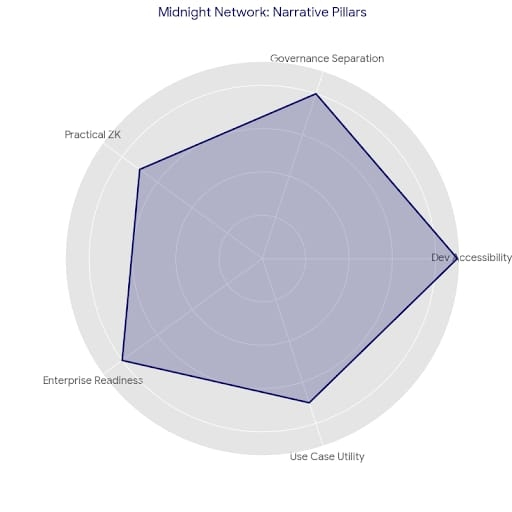
So for now, I’m doing the same thing I’ve learned to do after years of watching this industry move through its cycles.
I’m paying attention. I’m observing how the technology develops. I’m watching whether builders start using it in real ways instead of just talking about it.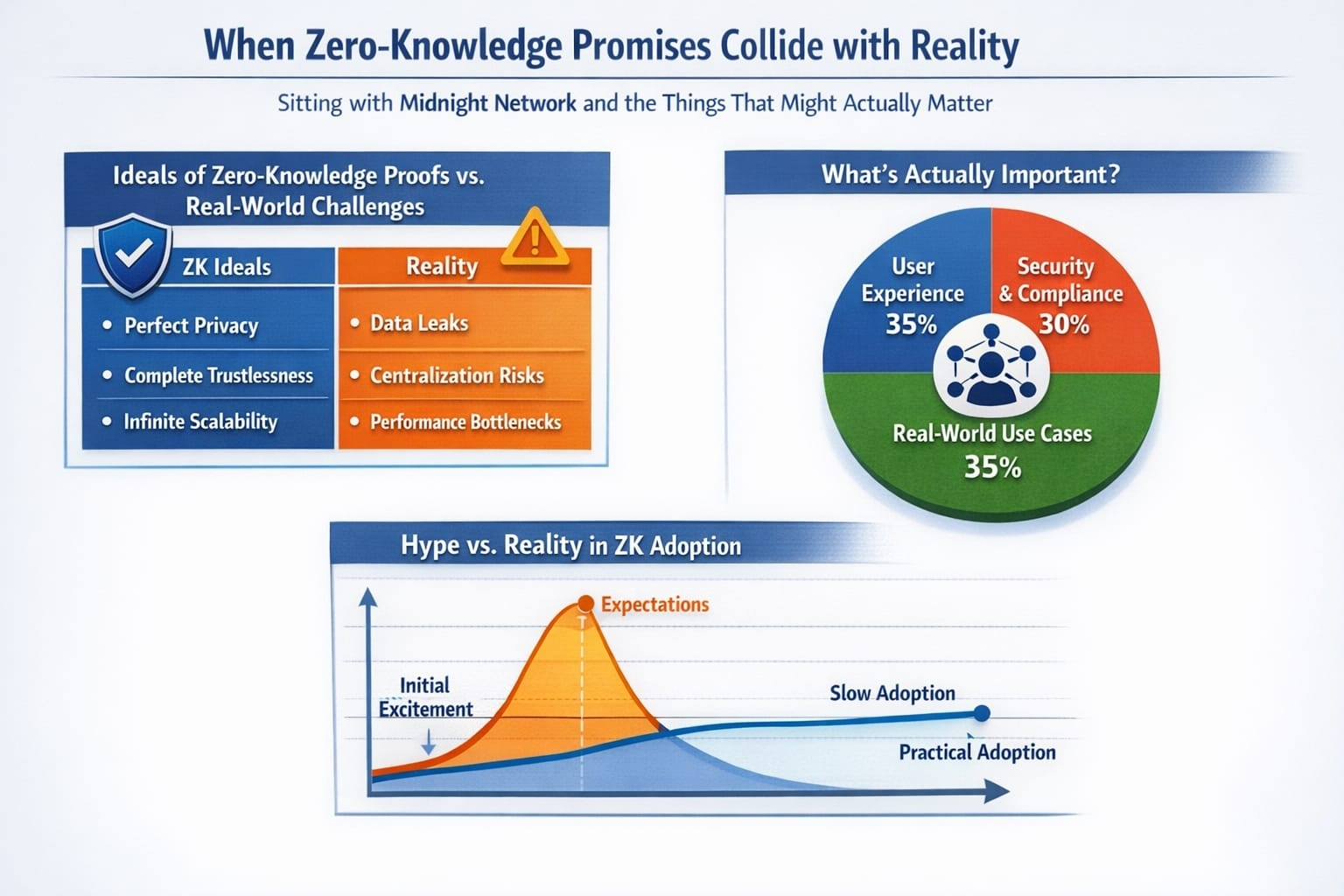
Because in crypto, the projects that truly matter rarely prove themselves immediately.
Sometimes they just sit quietly in the background while the rest of the market moves on.
And sometimes, if you keep watching long enough, you eventually see whether they were circling something important all along.