
After more than ten years covering blockchain, I’ve developed a reflex. Someone mentions a new chain,.and I tense. Shoulders tighten. A quiet sigh escapes internally.
I’ve heard it all before.
Faster. Cheaper. The future of everything.
Another Ethe-reum killer, they promise. Remember those? In 2017, in 2021—dozens came and went. Some raised billions. Others vanished before the market even blinked.
Lesson learned every time: talking about blockchain is easy. Running one at scale is brutal.
So when a new project lands in my inbox, I skip the technical specs. Throughput? Consensus? Me. I ask a simpler question:
Would my regular friends care?
Not the crypto insiders. Not the Discord traders, whitepaper scholars, or Twitter maximalists. I mean the people who use Venmo, occasionally transfer money, and don’t want to study cryptography just to split a dinner bill.
If they wouldn’t benefit, the tech probably isn’t solving a real problem.
That’s the lens I use when I look at zero-knowledge blockchains. And honestly? They might actually matter.
Not because the math is elegant—though it is.
But because they address one of crypto’s strangest, most overlooked flaws:
Blockchains are absurdly public.
When newcomers hear crypto, they often assume privacy comes built-in. It doesn’t. Most public blockchains are like permanent financial fishbowls. Every transaction. Every wallet movement. Forever visible.
Your wallet might not carry your name—but identities leak constantly. Exchanges link accounts. On-chain analysts trace patterns. Companies exist just to track these flows.
I once watched a researcher map a whale’s entire trading history from a single interaction. Twenty minutes. That’s it.
Imagine your bank worked that way. Imagine a website where anyone could see your rent, your salary, your groceries, even that 2 a.m. impulse purchase fueled by too much coffee. No one would tolerate that.
Yet crypto shrugged and called it transparency. Nice for auditing, terrible for real life.
Enter zero-knowledge technology.
The concept sounds like graduate-level cryptography, but at its heart it’s intuitive: you can prove something is true without revealing the underlying information.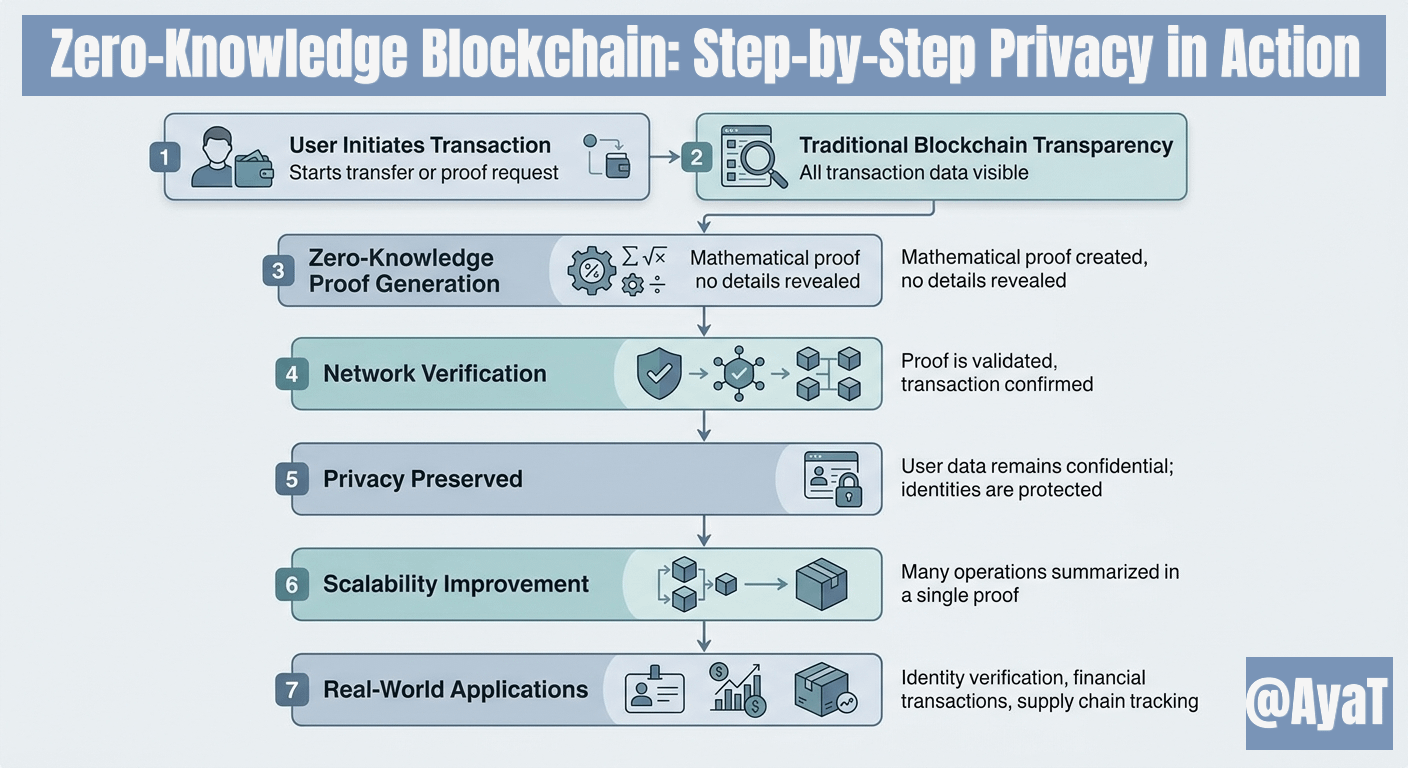
Picture this: I want to pay you $100. On a normal blockchain, everything is visible: my balance, the transfer amount. On a zero-knowledge chain, instead of publishing numbers, I provide a mathematical proof. The transaction is valid. I have the funds. No double spending. The network verifies. You get paid. Details? Hidden.
It’s verification without exposures.
At first glance, it seems minor. But it fundamentally changes what blockchains can do.
Here’s the quiet truth most crypto enthusiasts eventually realize: businesses cannot operate on fully transparent ledgers.
Trading firms don’t want competitors seeing their positions. Manufacturers don’t want rivals mapping supplier payments. Ordinary people don’t want strangers scrutinizing every dollar of their lives. Transparency is great for block explorers. Privacy is essential for real economies.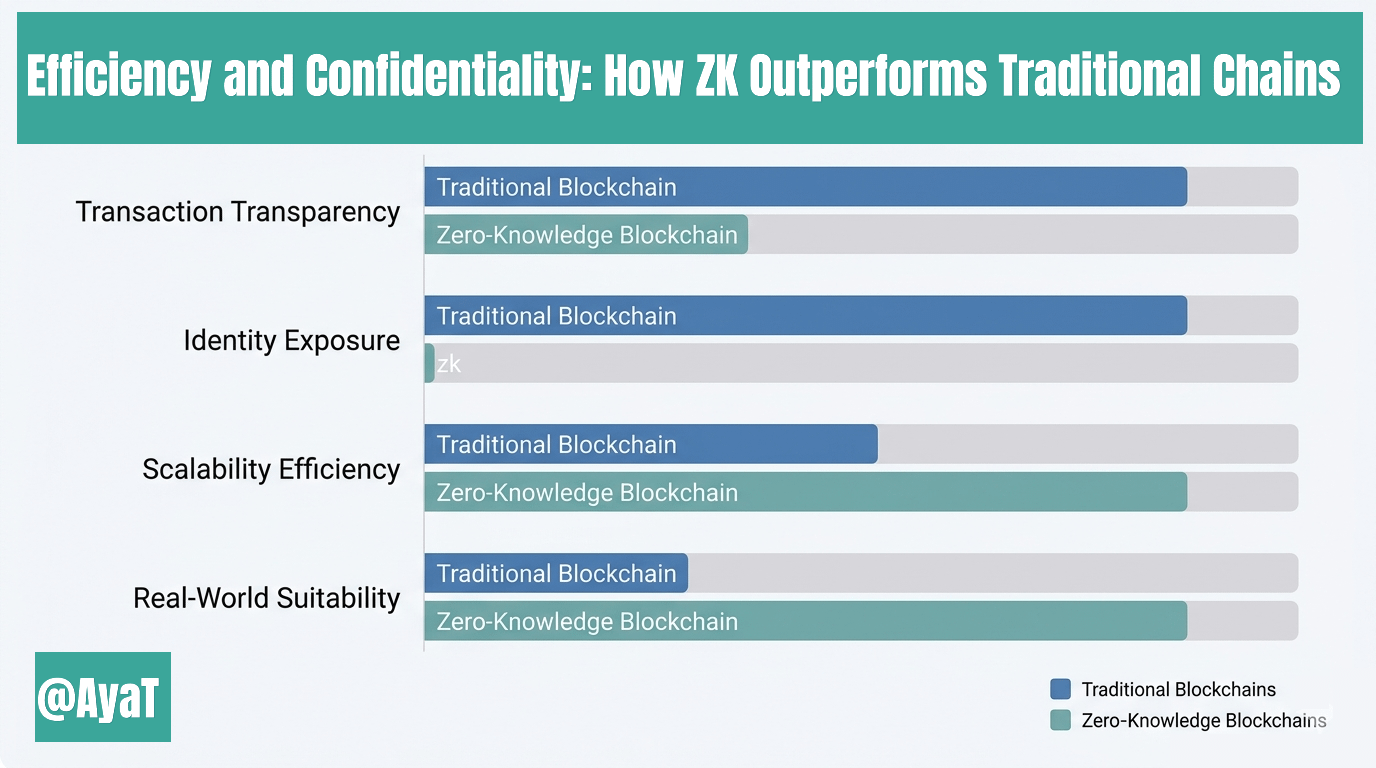
Zero-knowledge systems aim to walk that tightrope.
Identity is one of the clearest examples.
Today, proving who you are online is cumbersome. You upload documents. IDs. Birthdates. Passports. Every piece of personal data lands in yet another database. And they leak. Repeatedly. Equifax. Apps. Government systems. Millions exposed.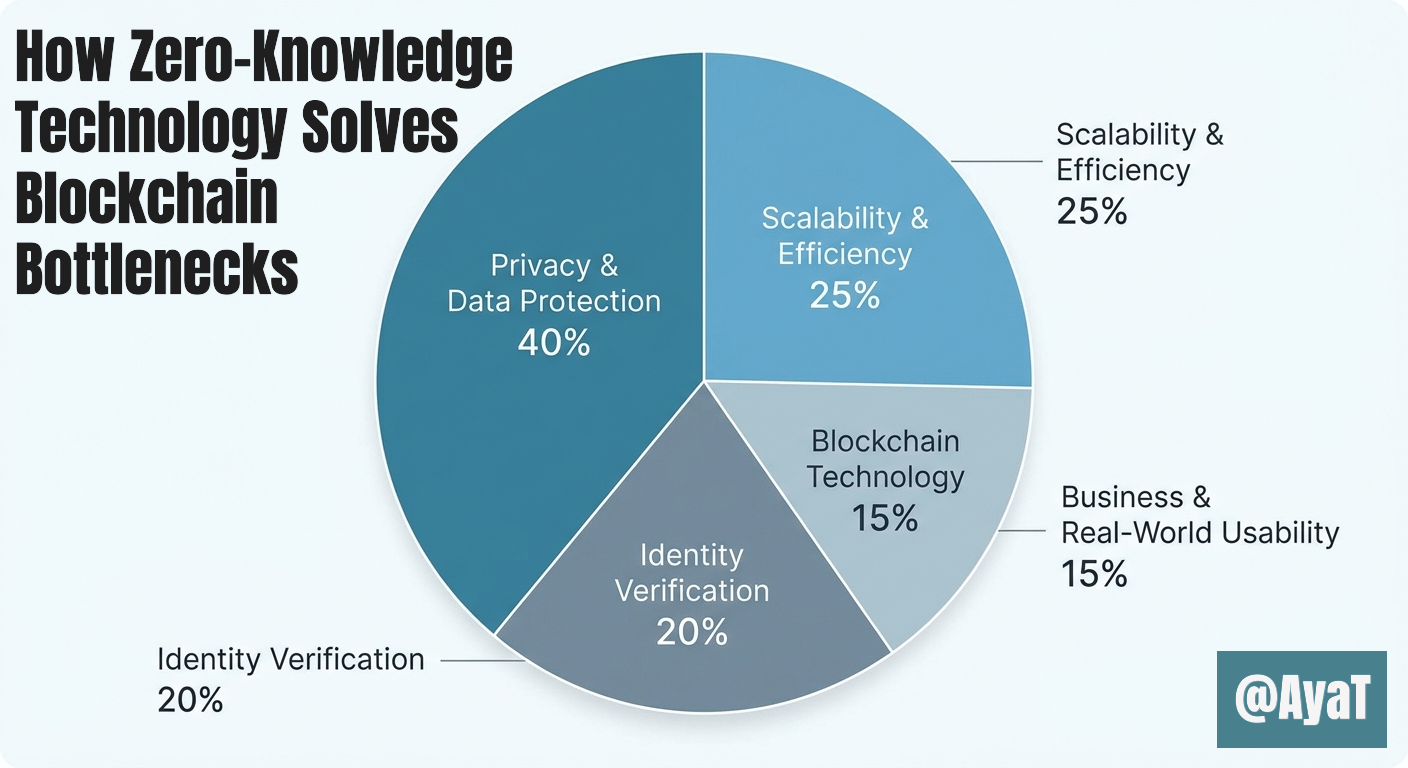
Zero-knowledge identity systems flip the script. You prove statements about yourself. I am over 21. I passed KYC. I’m eligible for this service. But the raw data? Never shared. Subtle. Powerful.
Underneath all this: mountains of cryptography, complex proofs, decades of academic work. Most people should never think about it.
The best technology disappears. Think about it: nobody sending an email worries about SMTP. Nobody streaming Netflix cares about packet routing. Mature tech becomes invisible.
Blockchain still has noise. Too many dashboards. Too many systems demanding attention. Zero-knowledge systems edge us toward the boring stage. And boring, in infrastructure, is a compliment.
They also help with scalability. Traditional blockchains verify every transaction step by step—secure but painfully slow. Zero-knowledge systems compress thousands of operations into a single proof. It’s like grading only the final answer in math, not watching every line. Networks can, in theory, handle far more activity.
But here’s the catch: execution is hard. Ideas are easy; reality is cruel. Promising Layer-1 chains crumble under congestion, governance chaos, or lack of developer interest. Zero-knowledge systems layer on extra difficulty. Small cryptographic mistakes ripple network-wide. And a blockchain without developers? A ghost town.
So the true test isn’t academic elegance. It’s reality: Can it handle millions of users? Can developers build meaningful apps? Will it survive the next bear market?
And yet… I see progress.
Banks experiment with private settlements. Supply chains explore proofs without exposing trade secrets. Identity platforms aim to give users control instead of hoarding data.
None of this is flashy. It’s quiet, essential infrastructure.
If zero-knowledge blockchains succeed, it might feel almost boring. No hype cycles. No debates over speed. No dramatic announcements. Just systems that let people move money, prove identity, and interact online without broadcasting their lives.
Good technology eventually becomes invisible. The internet did. GPS did. Cloud computing did.
If zero-knowledge systems follow that path, most users won’t even notice them. And maybe… that would be the greatest achievement blockchain has ever delivered.