
I have been thinking about social media more than usual lately. Not because the platforms are new, but because the tradeoff behind them has become impossible to ignore. We use them to communicate, share ideas, build communities, and express identity. In return, we surrender an extraordinary amount of personal data: posts, likes, social graphs, browsing patterns, private behavior turned into public signals, or private assets for platforms. The whole model often feels less like participation and more like surveillance with good branding. That is what made me curious about how Midnight Network might fit into the idea of decentralized social media.
At first glance, blockchain and social media seem like an awkward pairing.
Public blockchains are designed around transparency. Social media users usually need something more nuanced. People want visibility when they choose it and privacy when they do not. They may want to prove authorship without exposing every piece of metadata. They may want to control identity without turning their relationships and interactions into a permanent public archive.
That is where the usual blockchain model starts to feel inadequate.
If every social action is fully public on-chain, then the system risks becoming even more invasive than traditional platforms. A transparent ledger can preserve ownership and censorship resistance, but it can also create a complete behavioral record. In a way, that would not solve the privacy problem of social media; it might harden it.
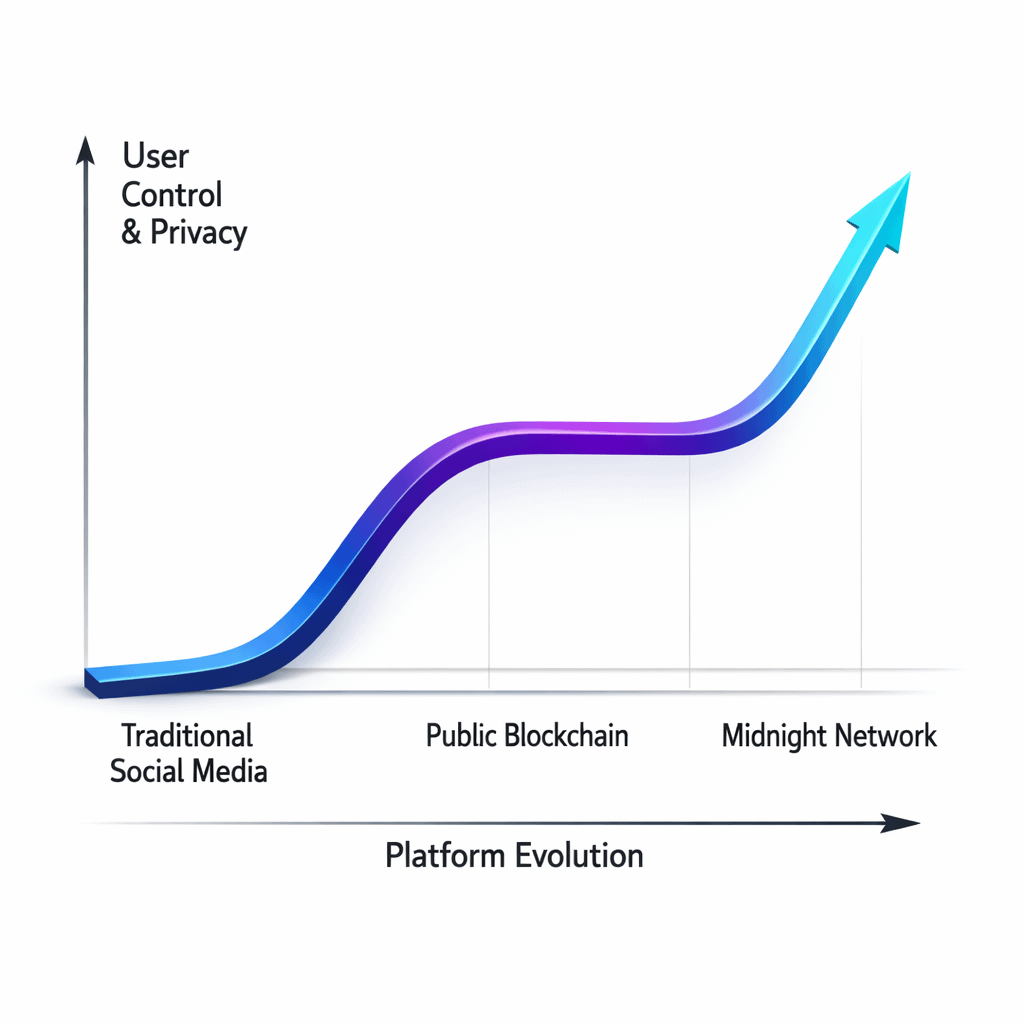
This is where Midnight begins to look interesting to me.
The network is built around the idea that data can remain confidential while still allowing verification. Instead of exposing every detail, the system can use cryptographic proofs to show that an action is valid. A user could prove control of an account or the legitimacy of a post without revealing unnecessary information. A platform could verify moderation logic or access rules without broadcasting the private data behind them.
In theory, that opens a different path for social media design.
Imagine a decentralized platform where users own their identities and content but do not have to expose every connection and interaction to the entire network. Private messages could remain private. Selective identity claims could be proven without revealing full personal details. Community membership could be verified without making every social tie permanently visible.
That sounds promising. Maybe too promising.
I remain cautious because social media is not only a technical system; it is also a behavioral system shaped by incentives, attention, and power. Privacy-preserving infrastructure can protect data, but it does not automatically solve harassment, misinformation, spam, or manipulation. A platform can be decentralized and still become chaotic. It can protect user privacy and still fail at community health.
There is also the question of usability.
Most people do not want to think in terms of zero-knowledge proofs or privacy-preserving computation. They want platforms that feel simple: fast onboarding, clear controls, familiar experiences. If decentralized social networks built on privacy infrastructure are too complicated, then mainstream users will stay where the interfaces are easier—even if the tradeoff is losing control of their data.
Developer adoption matters too.
Building a social platform that balances public expression with private interaction is not trivial. Developers would need tools that make it easy to manage confidential identities, permissions, and user-generated content without sacrificing performance. Midnight’s architecture appears to aim in that direction by abstracting much of the cryptographic complexity. That could help. But tool quality often determines whether a promising idea stays theoretical or becomes real software people actually use.
What keeps me interested is the broader shift in philosophy.
Traditional social platforms assume that the company owns the infrastructure and therefore controls the data. Public blockchains flipped that model but often overcorrected by treating transparency as the answer to trust. Midnight seems to ask whether social systems can preserve user control without forcing radical exposure.
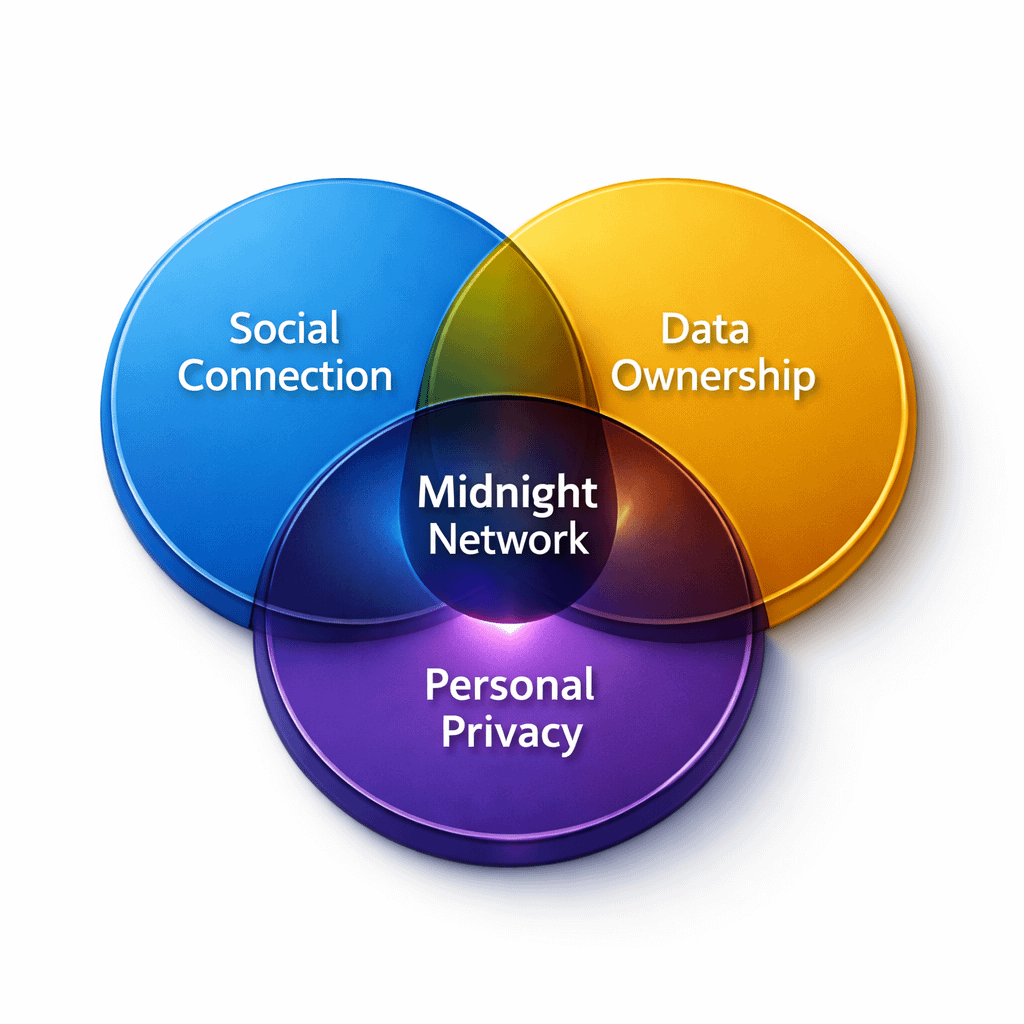
That feels like the right question.
Real privacy is not invisibility. It is choice—the ability to decide what is public, what is private, and what can be verified without being revealed. Social media has spent years collapsing those categories for the sake of growth and monetization. A privacy-focused, decentralized network would try to separate them again.
Whether Midnight can truly help reclaim data privacy in social media is still uncertain. Infrastructure alone does not build great platforms; it only creates new possibilities. But I think that matters. If the current social media model depends on users surrendering data to participate, then the next generation of networks will need a different foundation.
Midnight does not guarantee that future, but it points toward one where users may no longer have to choose between connection and control.