
A friend of mine recently started exploring Midnight Network. He asked me something that made me stop and think.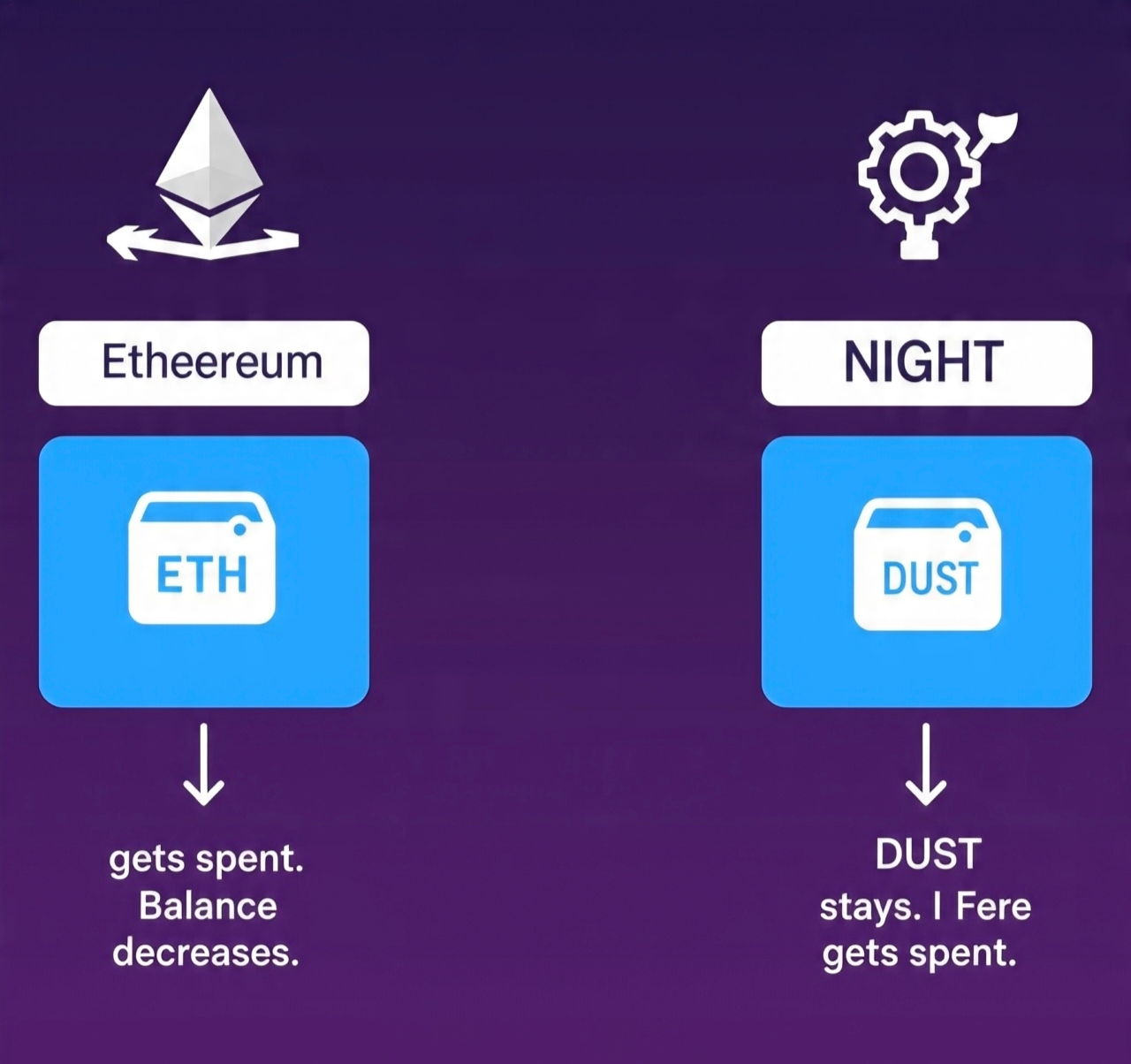
Why can't I just spend NIGHT directly? On Ethereum, I spend ETH for transactions. Here I need a whole separate thing for fees?
His question makes sense. Most blockchains work exactly like that. One token does everything. So why did Midnight choose something different?
The Ethereum model first On Ethereum, ETH does everything. You trade it. You stake it. You pay gas fees with it. You vote on governance with it. One token, all jobs.
It's simple. But there's a hidden problem. When ETH price goes up, your transaction costs go up too. In 2021 when ETH hit $4000, a simple swap cost $50 to $100. People stopped using the network for small transactions.
When ETH price drops, validators earn less. Network security gets weaker.
One token doing everything means every price movement affects every part of the network.
What Midnight does differently
Midnight splits the roles.
NIGHT is non-expendable. You don't spend it. You hold it. And because you hold it, it generates DUST over time.
DUST is expendable. You use it to pay for transactions.
A developer explained it to me with an analogy I haven't forgotten. NIGHT is your house. You don't sell your house every time you need cash. Your house generates rental income. You spend the rent on daily expenses. The house stays yours.
Why this design actually makes sense
First, costs become predictable.
Your DUST generation rate is stable regardless of NIGHT's price. You know how many transactions you can run. The token's market movements don't mess with your ability to use the network.
Second, network security stays separate. Validators stake NIGHT to secure the network. Their incentive depends on NIGHT price. But regular users pay fees in DUST. Those fees don't suddenly become expensive when NIGHT pumps. They don't become too cheap when NIGHT dumps.
Third, gasless transactions become possible. A developer can hold NIGHT, generate DUST, and let users transact without ever touching crypto. Users just use the app. They don't need to know what NIGHT or DUST even is.
My experience using it The first time I used Midnight, I was confused. I tried to spend NIGHT directly. It didn't work. I thought something was broken.
After a few days, I got it. I held some NIGHT. Over a few hours, DUST appeared in my wallet. I used that DUST for transactions. My NIGHT balance never changed.
I was using the network without spending my main token. That's actually pretty useful when you think about it.
What critics say Not everyone loves this model. Some developers say it adds complexity they don't want to deal with. Learning two tokens instead of one feels like extra work.
That's fair. But for regular users, wallets handle everything. You don't really think about DUST. You just know that holding NIGHT lets you transact.
The point of all this NIGHT doesn't get spent because it's designed to be something you hold, not something you burn.
It's like the difference between owning land and paying property tax. The land stays yours. The tax keeps things running. Both matter, but they do different jobs.
My friend eventually got it. His response was simple. So on Ethereum, ETH disappears when I use it. Here NIGHT stays with me and just makes what I need to use the network. That's actually better.
Yeah. It is.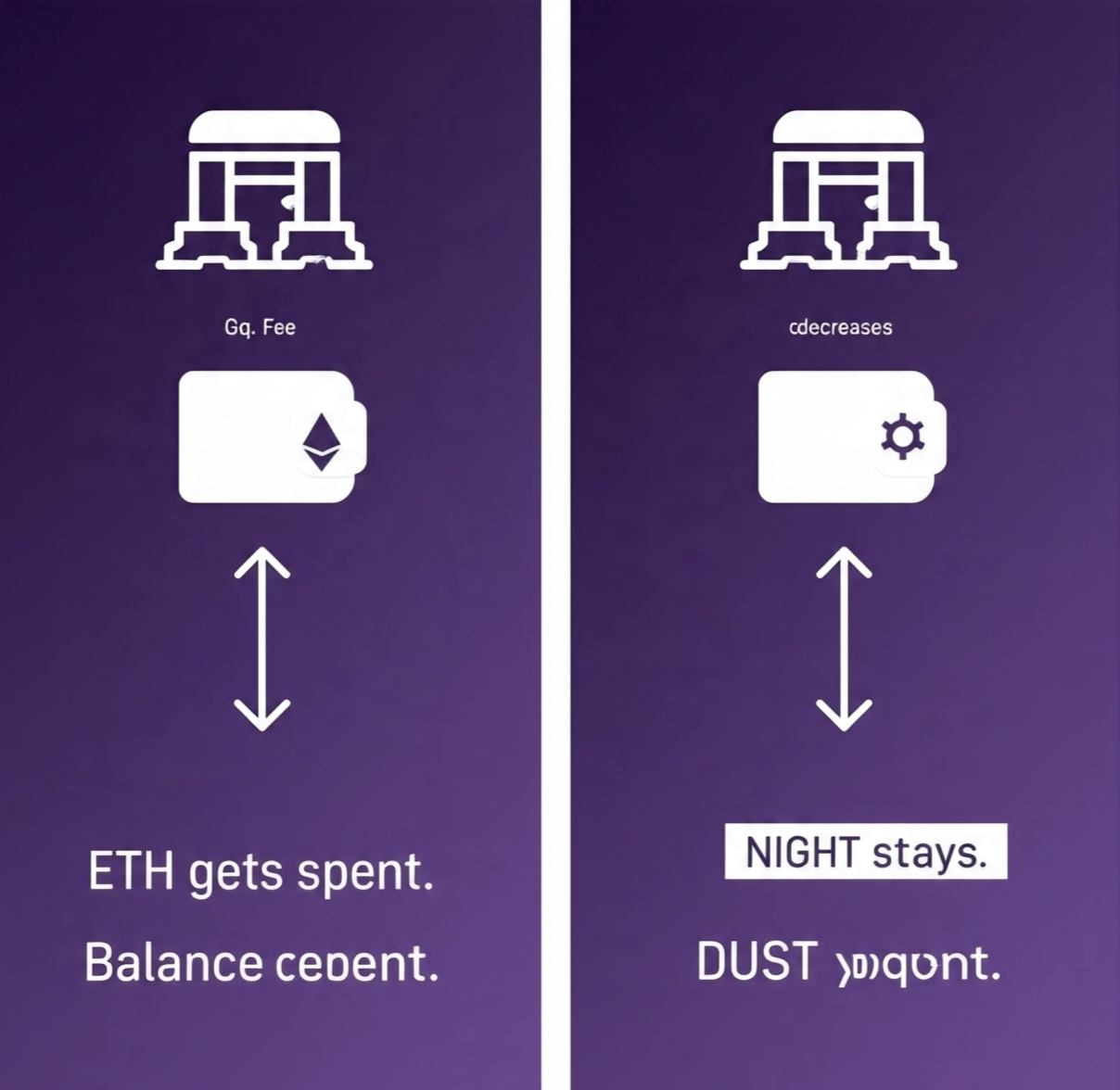
What do you think about this design? Is separating the roles smart or just unnecessarily complicated?
$NIGHT @SignOfficial #night #MidnightNetwork #MidnightNetwork #NIGHTToken #CryptoAna