

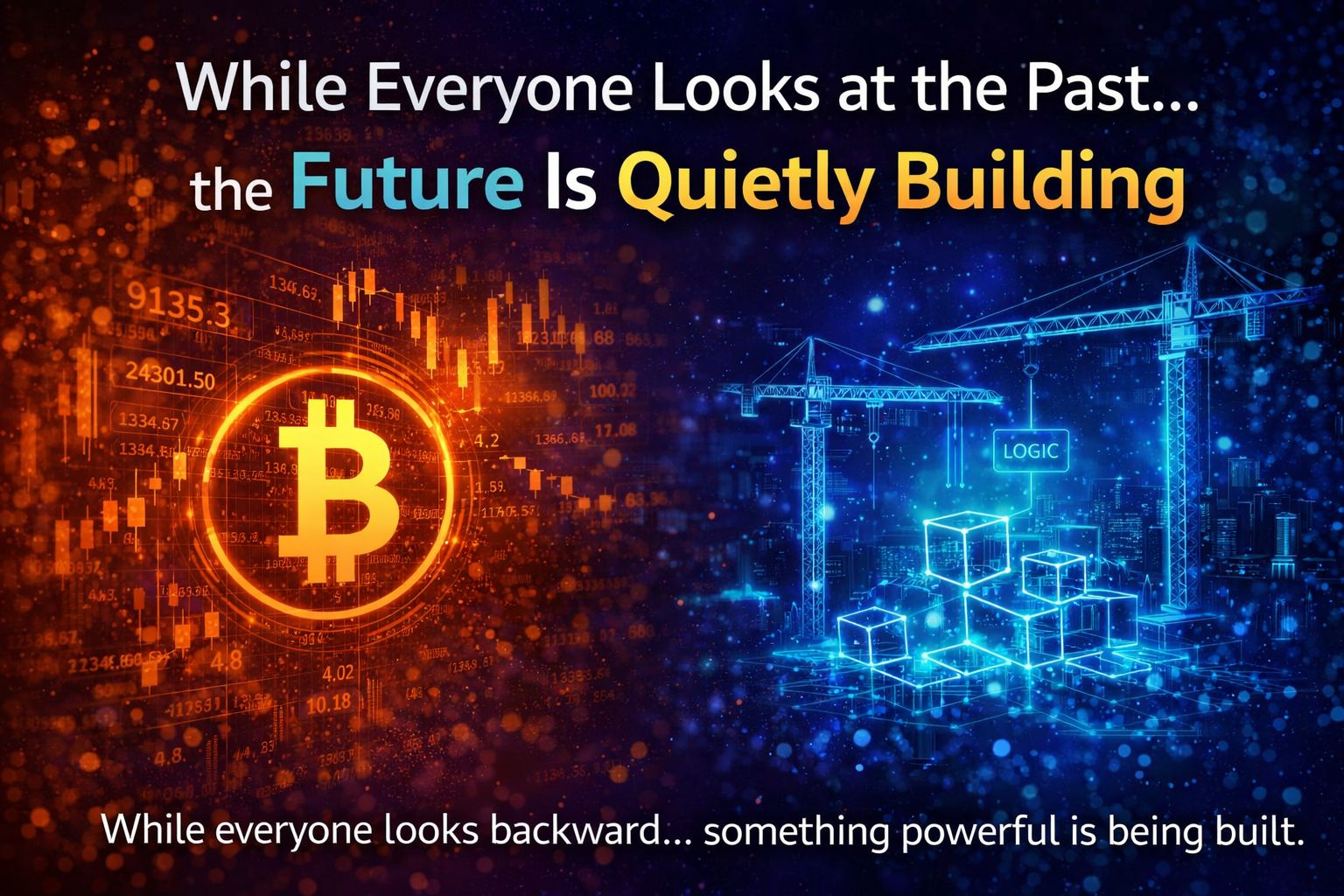
In the world of crypto, most attention is focused on what has already happened.
People track prices, analyze charts, and revisit the success of early projects like Bitcoin and Ethereum.
But history shows something interesting:
The biggest breakthroughs often start quietly—before anyone notices.
The Trap of Looking Back
It’s natural to look at past success.
Bitcoin created digital money.
Ethereum introduced smart contracts.
These innovations shaped the entire industry.
But focusing only on the past can create a blind spot:
You follow what already worked
You miss what’s emerging
You react instead of anticipate
Where the Future Is Being Built?
While most people are watching charts and prices, developers are working on something deeper:
New blockchain architectures
Alternative governance models
Scalable and adaptive systems
Some projects are even exploring ideas beyond traditional blockchain design.
For example, platforms like Tau Network are experimenting with logic-based systems, where networks could understand and evaluate rules instead of just executing code.
These ideas may sound complex today—but so did Bitcoin once.
Innovation Starts Quietly
Every major shift in crypto began with:
Small communities
Limited awareness
Experimental ideas
Before Bitcoin became global, it was just a concept discussed by a few.
Before Ethereum became mainstream, it was an experiment in programmable blockchain.
The pattern repeats:
Innovation starts where attention is lowest.
Hype vs Real Progress
Not everything that gets attention is important.
And not everything important gets attention.
In crypto:
Hype moves fast
Technology builds slowly
The real future is often being built behind the scenes, not in trending headlines.
The Next Shift
The next evolution in crypto may not look familiar.
It may not be about:
Price speculation
Traditional mining
Simple transactions
Instead, it could focus on:
Intelligent systems
Decentralized knowledge
Final Thought
Most people enter crypto by looking at what has already succeeded.
But real opportunity often lies in what is still being built.