
What Is Privacy Infrastructure and Why It Matters
Privacy infrastructure refers to the systems and technologies that protect user data, identity, and transactions in digital environments. It works quietly in the background, ensuring that people can interact online without exposing sensitive information. For everyday users, this includes encrypted messaging, secure wallets, and anonymous browsing tools.
Think of it like electricity in your home. You don’t constantly think about it, but it powers everything you do. In the same way, privacy infrastructure supports safe digital interactions without requiring constant attention or effort.
The Power of Being Invisible
The most effective privacy systems are the ones users barely notice. If a tool is too complex or requires constant setup, people are less likely to use it correctly. Simplicity and invisibility encourage consistent adoption.@MidnightNetwork
Imagine using a messaging app that automatically encrypts your conversations. You don’t need to understand how encryption works; it just happens. This seamless experience builds trust and ensures that privacy becomes a natural part of daily life rather than an extra task.
Everyday Examples of Seamless Privacy
Many people already use privacy infrastructure without realizing it. Features like fingerprint unlock, two-factor authentication, and encrypted payments are common in modern apps. These tools operate quietly while protecting users from risks.
For example, when you unlock your phone with your fingerprint, you are using biometric security. It feels fast and simple, but behind the scenes, advanced systems are protecting your data. This kind of invisible protection is what makes privacy infrastructure truly effective.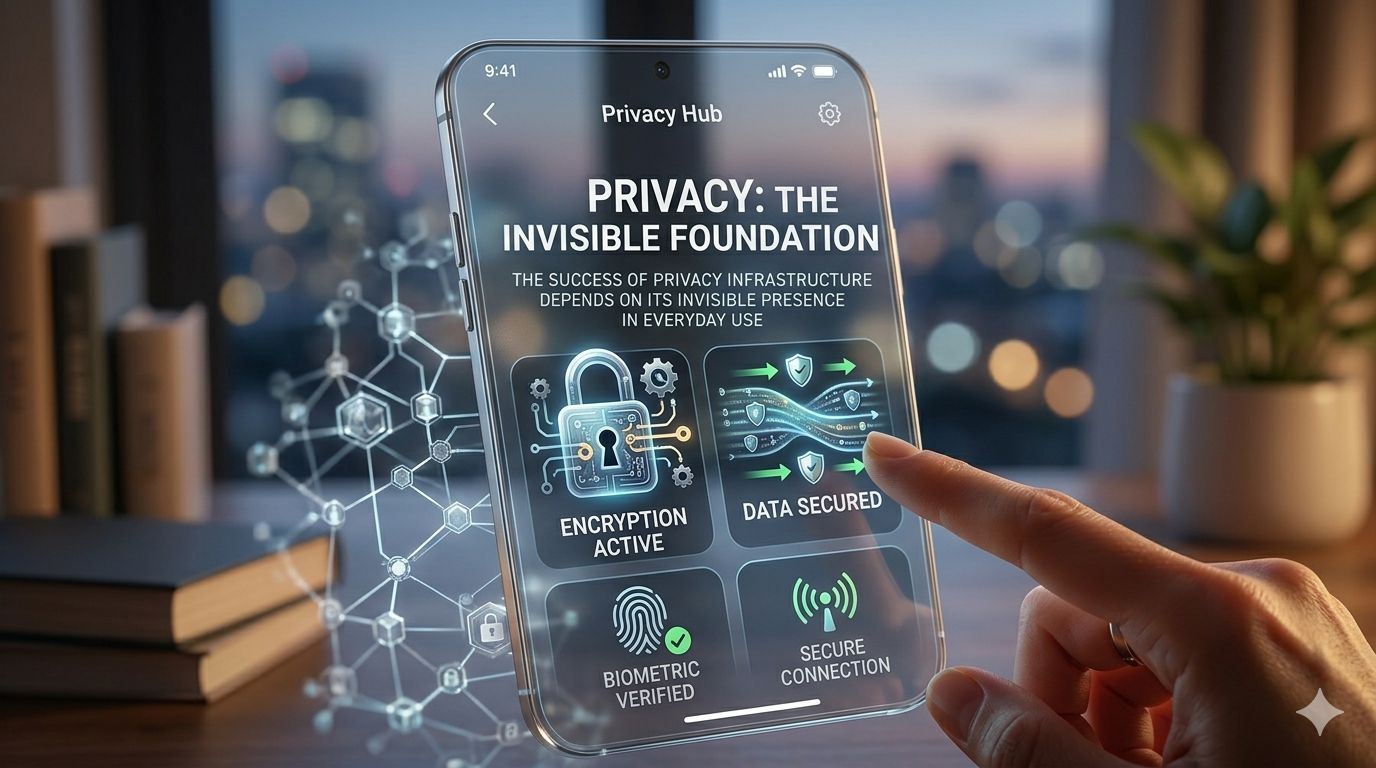
Why Complexity Can Be a Barrier
When privacy tools are too technical, they can create confusion. Users may feel overwhelmed by complicated settings or unfamiliar terms. This often leads to mistakes or complete avoidance of the tool.
In the crypto space, this challenge becomes even more important. Managing keys, understanding permissions, and securing assets can feel intimidating for beginners. If privacy solutions are not user-friendly, adoption slows down, and the benefits are lost.
Building Trust Through Simplicity
Trust is a key factor in digital adoption. When users feel safe without needing to constantly think about security, they are more likely to engage with technology. This is especially true in blockchain and crypto ecosystems.
Developers and platforms are focusing on making privacy tools more intuitive. Clear interfaces, automatic protections, and simple onboarding processes help users feel confident. The goal is to make privacy feel like a natural part of the experience, not a complicated add-on.
The Future of Invisible Privacy
As technology evolves, privacy infrastructure is expected to become even more seamless. Innovations will focus on reducing user effort while increasing protection. This includes smarter systems that adapt to user behavior and provide security without interruption.
In a world where digital interactions continue to grow, invisible privacy will play a crucial role. It allows people to explore new technologies with confidence, knowing their data is protected. The less users have to think about privacy, the more naturally they will adopt it.
The future of crypto and digital systems depends on making privacy effortless, because when protection becomes invisible, trust becomes unstoppable.