
When I look at a new project, I usually try to figure out one thing first.
Is this something users interact with directly, or something developers use to build for users?
With Midnight, that question has been sitting in my head all week.
After going through the docs, I realized the answer is not as straightforward as I expected 😅
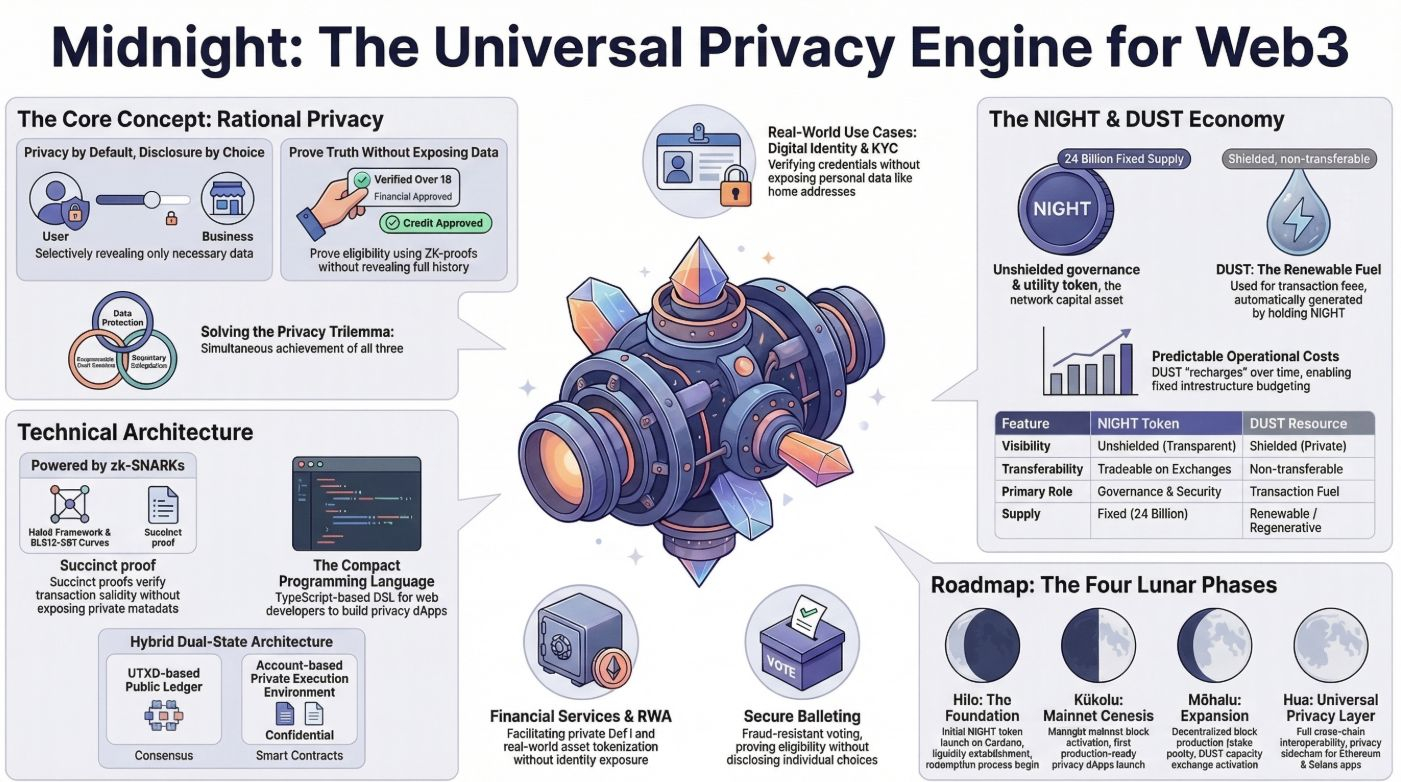
At the surface level, Midnight is clearly an independent L1.
It has its own consensus, its own ledger, its own execution layer, and its own native tokens.
From a technical perspective, it looks like a standalone chain with all the components you would expect.
But if we stop there, we miss a more important layer of what is being built.
What stood out to me is that Midnight does not position itself around user-facing competition.
It is not trying to attract users away from other chains.
It is not trying to become the main environment where users spend most of their time.
That already suggests something different.
What it seems to be building is closer to a developer-facing layer.
A system that developers can plug into when they need specific functionality that other chains do not handle well by default.
One example is how applications can use Midnight for selective data handling without redesigning their entire architecture.
Instead of forcing every product to rebuild its logic around privacy or verification, Midnight can act as a layer that integrates into existing systems.
That changes how developers think about building.
They do not need to choose between fully public systems and fully private systems.
They can start combining both, depending on what the product actually needs.
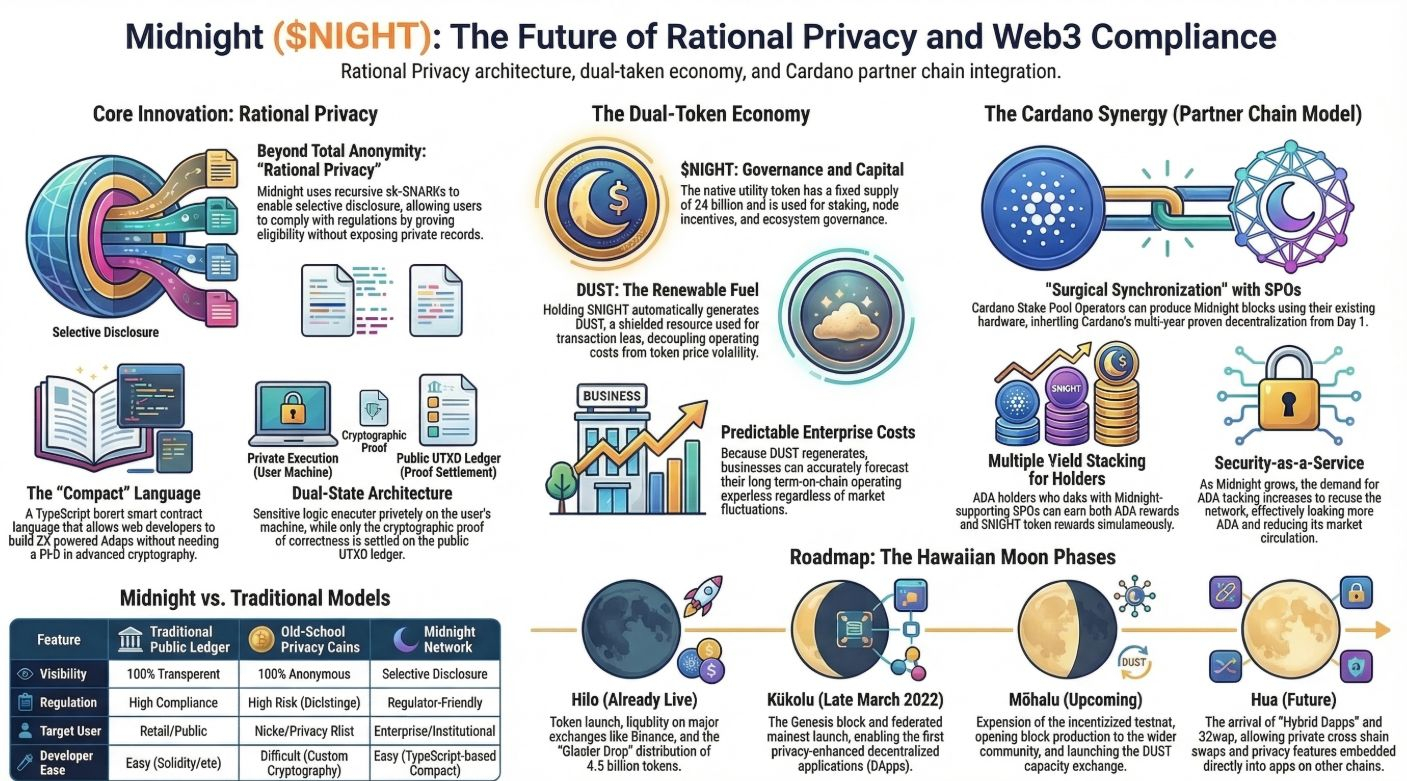
This is where the design starts to feel less like a competing chain and more like a functional layer.
Another signal is how the system allows interaction without requiring full migration.
Users do not necessarily have to move entirely into Midnight’s ecosystem.
Applications can connect to it when needed, use its capabilities, and continue operating in their original environment.
That is not typical behavior for a chain that is trying to capture users.
It is more typical for infrastructure that is meant to be used across systems.
From a strategic perspective, that creates a different positioning.
Instead of competing for attention, the system can aim to become something developers rely on in specific situations.
I have been comparing this to how most blockchain ecosystems evolve.
Many networks try to grow by attracting users and liquidity into their own environment.
They build tools, incentives, and applications to keep activity inside their system.
Midnight seems to be exploring a different route.
It does not necessarily need to own the user.
It needs to be useful to the developer.
And those are two very different growth strategies.
But this is also where the challenge becomes more complex.
Building a reliable L1 is already difficult.
Building a system that developers trust enough to integrate into their products is an even higher bar.
It requires stable infrastructure, clear tooling, good documentation, and long-term reliability.
And adoption depends on whether developers actually choose to use it.
The ecosystem is still early.
The tooling layer needs time to mature.
The developer experience needs to prove itself in real environments.
And integrations need to move beyond theory into actual products.
There is also the competitive angle.
Other ecosystems may develop their own solutions.
Some chains may build native capabilities that reduce the need for external layers.
And not every infrastructure layer becomes widely adopted.
So the direction alone does not guarantee success.
But it does raise an important question.
Midnight may not need to win by becoming the most used chain.
It may win by becoming the layer that other chains quietly depend on.
I am watching two signals closely.
Whether developers start building applications that rely on Midnight for specific functionality.
And whether those applications use Midnight without requiring users to fully migrate into a new ecosystem.
If those signals appear, then Midnight is not just another L1.
It is becoming part of the underlying stack of Web3.
And once something becomes part of the stack, it stops competing at the surface.
It becomes something everything else is built on.
Are you thinking about Midnight as a chain users go to, or as a tool developers use?
And between those two directions, which one do you think is more likely to happen?
Drop your thoughts 👇
@MidnightNetwork #night $NIGHT