
Dependence on multiple layers of intermediaries can now be broken down, enabling assets to be fractionalized, traded more flexibly, and accessed on a global scale. In this context, blockchain is no longer just a storage layer, but becomes an infrastructure layer that allows value to move more freely.
What I find particularly interesting about @SignOfficial ’s approach to RWA is that they don’t treat it purely as a financial narrative. They see it as a matter of trust and ownership. When a contract, document, or property right is recorded on the blockchain, it is no longer just a file that can be altered or dependent on a central authority. It becomes an independent, transparent, and tamper-resistant proof of existence. From there, many real-world applications emerge: from tokenizing real estate to increase liquidity, to bringing traditional assets into DeFi as collateral, or simply reducing fraud in document verification.
Looking at the bigger picture, RWA is also reshaping how capital flows. In traditional financial systems, assets are often “frozen” within complex structures. But once brought onto the blockchain, they can be traded continuously, fractionalized, integrated into protocols, and circulate far more efficiently. This is why more and more major institutions are starting to pay attention to this space.
What makes me reflect the most is the fundamental shift: blockchain is no longer just storing value, but beginning to represent real-world value. When a token is not just a number but is tied to a tangible asset, crypto is no longer a closed ecosystem. It becomes part of a broader financial infrastructure.
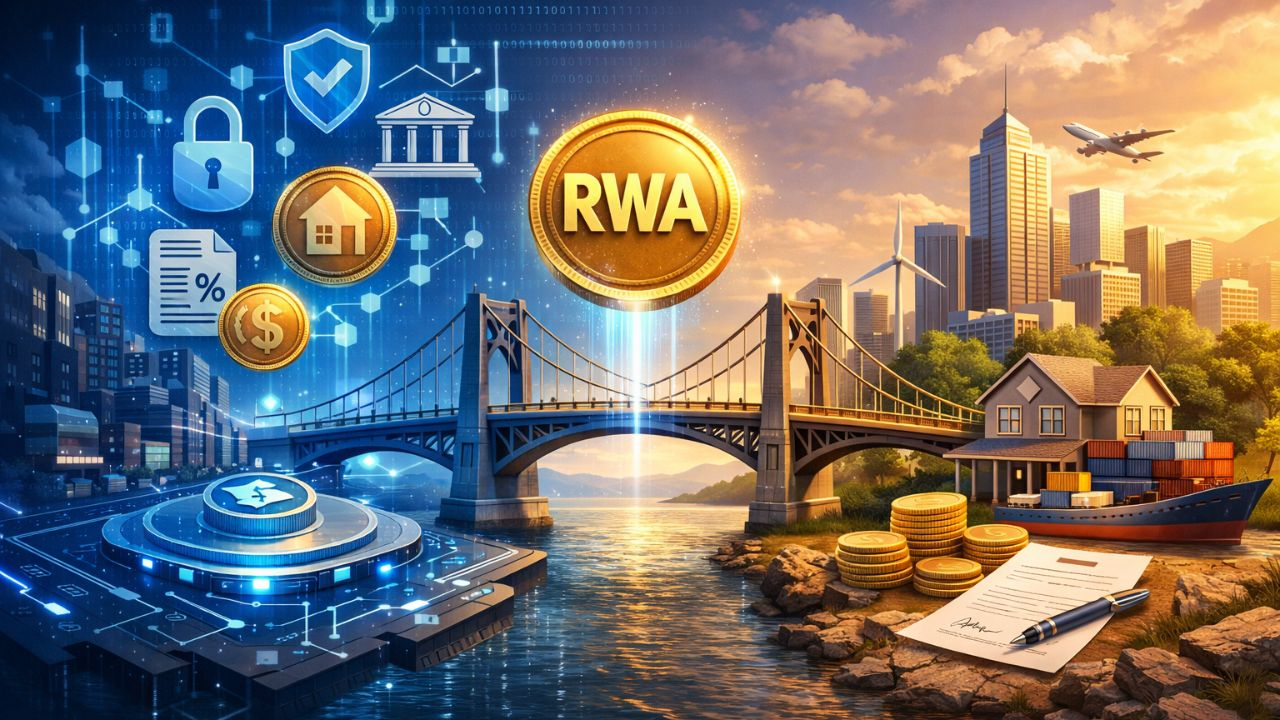
In my view, RWA is not just another use case, but a bridge between two worlds: on-chain and off-chain, digital and physical. And perhaps it is precisely these bridges that signal Web3’s maturation, bringing it closer to real-world applications and sustainable value.
#SignDigitalSovereignInfra $SIGN
