
I was sitting in the dark last night, scrolling mindlessly through my phone after a long day, the kind where nothing really lands but you keep looking anyway. The house was quiet except for the low hum of the fan. Then I tapped into Binance Square, more out of habit than interest, and saw the CreatorPad campaign for SIGN pop up again. I clicked "Join now" like I sometimes do, skimmed the tasks—post something over 100 characters, throw in #SignDigitalSovereignInfra, tag $SIGN and @SignOfficial—and suddenly felt this small twist in my stomach.
It wasn't excitement. It was the opposite. While I was typing a forced little paragraph to check the box and maybe grab some points on the leaderboard, it hit me how much of crypto's "attention" right now is manufactured in exactly this way. We tell ourselves the good projects rise because the community organically loves them, because the tech is superior, because people see the vision. But a lot of the noise—the likes, the reposts, the sudden visibility—is just people completing tasks for token vouchers. I finished the post, hit submit, watched the verification tick green, and thought: this feels more like paid performance than genuine discovery.
The uncomfortable part is admitting that real belief might be rarer than we pretend. We act like the market rewards truth and utility, but so much volume comes from incentivized behavior loops that look identical to organic enthusiasm from the outside. You see a project trending, threads multiplying, hashtags everywhere, and assume conviction. But strip away the reward pools—1,968,000 SIGN in this case—and how much would still be there? That moment of mechanically adding the required hashtag made the whole theater feel thin. It's not that SIGN itself is fake; it's that the mechanism revealing it to many of us is so openly transactional that it forces the question: are we discovering infrastructure, or are we discovering marketing budgets?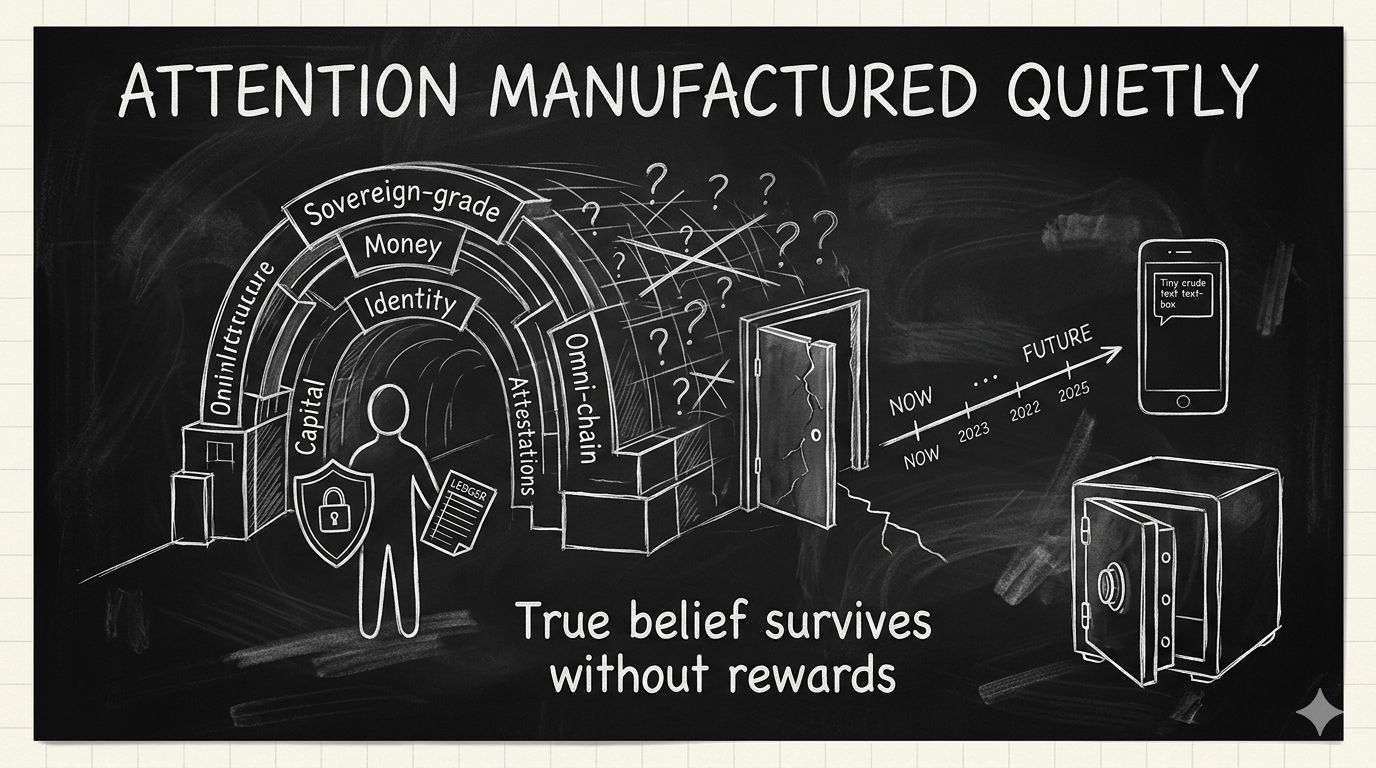
SIGN tries to position itself differently—omni-chain attestations, credential verification for governments and institutions, programmable token distribution without the usual circus. It's dry, institutional language that doesn't scream "moon." No memes, no KOL armies promising 100x. Yet here it is, getting eyes precisely because Binance Square dangled rewards to make us talk about it. That contrast disturbs me more than outright hype ever could. Hype at least announces itself as hype. This is quieter, more structural: attention engineered through micro-payments disguised as participation.
It makes you wonder about the whole game. If even the serious, boring, "real world" use-case projects need these same gamified loops to break through, then maybe the line between signal and noise has blurred permanently. We criticize memecoins for being pure vibes, but the infrastructure plays are increasingly getting pulled into the same incentive machinery. The difference is only cosmetic. One promises lambos, the other promises legitimacy, but both rely on extrinsic carrots to move the conversation.
And yet I still completed the task. I still ranked my points. I still might claim whatever small voucher comes. That's the part that sticks—the quiet complicity. We're all in the loop, critiquing it while feeding it.
So what happens when the rewards dry up? Will the conversation about sovereign-grade verification infrastructure continue on its own merit, or will it fade until the next campaign lights it up again? @SignOfficial $SIGN #signDigitalSovereignlnfra