
 I spent some time recently digging into Sign Protocol and one concept that really stood out is the schema system. At first it sounds technical, but once you understand it, you realize it’s actually the backbone of how trustworthy data gets recorded on-chain.
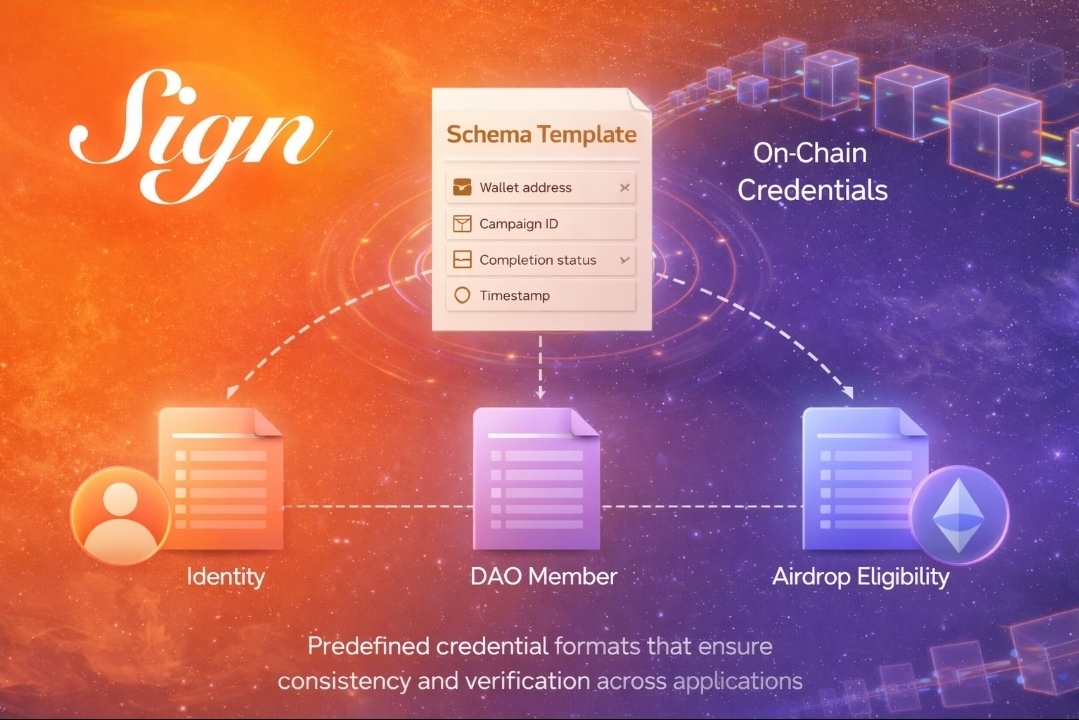
A schema in Sign Protocol is basically a predefined structure that defines how an attestation should look. Think of it like a template or format that tells the blockchain what type of information is being verified.
For example, if a project wants to verify that a user completed a campaign task, the schema might include fields like:
• wallet address
• campaign ID
• completion status
• timestamp
Because the schema is predefined, every attestation created under it follows the same structure. This makes the data easier to verify, read, and integrate into other applications.
From a builder perspective, schemas are extremely powerful. Developers can design custom schemas for different use cases: identity verification, DAO membership, event participation, airdrop eligibility, or contributor recognition.
Another important detail is that schemas create consistency across applications. Instead of every project inventing its own verification format, Sign Protocol allows standardized credential frameworks that other platforms can understand and reuse.
I also like how schemas help reduce fake claims. If an attestation must follow a specific schema and come from a trusted attester, the system becomes much harder to manipulate. This is especially important for Web3 reputation systems and decentralized identity.
A practical example: imagine a DAO using Sign Protocol to verify contributors. Once a schema for “Contributor Activity” exists, any verified contribution can be recorded under that schema. Later, other protocols or communities could check those attestations and instantly recognize that wallet’s reputation.
Personally, I think this is where @SignOfficial Protocol becomes more than just another infrastructure tool. It starts to look like a credential layer for Web3, where trust, reputation, and achievements can move across platforms.
The bigger picture is interoperability. If schemas become widely adopted, credentials issued in one ecosystem could be recognized across many others without needing centralized verification systems.
Of course, adoption will be the key factor. A schema system only becomes powerful when multiple projects start using compatible standards. But the framework is already there, and the potential use cases are massive.
Right now we’re still early in decentralized identity and verifiable credentials. But tools like Sign Protocol especially its schema structure could play a major role in shaping how trust is built in Web3 ecosystems.
I’ll definitely keep watching how builders use this, because the next wave of Web3 apps might rely heavily on these types of attestations rather than traditional databases.