I’ve held off longer than usual with $SIGN . In this market, hesitation usually means move on. If something doesn’t give you a clear reason to act, there’s always another narrative around the corner.
But this one’s different.
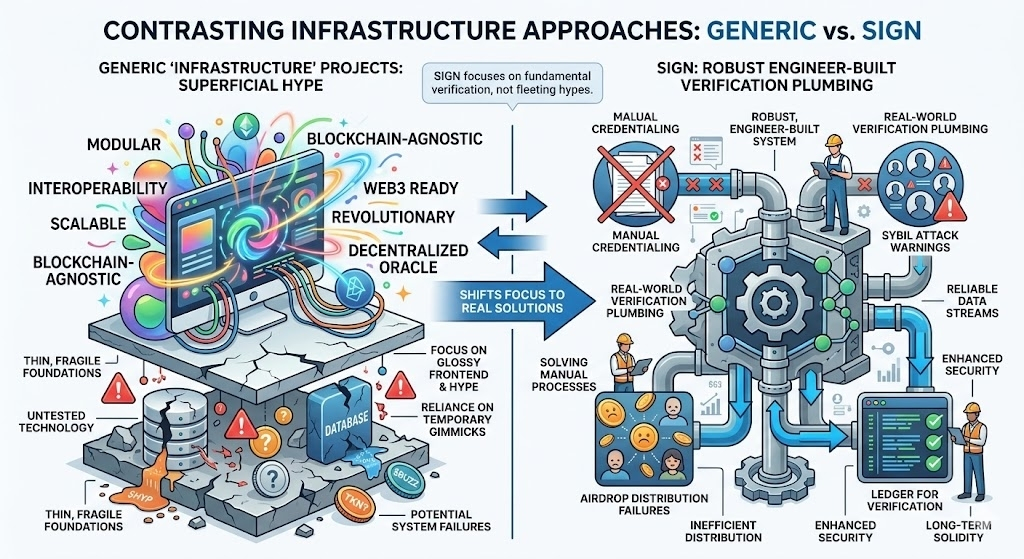
Most “infrastructure” plays are just narratives with a UI. SIGN feels like actual backend work. It’s tackling real issues—verification, sybil resistance, credential portability—in a way that isn’t easy to explain or quick to hype.
And that’s the catch.
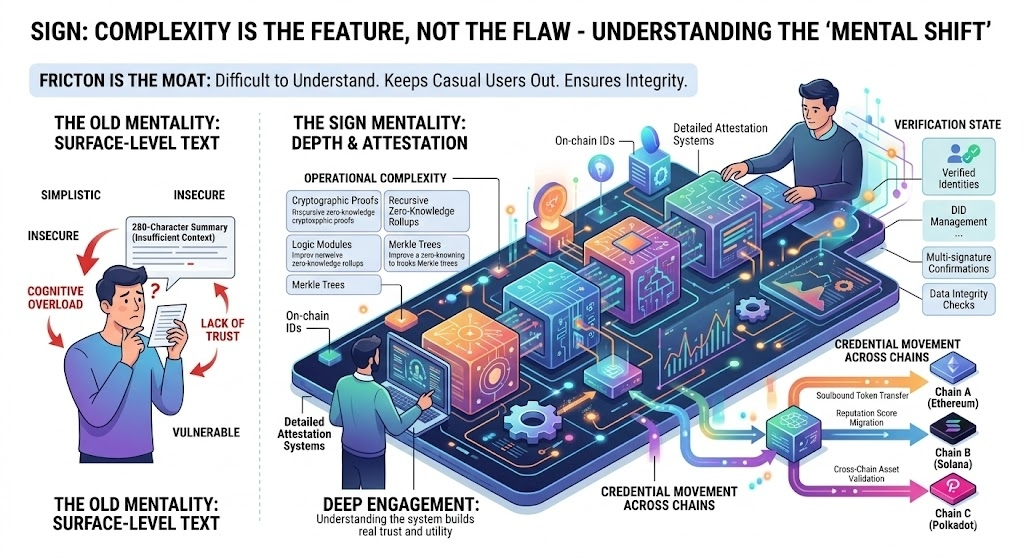
It’s complex. It takes time to understand. You can’t reduce it to a clean one-liner without losing what makes it valuable. In a market built on speed and attention, that kind of friction keeps both tourists and liquidity away.
But that same friction is also the moat.
SIGN isn’t trying to win the current cycle. It looks like it’s being built for when identity, compliance, and on-chain trust actually matter at scale. When ecosystems can’t afford broken airdrops, fake users, or unverifiable participants anymore.
Right now, it sits in that uncomfortable middle ground—serious enough to matter, but not simple enough to go viral.
The real shift won’t come from announcements. It’ll come when apps start using it quietly in the backend. When verification just works, and no one thinks about it.
That’s when this kind of infrastructure stops being optional.
Until then, it’s a waiting game. Not for hype, but for necessity to catch up.
Not exciting. Not loud. But very hard to ignore once it clicks.