
Expanding Beyond Cardano: Why Midnight’s Cross-Chain Privacy Strategy Feels More Serious Than It First Looks
Starting from the real problem
I’m writing this after another late pass through Midnight’s March updates, with too many tabs open and a note to myself that just says: “this is not a sidecar anymore.” That was the part I kept coming back to. Midnight still grows out of the Cardano orbit, sure, but the actual strategy now looks much wider than “privacy for Cardano users.” It looks more like an attempt to become a privacy layer that other ecosystems can route through when transparency stops being useful.
Midnight, at its core, is a privacy-first blockchain built around zero-knowledge proofs, selective disclosure, and a dual-asset design where the public token, NIGHT, generates a shielded resource called DUST for transaction execution. The pitch is pretty specific: don’t force users and builders to choose between verifiability and confidentiality. Keep proofs public enough to trust, keep data private enough to use in the real world. That matters because fully transparent rails are great for some things, but pretty bad for payroll, private credit, enterprise negotiation, health data, identity, and a lot of business logic people still pretend can live comfortably on a public ledger.
Why “beyond Cardano” is the point now
A lot of people still frame Midnight as a Cardano-adjacent privacy chain. I think that’s already too narrow. Yes, it is a Cardano partner chain, and its nodes track Cardano data through Cardano-db-sync. Early block production also leans heavily on the Cardano validator world, because Midnight block producers first come through the Cardano SPO path. But the distribution, partnerships, and product language all show a network that wants relevance across Web3, not just inside one community.
The clearest signal is the Glacier Drop design. Midnight didn’t limit its first major token distribution to ADA holders. It targeted self-custodying holders across eight ecosystems: ADA, BTC, ETH, SOL, XRP, BNB, AVAX, and BAT. Phase one alone saw more than 3.5 billion NIGHT claimed by over 170,000 eligible wallet addresses, and Scavenger Mine added 1 billion more claimed across more than 8 million unique addresses. That is not what a chain does if it only wants to deepen one base. That is what a protocol does when it wants social and economic surface area across multiple networks before mainnet is even live. 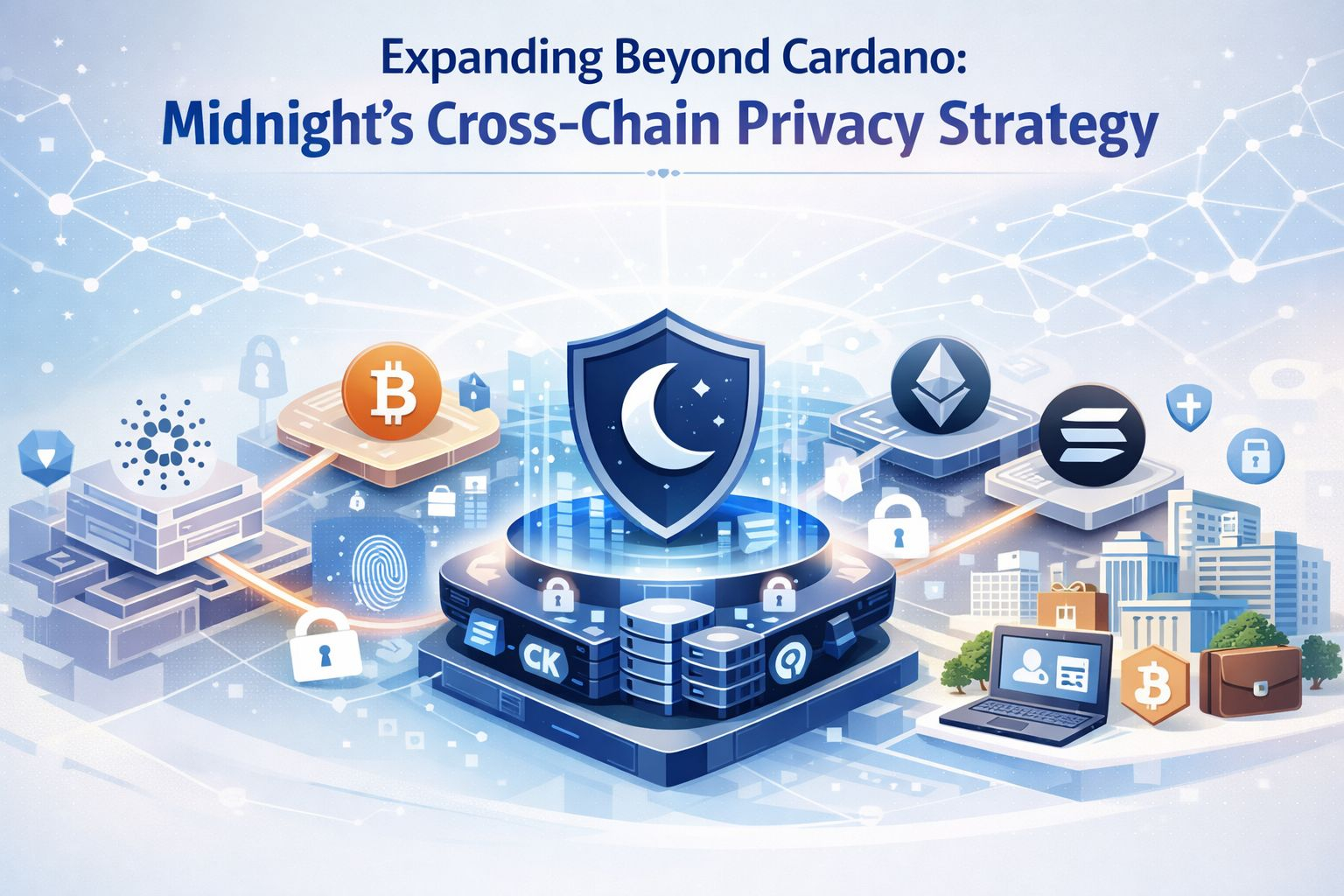
I had a DM this week from someone who still thinks the cross-chain angle is just marketing because Midnight hasn’t reached the fully interoperable end state yet. I get the skepticism. But I don’t think the strategy depends on pretending it is already finished. The roadmap itself has been explicit that the current Hilo and Kūkolu phases are stepping stones, with the long arc moving toward hybrid dApps and broader interoperability. Even the January network update describes Web3-native builders using Midnight to combine privacy-first logic with transparent ledgers. That’s a very different ambition from “build all your apps here and never leave.”
Who actually has power here
Governance is where things get less romantic. NIGHT is officially the native governance token, but practical power today is still concentrated in a handful of places: the Midnight Foundation, Shielded Technologies as the core engineering force, and the early operator set managing the federated path to mainnet. That does not make the project fake. It just means the governance reality is earlier-stage and more managed than token people usually imply.
The Foundation has been pretty open about that.
The project is entering mainnet through an early federated structure. The Foundation says this is the starting phase, not the final one, and that decentralization should increase over time. At the moment, influence is mostly in the hands of institutions that can operate stable infrastructure and the teams designing the standards, documentation, tooling, and incentives. There is some community input through surveys, open forums, fellowships, Catalyst-linked funding tracks, and feedback loops, but it would be wrong to pretend this is already pure token-holder rule. Right now, Midnight looks more like guided decentralization with a serious institutional onboarding layer. Messy, yes. Also maybe realistic.
Ecosystem, use cases, and where value might actually collect
This is where Midnight gets more interesting. The ecosystem is not just “privacy apps” in the abstract. Official materials point to identity infrastructure, privacy-preserving stablecoins, custody, wallets, oracle tooling, AI projects, tokenized finance, and founder support programs. OpenZeppelin has built Compact-focused contracts and starter tooling. Google Cloud is involved on security and infrastructure, with startup support layered in. W3i is building shieldUSD. The decentralized identity stack has partners working on DID-based components and real applications, including dark-pool-style trading and private lending flows.
That matters because value on Midnight probably does not accumulate only in one token chart. It accumulates where privacy solves a cost. A payment network that cannot reveal everything. A lending flow that needs proofs without exposing the borrower’s whole life. A government or enterprise system that must show compliance while keeping internal records confidential. Midnight’s own startup request pages lean hard into those kinds of uses: identity verification, compliance monitoring, supplier evaluation, healthcare data, elections, governance reporting. Some of these will fail. A few could be important.
And the token model is actually central here, not decorative. NIGHT is public, used for governance and security, and it generates DUST, which is shielded and non-transferable and pays for execution. Without that separation, Midnight would lose one of its strongest design advantages: the ability for developers or enterprises to hold NIGHT, generate operational capacity over time, and potentially subsidize user actions without forcing users into awkward fee mechanics. If you collapsed everything into a single exposed fee token, a lot of the privacy and predictability story would weaken fast. 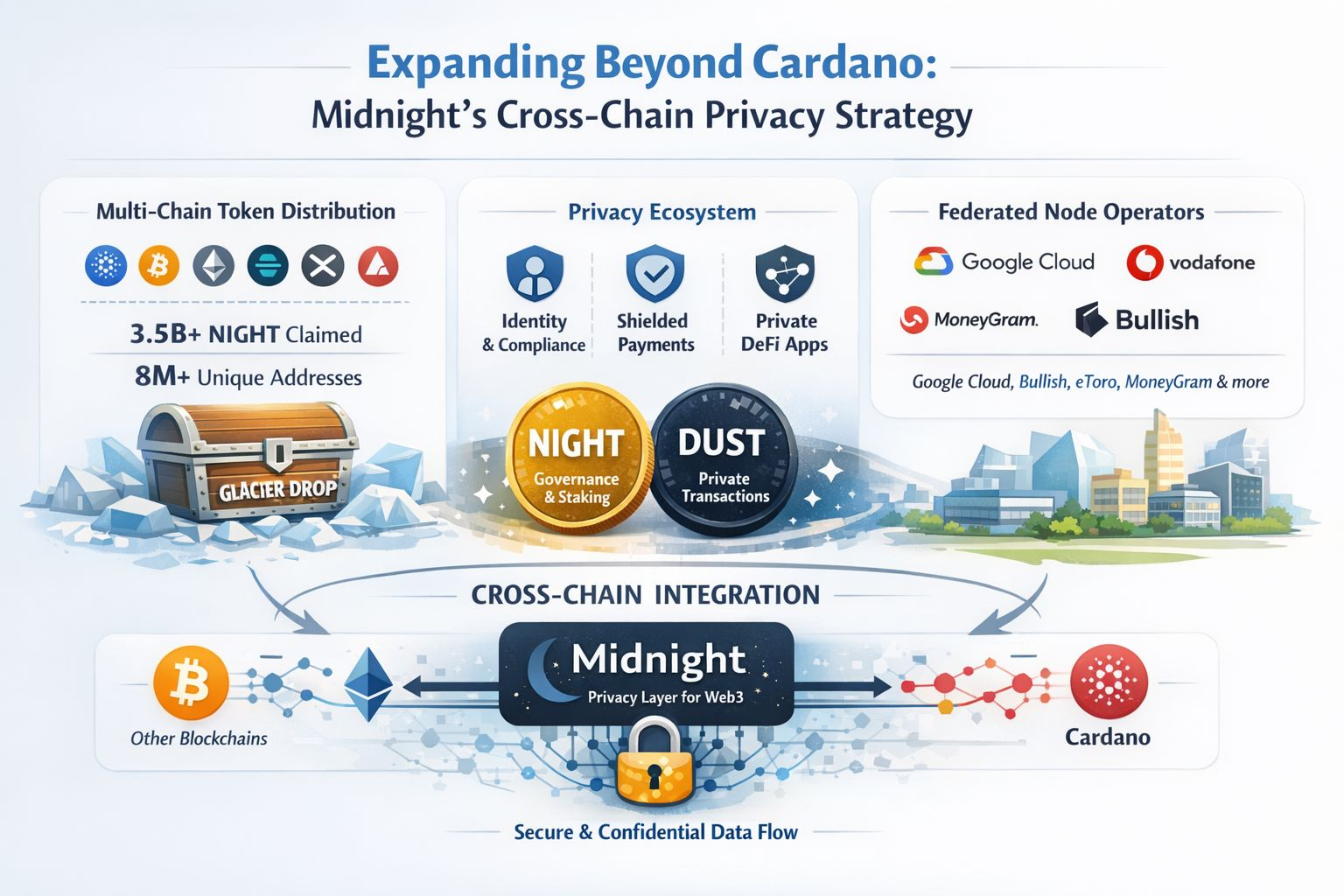
What the community is actually doing
I don’t think Midnight’s culture is mainly speculative, even if the token obviously brought attention. The more day-to-day pattern is contributors doing ecosystem labor: quests, docs, hackathons, fellowship work, forum support, tool-building, standards discussion, and startup formation. The Aliit Fellowship is explicitly set up for hands-on technical contribution. Nightforce is positioned more as values-driven ecosystem stewardship than short-term reward farming. Build Club and the Catalyst track are there to pull ideas into real prototypes. That combination usually tells you what a chain wants from its community. Not just tweets. Work.
I also noticed one small but revealing thing in the March docs push: Midnight is trying to get its ecosystem map properly counted by Electric Capital right around mainnet. That sounds minor. It isn’t. Teams do that when they care about being measured as a real developer ecosystem, not just a narrative. Add the March developer guide, the active forum traffic, the preprod resets, and mainnet-readiness chatter, and the cadence feels less like a sleepy side project and more like a network trying to arrive with receipts.
Why it’s trending now, and what would change my mind
The reason Midnight feels more visible right now is pretty simple: the timing finally matches the thesis. NIGHT launched in December 2025 after one of the broadest token distributions in recent crypto memory. Mainnet is officially slated for late March 2026. Federated node operators now include Google Cloud, Blockdaemon, Shielded, AlphaTON, Pairpoint by Vodafone, eToro, MoneyGram, and, as of March 17, Worldpay and Bullish. That is a lot of infrastructure and institutional signaling compressed into a short window. 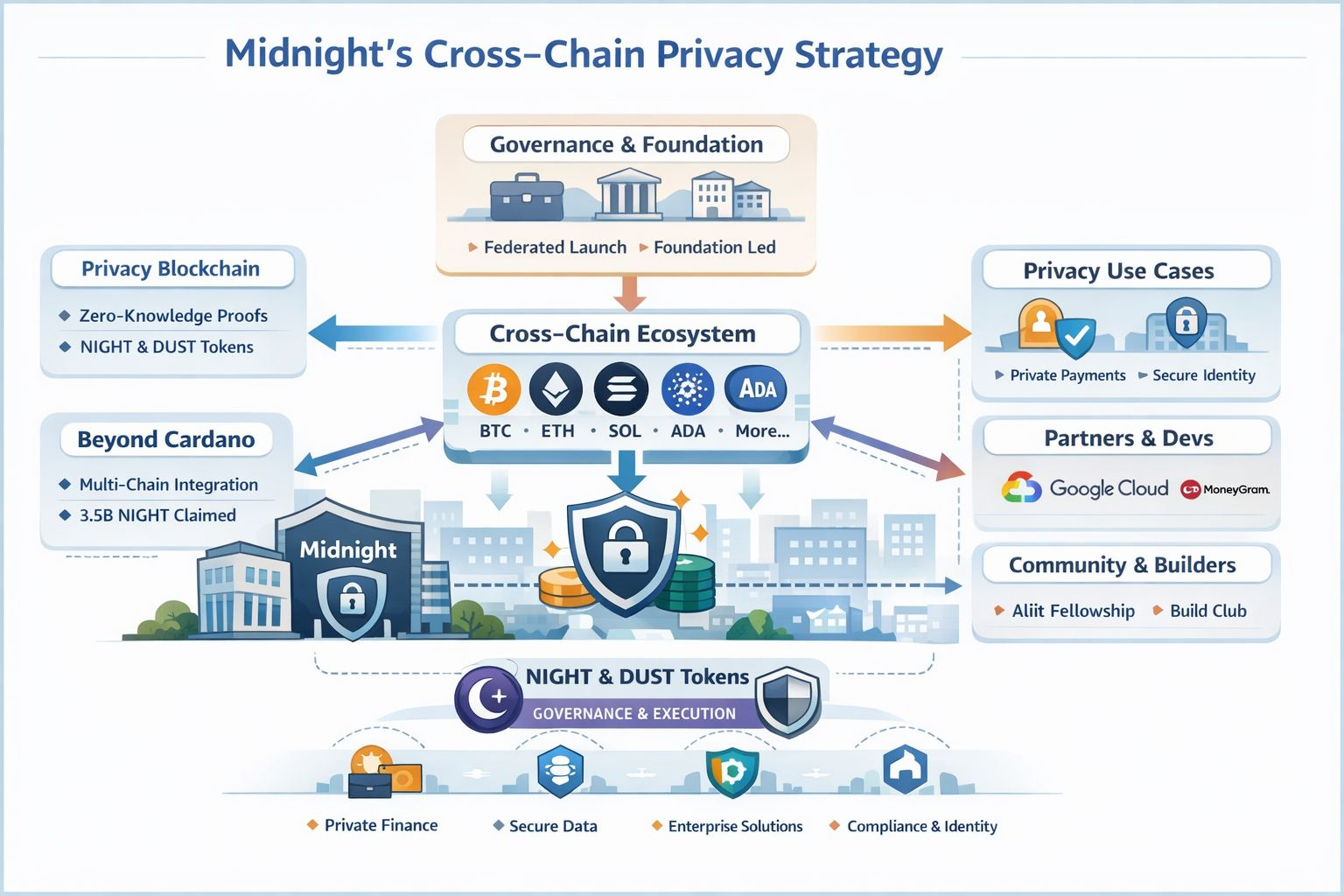
Still, I’m not sold on everything. Midnight’s biggest risk is execution creep. Cross-chain privacy is easy to admire and hard to operationalize. Early governance is still steered more than decentralized. Institutional partnerships look good on blog pages, but applications and usage matter more than logos. I’d change my mind quickly if mainnet launches and the ecosystem stalls into demos, if DUST economics feel awkward in practice, or if the cross-chain story never matures beyond distribution theater.
But the sharp takeaway for me is this: Midnight is interesting not because it came from Cardano, but because it seems increasingly determined not to stay there. And if privacy becomes an infrastructure requirement across chains rather than a niche feature inside one of them, that decision may turn out to be the whole game.
@MidnightNetwork #night $NIGHT
