
These two pillars ensure that the technology not only scales technically but also remains aligned with the needs of its diverse user base. Here is a visual and textual explanation of how these concepts are structured.
The Technology Roadmap: Scaling Trust Omni-chain
A roadmap is a strategic blueprint. For Sign Protocol, the roadmap has always focused on transitioning from a single-use application to a foundation for broader applications.
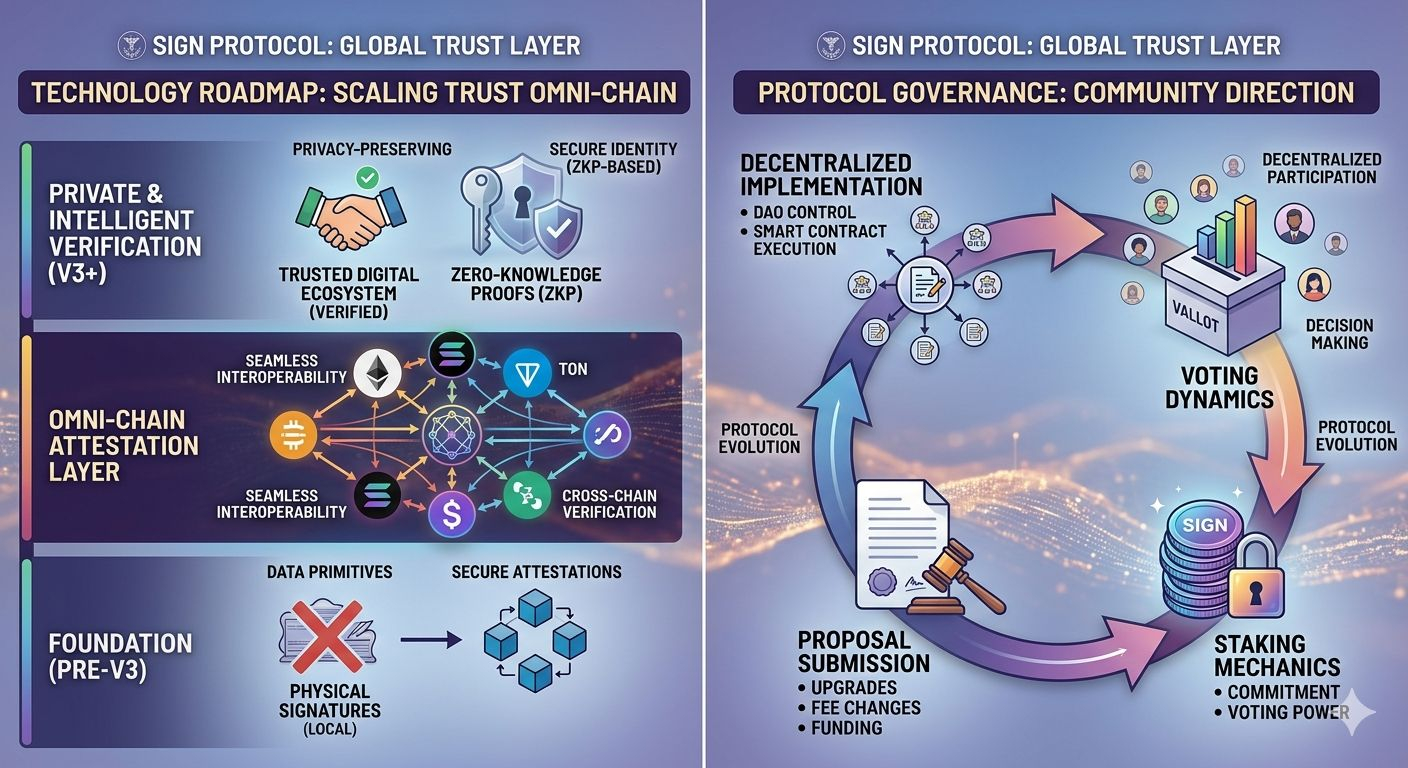
The initial phase of $SIGN re-V3 focused on proving the core technology: on-chain electronic signatures. This established the essential Data Primitives—creating standardized schemas for data and producing signed, tamper-proof attestations. These primitives are the building blocks of any digital claim.
The current phase, depicted in the visualization below, represents a massive expansion in scope. The protocol has moved beyond just signatures to a full Omni chain Attestation Layer. This enables different blockchain networks whether they are EVM compatible like Ethereum, high-speed like Solana, or integrated like TON to interoperate seamlessly. A verification on one chain can now be recognized on another.
Furthermore, a key focus of the modern roadmap is balancing transparency with privacy. The integration of Zero Knowledge Proofs ZKP allows users to prove credentials (e.g., identity, age, or asset ownership) without revealing sensitive underlying data. This transition from basic storage to intelligent, private verification is critical for mainstream adoDirecti
Protocol Governance: Staking and Community Direction
While the roadmap defines what will be built, Governance defines how the protocol will evolve and who will make those decisions. In a decentralized ecosystem, governance must move away from a central team and toward the token holders and active participants.
The mechanism for this transition is the native SIGN token. Governance here isn't just a voting system; it’s an entire economic ecosystem designed to align incentives. As shown in the graphic below, the framework generally involves four key areas:
Proposal Submission: Token holders can submit detailed proposals for protocol upgrades, fee structure changes, or funding allocations.
Staking Mechanics: The governance model often requires users to stake (lock up) their tokens to participate in voting. This creates "skin in the game," ensuring that voters are committed to the long-term health of the network.
Voting Dynamics: Once staked, tokens translate into voting power. Proposals are voted on, and if successful, they move toward implementation.
Decentralized Implementation: Over time, the core development team transitions control to decentralized autonomous mechanisms (like a DAO), where successfully voted proposals are executed directly by smart contracts. This final stage ensures that no single entity can override the collective decision of the community.
Together, the Roadmap and Governance structure ensures that the Sign Protocol grows intentionally and responsibly, fulfilling its mission to become the global, immutable trust layer for digital lifeboats and sovereign nations.
@SignOfficial ,#DrAnees , $SIGN ,