

The Middle East is not adopting crypto in the way most markets do. It’s not chasing trends, speculation, or short-term liquidity cycles. What is happening instead is structural. Governments and institutions across the region are redesigning how economic systems operate at a foundational level. Digital identity, financial settlement, legal verification, and cross-border coordination are no longer being treated as isolated problems. They are being approached as components of a single system that must be sovereign, auditable, and interoperable by design. This is where most existing infrastructure fails. Traditional systems depend on centralized authorities that do not scale well across jurisdictions, while many crypto systems focus on transactions without solving how trust is established and reused. The result is fragmentation at the exact moment when coordination is becoming critical for economic growth. The Middle East is not looking for more applications. It is looking for infrastructure that can unify how data, identity, and value interact under sovereign control.
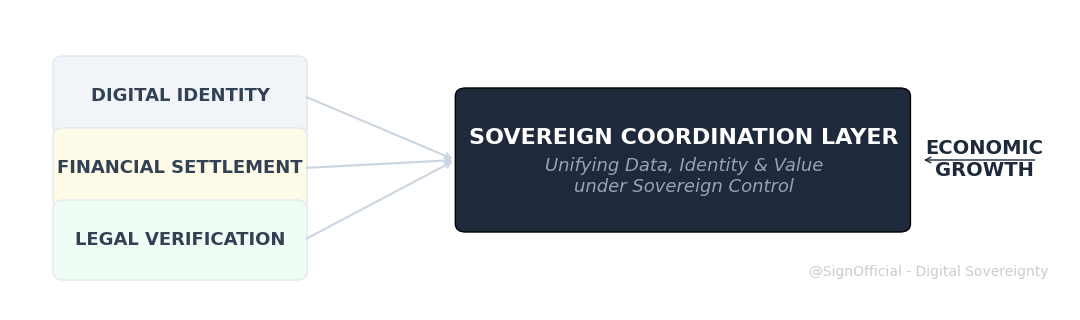
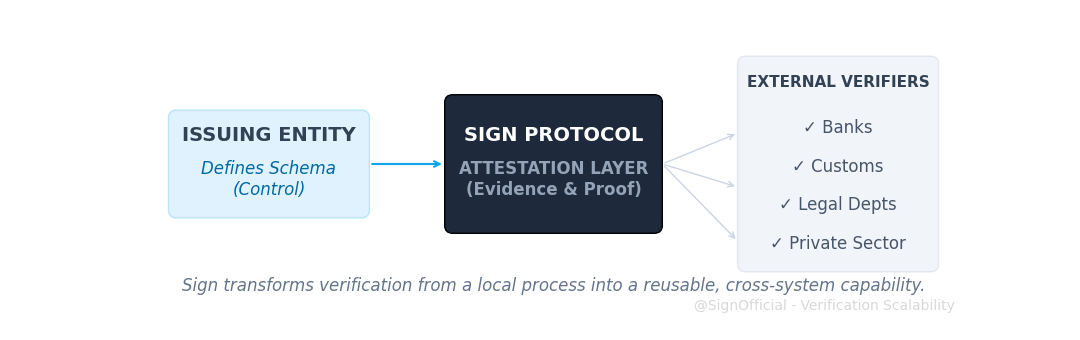
What makes Sign relevant in this context is not just its technology, but its positioning as a verification layer for sovereign systems. Instead of acting as another blockchain or application, it operates as an infrastructure layer where claims can be structured, signed, and verified across different environments. This becomes critical when governments need to issue credentials, validate contracts, or manage financial interactions without relying on external intermediaries. In regions like the UAE, where digital transformation strategies are tied directly to economic expansion, the ability to create verifiable and portable records is not optional. It is a requirement. Sign’s model of schemas and attestations allows institutions to define their own standards while maintaining interoperability with other systems. That balance between control and compatibility is what enables sovereign infrastructure to function at scale. Without it, every system becomes a silo. With it, systems can coordinate without losing autonomy.
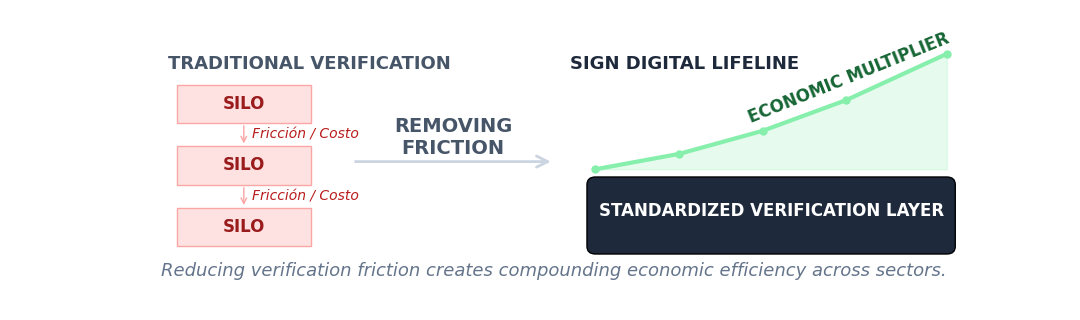
The economic implications of that shift are significant. When verification becomes standardized and portable, transaction costs begin to decrease across entire sectors, not just individual platforms. Processes that traditionally required intermediaries, manual validation, or duplicated data entry can be executed with cryptographic guarantees and auditability built in from the start. This is why integrations with financial systems in the region are being explored so aggressively. Whether in settlement layers similar to those used by central banking systems or in commercial contract verification, the goal is the same: reduce friction while maintaining trust. In fast-growing economies, even small inefficiencies scale into massive costs. Removing those inefficiencies is not just a technical upgrade, it is an economic multiplier. This is also why the narrative around Sign has shifted from being a protocol to being described as a “digital lifeline” infrastructure. Because at scale, verification is not a feature. It is a dependency for growth.
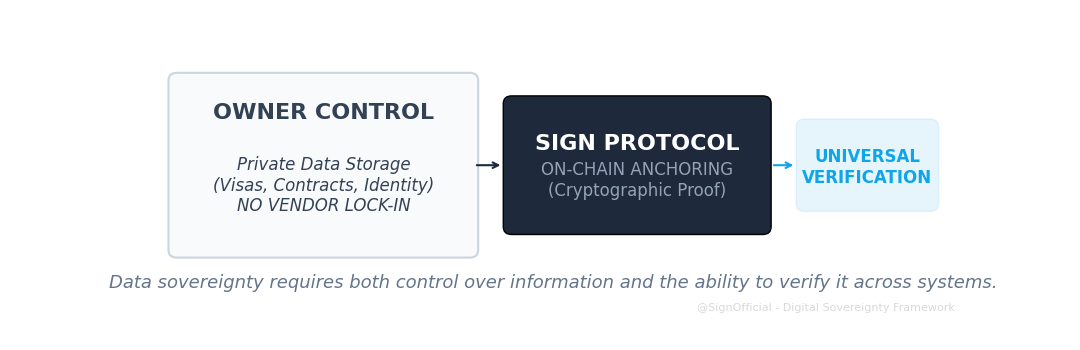
Another layer that is often overlooked is data sovereignty. In many regions, including the Middle East, control over data is directly linked to economic independence. Relying on external platforms for identity, contracts, or financial verification introduces vulnerabilities that go beyond technology. It creates dependencies that can limit how systems evolve. Sign addresses this by allowing entities to issue and control their own attestations while still participating in a broader interoperable network. Citizens, companies, and institutions can hold verifiable credentials without those credentials being locked into a single provider. This is particularly relevant in use cases such as digital identity, visas, and commercial documentation, where both privacy and verifiability are required. By combining on-chain anchoring with flexible data storage models, Sign enables a system where information can remain private while still being provable. That duality is essential for sovereign digital infrastructure.
The part that becomes clear only when looking at the system as a whole is how interoperability compounds into economic expansion. At first, it improves efficiency. Systems can reuse verified data instead of recreating it. But over time, it changes how new services are built. Developers and institutions no longer need to design around isolated datasets. They can build on top of existing verification layers, inheriting trust instead of reconstructing it. This accelerates innovation because every new system starts from a higher baseline. In regions that are actively investing in digital transformation, this effect is amplified. Growth is no longer linear because infrastructure enables composition. New services emerge faster, integrate more easily, and scale more effectively. This is the stage where infrastructure stops being visible and starts becoming indispensable. And in that transition, the systems that enable coordination across entire economies become far more valuable than those that simply capture activity.